


18th Century Wall Cupboard
An 18th century wall cupboard organises domestic storage with compact cleverness, turning plain corners into panelled display spaces.
18th Century Wall Cupboard
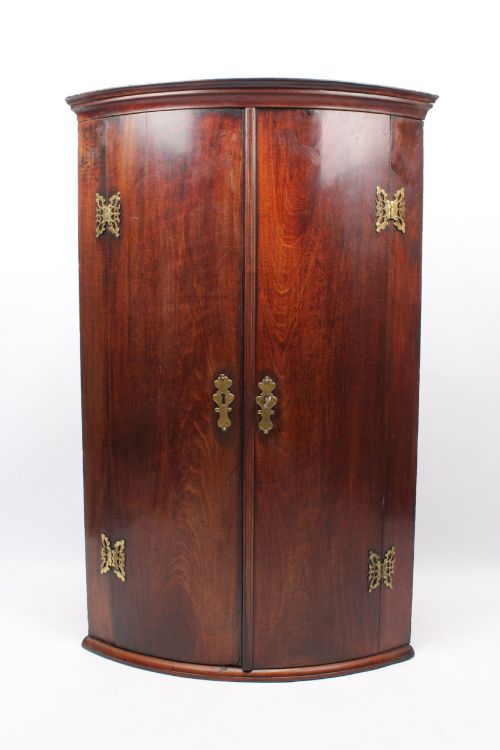
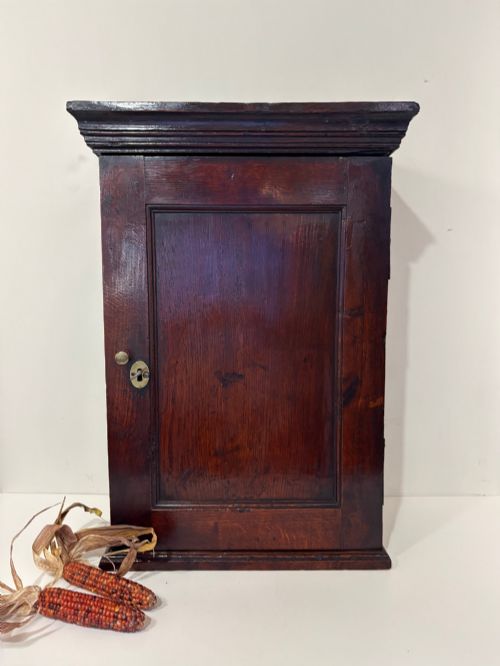
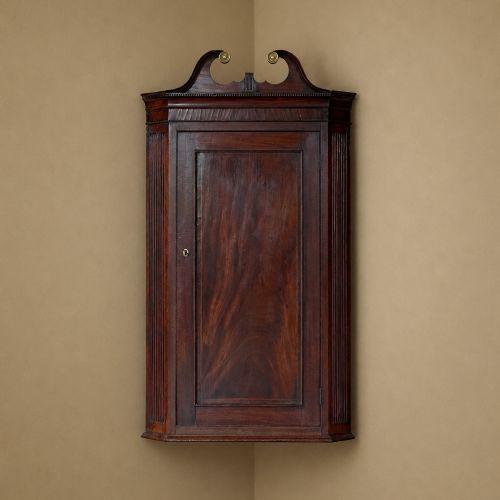
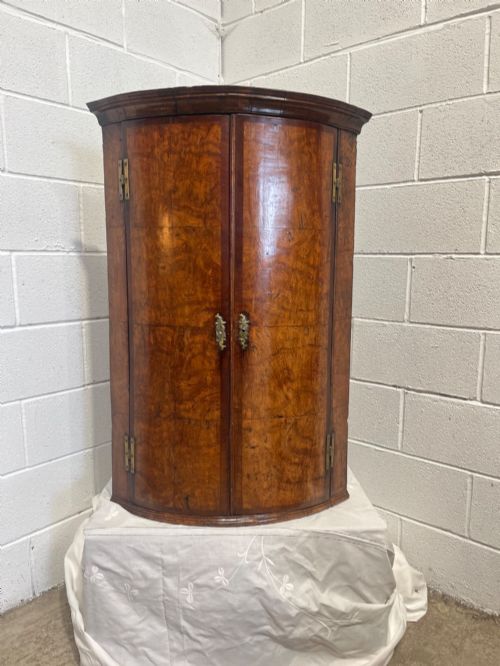
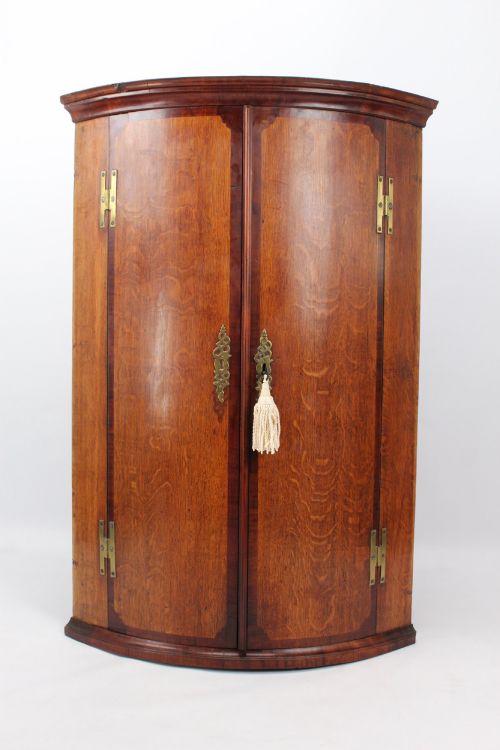
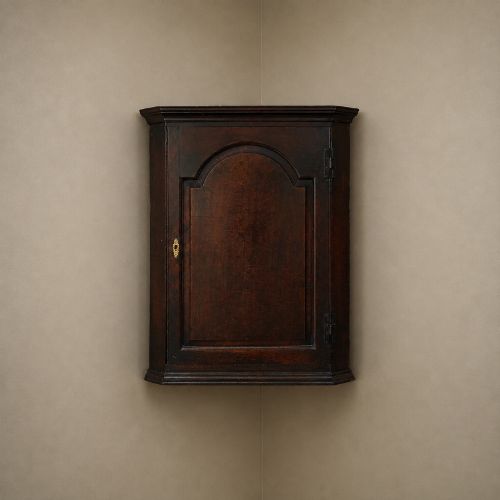
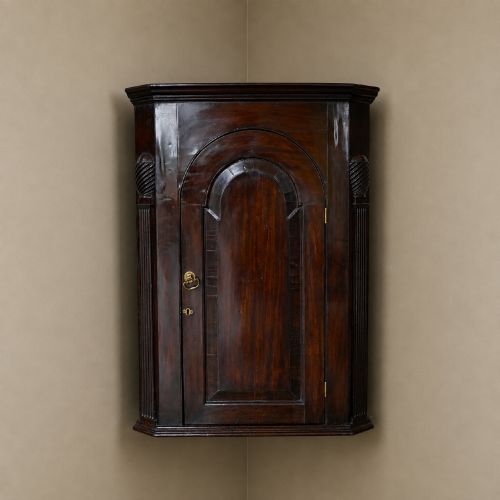
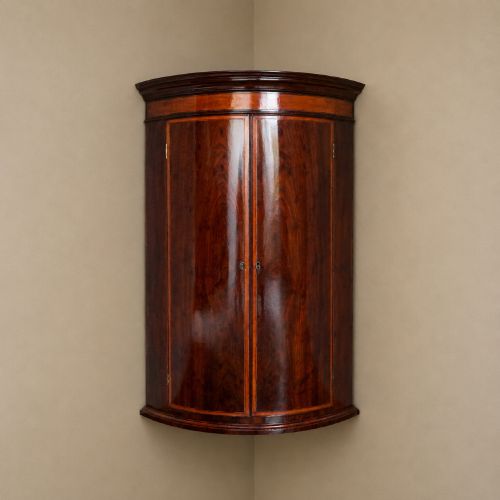
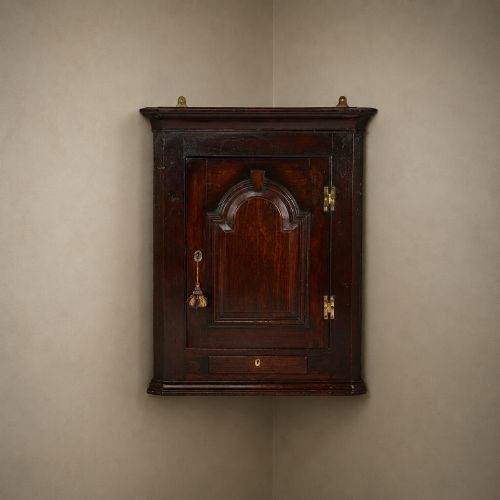
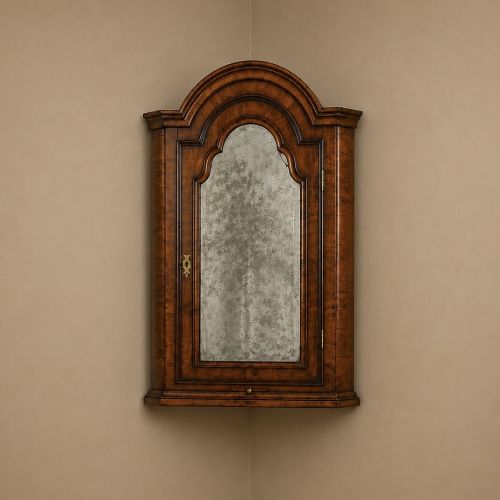
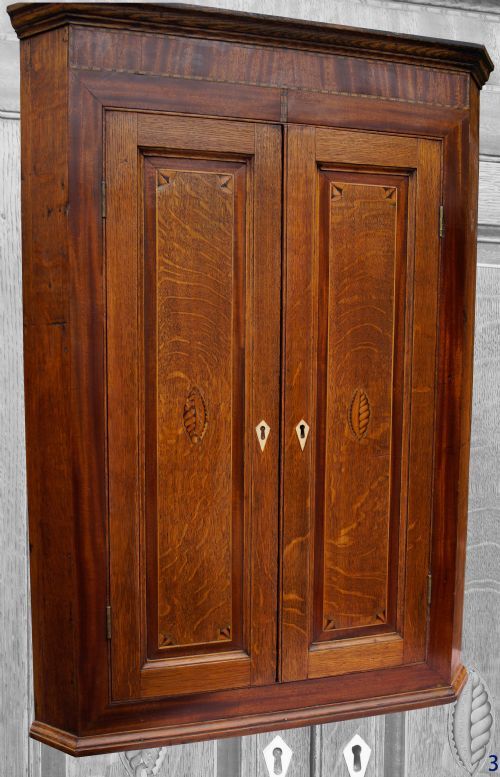
An 18th century wall cupboard appears primarily as a hanging corner cabinet or a flat-backed spice cupboard designed to save floor space in compact rooms. The evidence shows these pieces span periods from Queen Anne and George I through to George III, rendered in formats that range from simple country oak to formal mahogany bow-fronts.
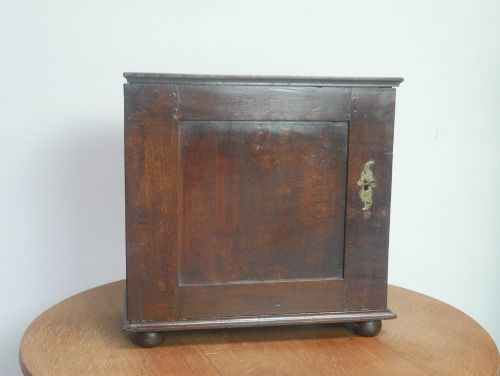
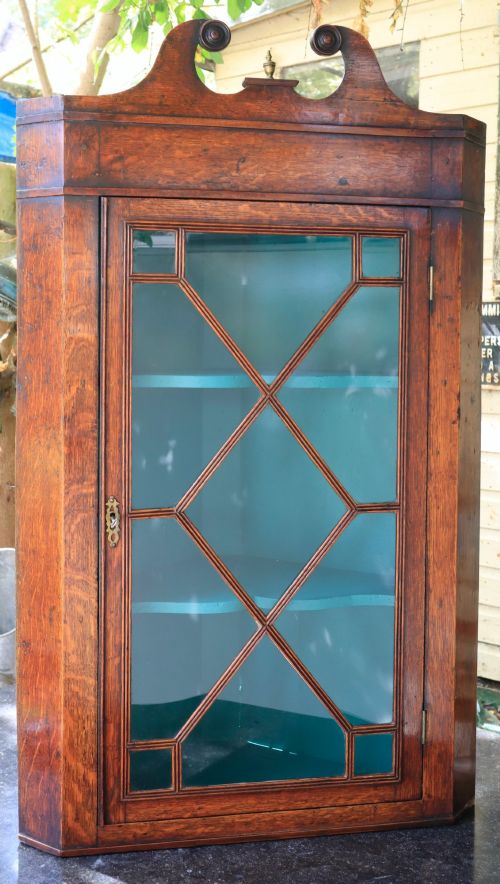
The version a buyer most commonly meets on this page is the oak or mahogany hanging corner cupboard, often outfitted with panelled doors and internal shelving. Alongside these, smaller spice cupboards and glazed wall cabinets surface regularly, reflecting the diverse storage needs of eighteenth-century households.
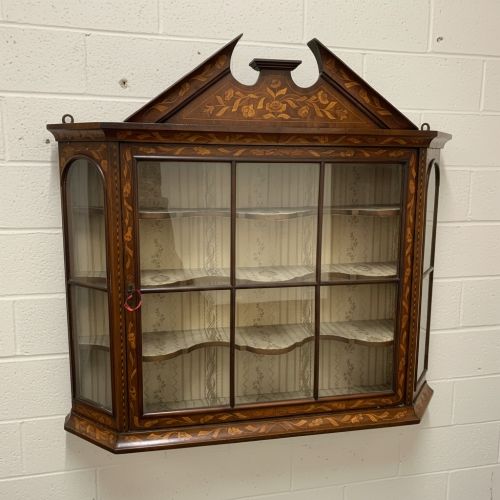
Makers utilised regional timbers and architectural moulding styles particular to their districts, producing pieces that served both utilitarian storage and polite display. French Provincial and Dutch marquetry variants also appear, demonstrating how continental workshops adapted the form for domestic interiors.
What varies in quality
The grade of an 18th century wall cupboard rests on the selection of timber, such as burr oak or figured mahogany, and the crispness of any applied carving or inlay. Subtle details like original brass hardware, candle slides, and intact glass panes distinguish exceptional examples from simpler utilitarian storage.
Construction methods also separate the range, with dovetailed carcases and panelled backs showing greater care than basic boarded boxes. The survival of early surface finishes, including period paint or lacquer, significantly alters the character and integrity of the piece.
18th Century Wall Cupboard Retail Price Guide 2026
Typical asking prices for 18th century wall cupboard among the pieces listed under this phrase on Sellingantiques today, from the lower quarter to the upper quarter. They describe what is for sale here now, not the wider market.
The selection includes regional English styles, French provincial chestnut furniture, and Dutch marquetry wall cabinets.
The 18th Century Wall Cupboard Glossary
- Bow front
- A cabinet front that curves outward in a convex arc. This shape gained popularity during the Georgian period to soften room angles.
- Crossbanding
- A strip of veneer applied to the border of a panel where the grain runs at right angles to the central wood. It frames the primary timber visually.
- Japanning
- A European imitation of East Asian lacquerwork using resin varnishes and raised metallic decoration. It appears on fashionable pieces from the early eighteenth century.
- Spice cupboard
- A small wall-mounted box with a primary door enclosing tiny internal drawers. These protected valuable culinary ingredients and medicines.
- Panetiere
- A ventilated wooden bread cage from French provincial kitchens. It kept loaves fresh and safe from household pests.
18th Century Wall Cupboard: Frequently Asked Questions
Where were these cupboards hung?
These cabinets were typically mounted directly onto walls or fitted snugly into room corners to utilise dead space. Their elevated position kept contents clean and out of the reach of household animals.
In kitchens or parlours, they held spices, tableware, or valuable documents close at hand without crowding narrow floor areas.
How do I identify a Georgian piece?
Georgian examples often feature characteristic timber choices such as mahogany or oak, alongside architectural mouldings like dentil cornices. Proportions follow classical design rules established during the reigns of the Georges.
Look for period construction traits like hand-cut dovetails, pegged joints, and original brass hardware to confirm the era of manufacture.
Did they always have glass doors?
Glazed doors appear on specific wall cabinets designed for displaying ceramics or glassware, but solid panelled timber doors are equally common. Many early spice and corner cupboards used blank wooden panels to conceal contents securely.
Both styles coexisted throughout the eighteenth century depending on the intended room and the owner's budget.
How do I care for an old timber finish?
Maintain antique wood surfaces by keeping them away from direct sunlight and sudden radiator heat changes. Dust gently with a dry cloth and apply occasional high-grade wax if the finish appears dry.
Avoid modern silicone polishes, which can sink into historic grain and damage original patination over time.