




Bookmatched Walnut Furniture
Bookmatched walnut furniture brings striking symmetry into a room through mirrored grain patterns across beds, chests and cabinets.
Bookmatched Walnut Furniture
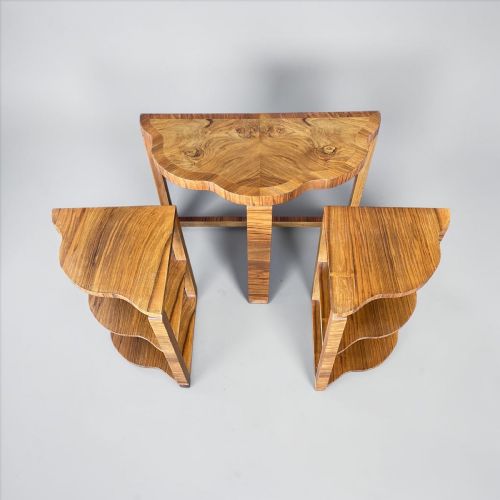
Bookmatched walnut furniture centres on timber boards sliced and opened like a book to create symmetrical grain patterns. Buyers search this phrase to find surfaces where the natural figures mirror each other precisely across a seam. The selection leans heavily toward Art Deco pieces alongside 19th Century Scandinavian and Biedermeier examples.
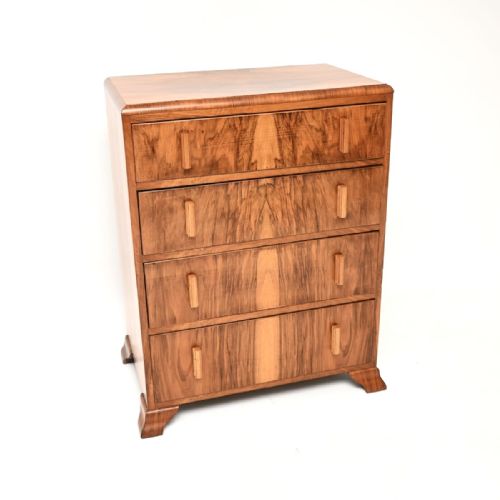
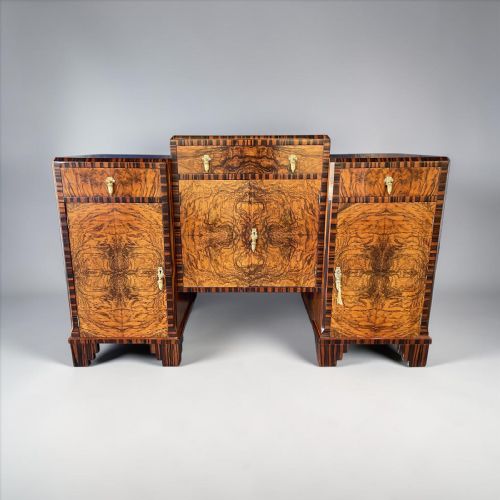
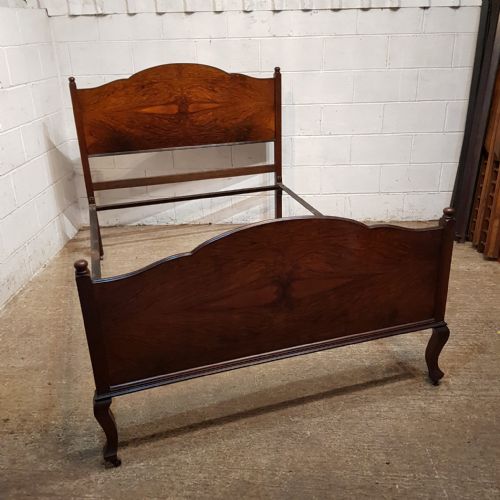
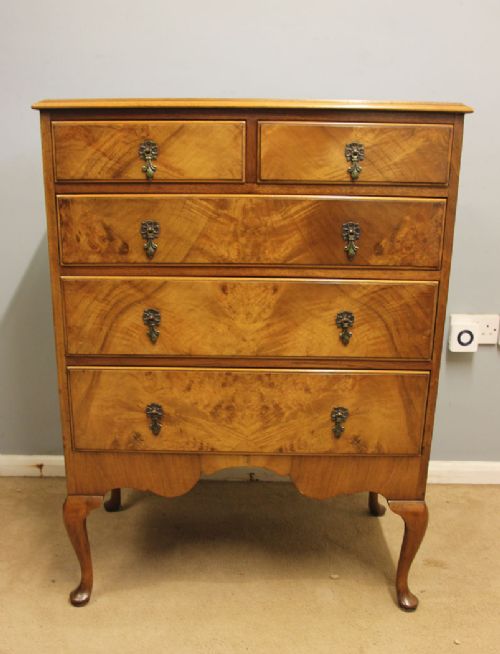
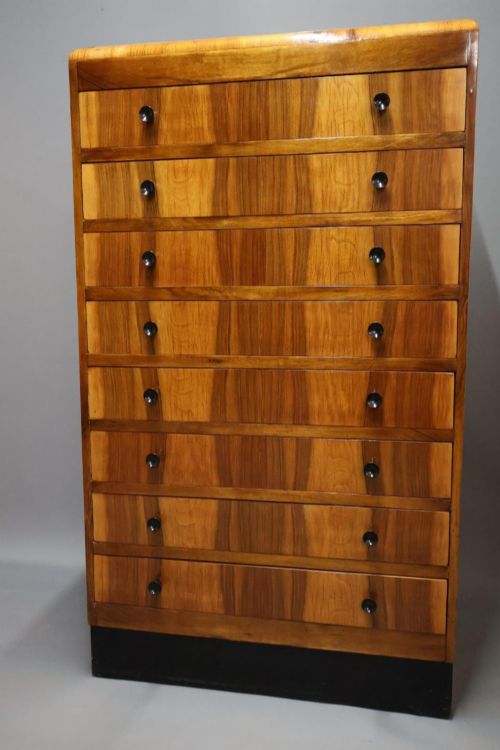
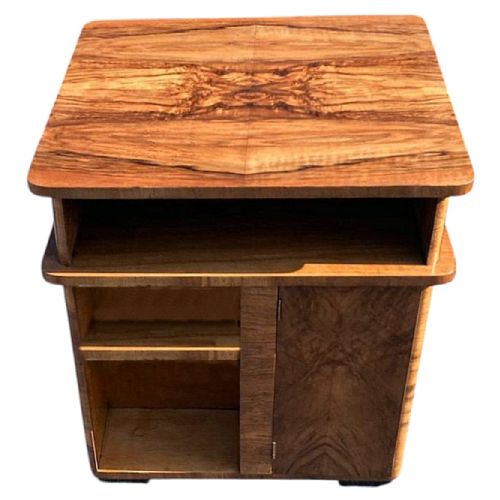
The forms span practical bedroom and living space items, including chests of drawers, bedside cabinets, tallboys and sideboards. Beds and headboards also appear frequently, often paired with matching bedside tables or compactum wardrobes. These pieces showcase the rich figuring of the timber on large flat panels such as drawer fronts and cabinet doors.
Origins in the listings stretch from English and French workshops to Scottish makers and Scandinavian houses. Pieces range from the mid-19th Century up through the 1920s, 1930s and 1940s. Art Deco items dominate the selection, bringing geometric lines that complement the swirling movement of the wood.
What varies in quality
Quality rests primarily on the symmetry and visual impact of the veneer matching. Superior pieces display harmonious, vivid grain patterns that align perfectly down the centre seam without awkward interruptions. The choice of burr walnut or highly figured walnut also elevates the visual depth of the surface.
Construction standards and secondary timbers set the broader tiers of craftsmanship apart. Finer examples feature robust internal framing, precise drawer tolerances and considered integration of auxiliary materials like brass or ebonised details. The harmony between the architectural form and the grain layout dictates the overall success of the piece.
Listings span periods from the mid-19th Century through the 1920s, 1930s and 1940s, with Art Deco dominating the forms.
Harry and Lou Epstein·Whytock & Reid of Edinburgh
The Bookmatched Walnut Furniture Glossary
- Bookmatching
- A woodworking technique where two adjoining veneer leaves are sliced from the same log and opened side by side. This creates a mirrored pattern resembling the pages of an open book.
- Burr Walnut
- Timber taken from a tree growth or wart, producing dense, swirling clusters of knots. It yields highly decorative veneer surfaces prized for luxury cabinetry.
- Figured Walnut
- Woodgrain that displays distinct, attractive patterns such as waves or curls rather than straight lines. Cabinetmakers select these boards to draw the eye across prominent panels.
- Tallboy
- A tall chest of drawers, often combining a set of drawers with a wardrobe compartment or smaller upper drawers. These units maximise vertical storage space while displaying expansive wood veneers.
- Secretaire
- A desk or chest of drawers featuring a pull-down writing flap that conceals small drawers and pigeonholes. It merges workspace utility with cabinetry.
Bookmatched Walnut Furniture: Frequently Asked Questions
How do I clean bookmatched walnut furniture?
Dust surfaces regularly with a soft, dry cloth to prevent micro-abrasions from settling into the grain. Avoid chemical sprays or silicone polishes that can degrade historical finishes over time.
Apply a traditional beeswax conditioner occasionally to nourish the walnut veneer and maintain its natural lustre. Keep these pieces away from direct sunlight and radiators to prevent the wood from drying out.
What is the difference between burr walnut and figured walnut?
Burr walnut comes from knotty tree growths that produce chaotic, highly energetic swirls and clusters of tiny eyes. It offers a dense, mottled texture that looks intensely decorative.
Figured walnut encompasses broader, flowing wave patterns and ripples across standard timber logs. While still decorative, figured grain provides a smoother, more linear movement compared to burr growth.
Are these pieces suitable for modern bedrooms?
Art Deco and mid-century items integrate smoothly into contemporary spaces due to their clean architectural lines and warm tones. Wardrobes, beds and bedside cabinets offer substantial internal storage while serving as strong visual focal points.
Pairing walnut tones with neutral walls allows the natural wood symmetry to stand out without overwhelming smaller rooms. The variety of scales available ensures options fit both compact flats and larger properties.
How can I tell a 1930s piece from a 19th Century one?
Nineteenth-century examples often lean toward heavier proportions, ornate carving and darker ebonised accents influenced by Victorian or Biedermeier tastes. Their internal construction uses traditional solid wood framing suited to earlier cabinetmaking standards.
Nineteen-thirties pieces embrace streamlined geometric shapes, minimalist hardware and symmetrical waterfall edges typical of Art Deco design. They rely heavily on large unbroken expanses of burr veneer rather than applied decorative carvings.