





Bone Inlaid Tea Table
A bone inlaid tea table brings intricate craftsmanship and global trade history into a room, offering both surface utility and ornamental richness.
Bone Inlaid Tea Table
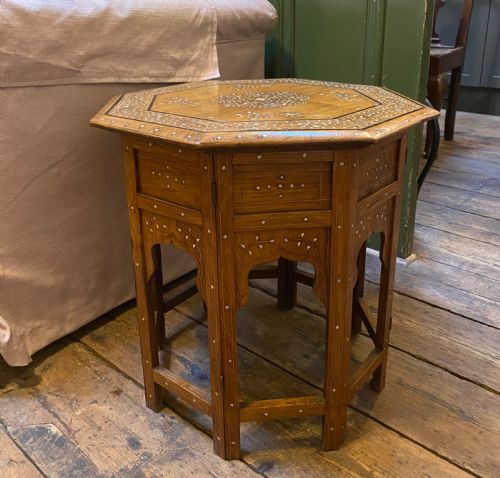
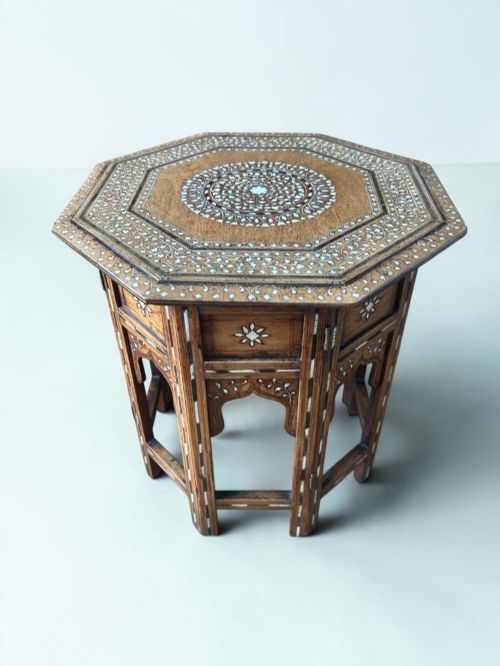
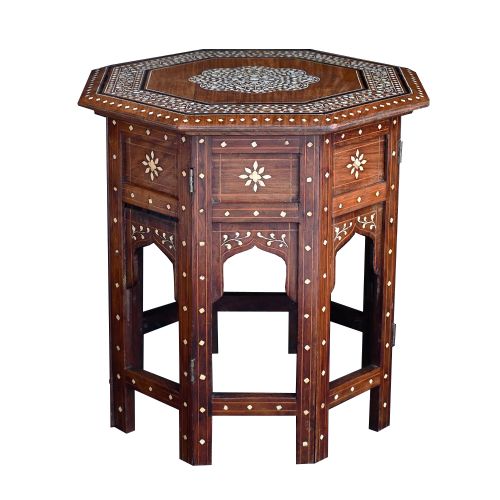
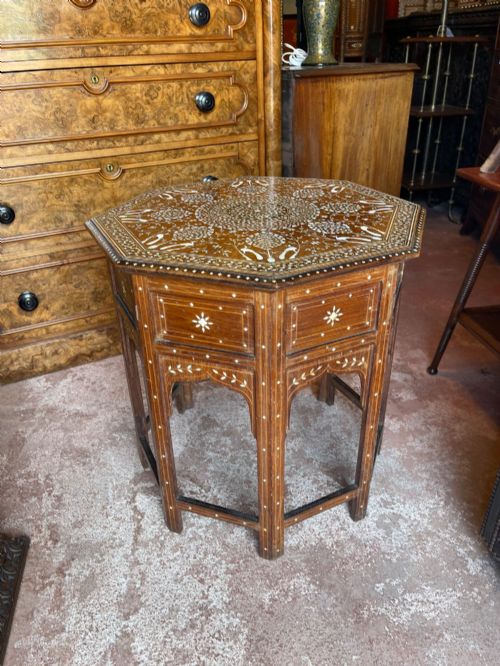
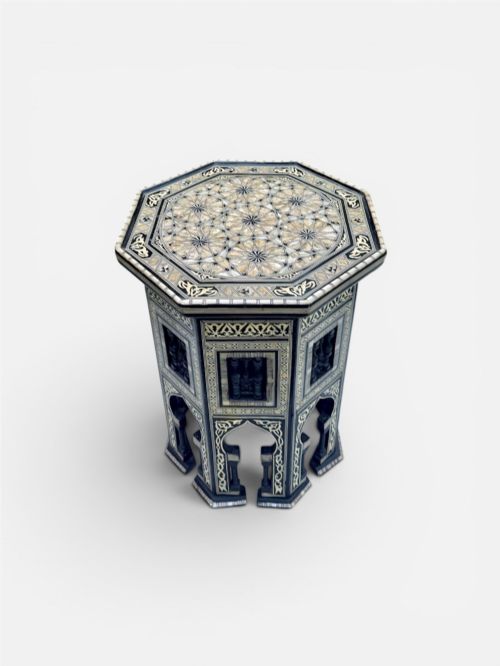
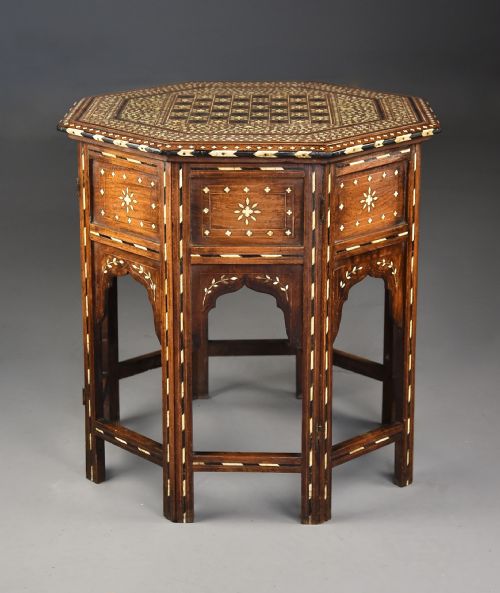
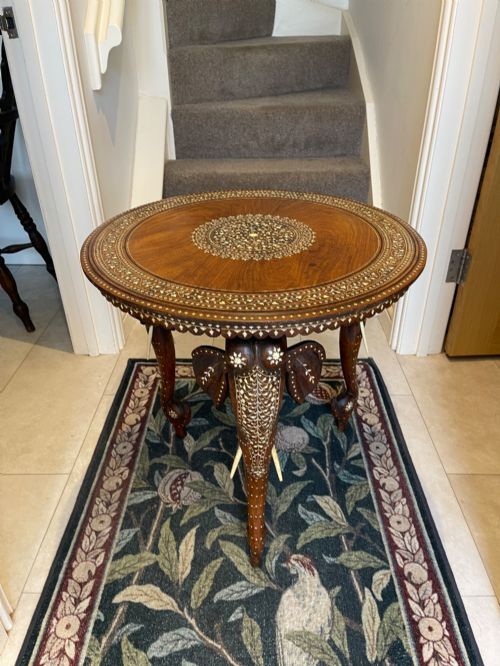
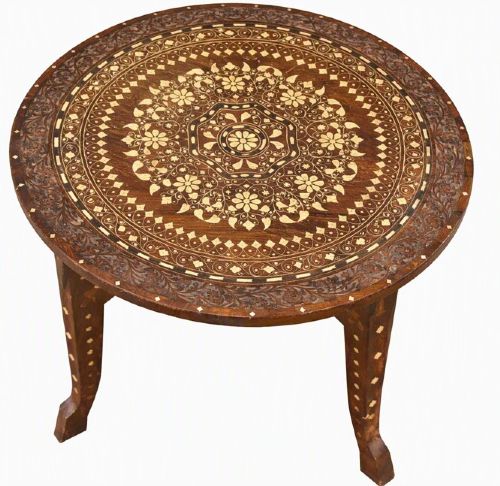
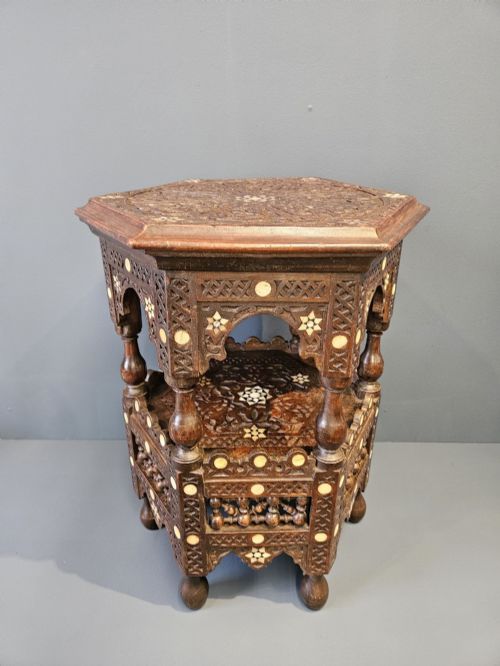
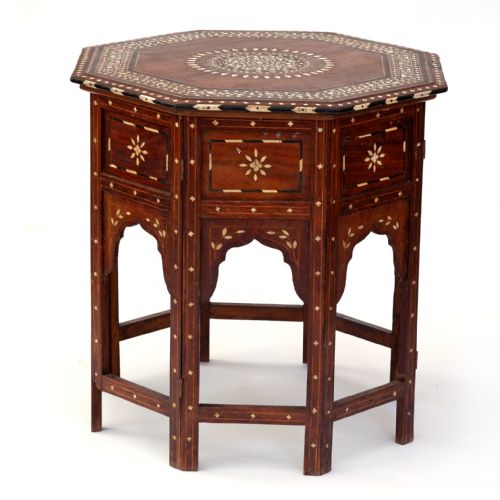
When you search for a bone inlaid tea table, you encounter tables designed for occasional use, coffee, side placement, or games, frequently shaped in octagonal or round silhouettes. These pieces span the nineteenth and twentieth centuries, originating from stylistic traditions such as Anglo-Indian, Moorish Revival, and Ottoman design.
Origins range from British colonial production linked to retailers like Liberty and Co to traditional workshops in India and the Middle East. Buyers choose these objects for their dense surface patterns and compact forms that fit beside seating.
How they were made
Articles are constructed from dense timbers such as teak, rosewood, sheesham wood, and ebony, providing a dark foundation that contrasts with pale decoration. Artisans carve these woods deeply with foliage and geometric motifs before introducing other elements.
Makers cut bone, mother-of-pearl, and brass into precise geometric shapes and individual floral fragments, pressing them into hand-chiselled recesses within the wood. Secondary materials like ebony stringing and satinwood further define the panels and borders.
Bone Inlaid Tea Table Retail Price Guide 2026
Typical asking prices for bone inlaid tea table among the pieces listed under this phrase on Sellingantiques today, from the lower quarter to the upper quarter. They describe what is for sale here now, not the wider market.
What varies in quality
The standard of carving determines visual success, separating pieces with deep, crisp relief from those with shallow, indistinct foliage. The density and precision of the bone inlay also distinguish masterwork production from simpler commercial outputs.
Structural integrity relies on the tightness of joints, particularly in collapsible or folding versions where hinges and wooden pins must align correctly. The choice of secondary woods and the inclusion of mother-of-pearl or brass accents elevate the status of an individual table.
Liberty and Co
The Bone Inlaid Tea Table Glossary
- Hoshiarpur
- A city in Punjab renowned for its woodcarving and inlaid craft traditions, particularly associated with tables featuring dense floral and geometric bone work.
- Anglo-Indian
- A style describing furniture made in India during the British colonial period, often combining traditional eastern forms with western furniture types.
- Moorish Revival
- An architectural and decorative style popular in the nineteenth century that incorporated Islamic and Moorish design motifs into European and colonial interiors.
- Etagere
- A set of open shelves or tiered occasional tables used for displaying small decorative objects.
- Sheesham
- A durable Indian rosewood frequently utilised as the primary timber for carved and inlaid folding furniture.
Bone Inlaid Tea Table: Frequently Asked Questions
How do I fold a Hoshiarpur table?
Many Hoshiarpur tables feature an ingenious interlocking wooden base that collapses flat for storage or transport. The octagonal top simply lifts off the slotted folding legs.
Take care when lifting the top to support the hinges evenly and avoid stressing the carved wooden struts.
Are these tables sturdy enough for daily use?
These tables provide stable surfaces for lamps, drinks, and occasional display items. Solid hardwoods give them adequate weight, though intricate carvings require gentle cleaning.
Folding versions should be placed on level flooring to prevent rocking on their hinges.
How do I distinguish Moorish from Anglo-Indian tables?
Moorish tables lean towards geometric Islamic lattice patterns and arched motifs influenced by Middle Eastern architecture. Anglo-Indian pieces often combine these influences with dense Indian floral carving.
Both styles frequently utilise identical bone inlay techniques, making the overall carved motif the primary indicator of regional origin.
What is the best way to clean bone inlay?
Dust the surface regularly with a soft, dry brush to prevent dirt settling into the crevices between the bone and wood. Avoid harsh liquid cleaners that can discolour the bone or loosen the adhesive.
A light application of appropriate furniture wax keeps the timber nourished without harming the inlaid sections.