


Middle Eastern Coffee Table
These middle eastern coffee table pieces bring rich timber, inlaid pearl and engraved metal into modern rooms.
Middle Eastern Coffee Table
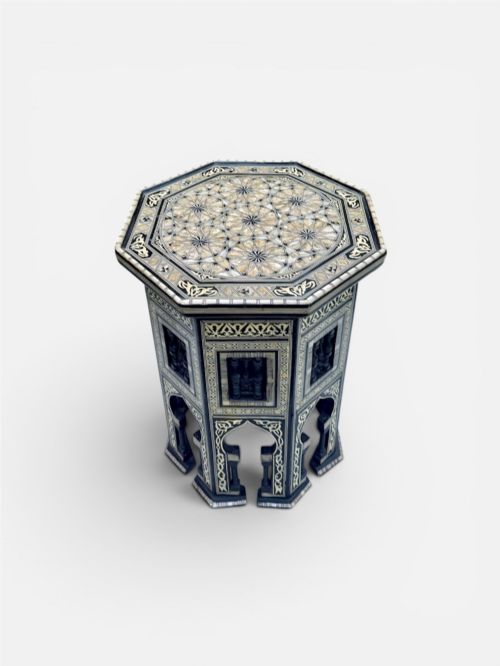
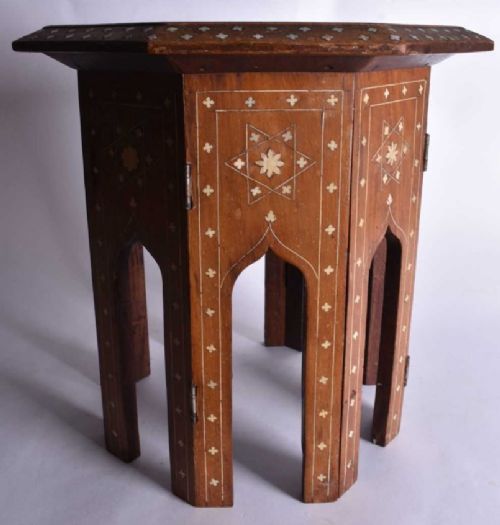
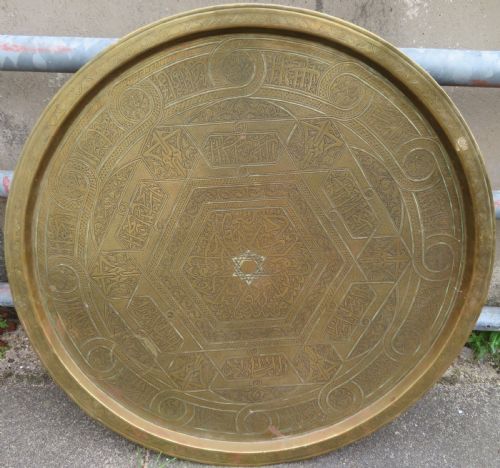
When you search for a middle eastern coffee table, you encounter low tables, folding tray stands, and occasional tables originating from the nineteenth and early twentieth centuries. The selection on this page relies heavily on octagonal side tables, folding Damascus tables, and tables featuring brass tops.
Makers and workshops from this tradition utilised styles such as Moorish Revival, Mamluk Revival, and Anglo-Indian, alongside Persian and Ottoman influences. Many examples function as folding units, designed originally for versatility and ease of movement within traditional interiors.
The materials and forms vary widely, ranging from low stools and centre tables to large engraved trays paired with wooden folding bases. These items bridge traditional craftsmanship and practical domestic use in contemporary spaces.
How they were made
Woodwork forms the structural core of these pieces, utilising hardwoods such as walnut alongside general timber for folding frames and octagonal surfaces. Craftsmen employed traditional joinery techniques to create collapsible bases that lock together without metal hinges.
Surface ornamentation relies on intricate inlay work, combining bone and mother-of-pearl geometric patterns into the wooden panels. Metalwork is equally prominent, featuring engraved brass and copper tops adorned with zodiac signs and Islamic motifs.
Listings feature woods including walnut and hardwood, alongside brass, copper, bone, and mother-of-pearl materials.
What varies in quality
The standard of a middle eastern coffee table rests upon the precision of its inlay and the depth of its metal engraving. Dense, exact arrangements of mother-of-pearl and bone distinguish superior examples from simpler, sparser decorative schemes.
The integrity of the wooden folding mechanism and the weight of the brass or copper top also determine the grade of the piece. Heavier gauge metal and tightly jointed hardwood bases indicate a higher tier of original workshop production.
The Middle Eastern Coffee Table Glossary
- Mamluk Revival
- A design style drawing inspiration from the art and architecture of the Mamluk Sultanate, often featuring bold brass engraving and geometric strapwork. This revival movement gained momentum in the nineteenth century.
- Damascus Table
- A folding occasional table featuring an octagonal top heavily inlaid with mother-of-pearl and bone pieces. These items originate from the traditional workshops of Syria.
- Moorish Revival
- An architectural and decorative style incorporating elements of North African and Spanish Islamic design. Pieces in this style utilise horseshoe arches, intricate wood carving, and dense surface patterns.
- Cairoware
- A term used to describe nineteenth and early twentieth century brass and copper metalwork produced in Cairo, typically inlaid with silver and gold. These vessels and trays display dense Islamic calligraphy and floral motifs.
Middle Eastern Coffee Table: Frequently Asked Questions
Are these folding tables sturdy?
The folding bases rely on interlocking wooden slats designed to support weight securely without permanent fixings. When properly aligned, they hold coffee table loads reliably.
Care should be taken when moving them to avoid straining the joints where the wooden panels cross.
How do I clean mother-of-pearl inlay?
Dust the surface gently with a dry, soft cloth to prevent buildup in the crevices between the pearl and the wood. Avoid harsh chemical cleaners that can strip the natural sheen from the shell.
Occasionally, application of a suitable wood wax helps preserve the timber surrounding the delicate inlay work.
What is the difference between Mamluk and Moorish styles?
Mamluk Revival pieces focus heavily on engraved brass work, heavy metal trays, and geometric Islamic strapwork patterns. They reflect the heritage of medieval Egyptian metalsmiths.
Moorish Revival leans more towards intricate woodwork, mother-of-pearl inlay, and architectural motifs drawn from North African and Spanish Islamic traditions.
Can I use brass top tables daily?
Brass and copper tops handle normal daily use well, though unlacquered metal develops a natural patina over time. Using coasters protects the surface from liquid rings and staining.
Cleaning should be done with mild agents to preserve the engraved details rather than scrubbing the metal bright.