
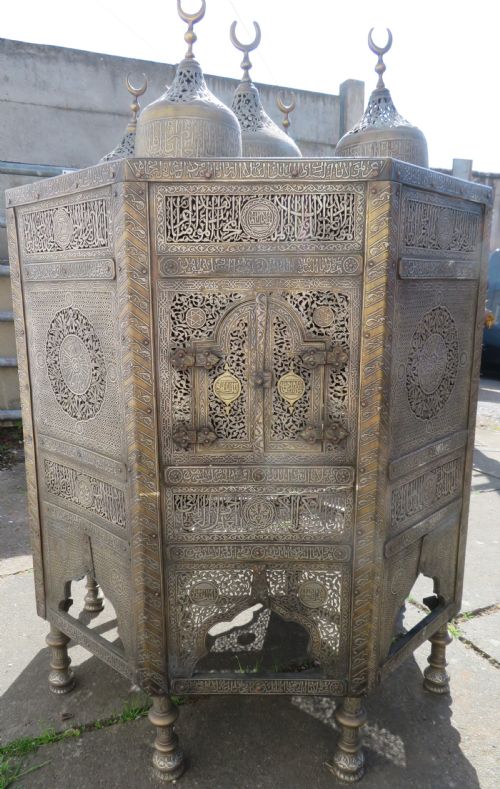
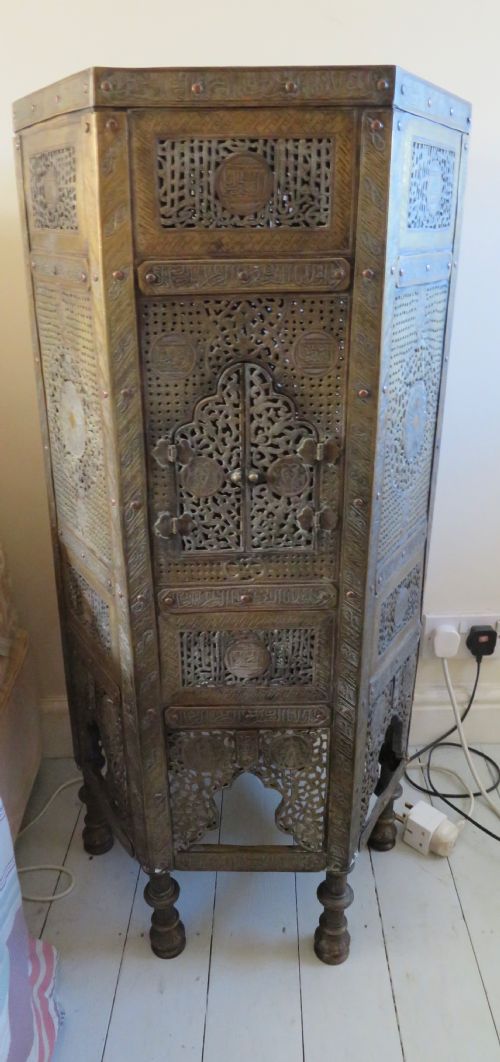


Islamic Inlaid Side Table
These Islamic inlaid side table examples bring geometric intricacy and rich material contrast straight into a room, offering both practical surface space and distinct historical character.
Islamic Inlaid Side Table
An Islamic inlaid side table brings together centuries of decorative tradition through compact occasional furniture designed for practical living spaces. Buyers searching this phrase will find a variety of geometric forms, from octagonal lamp tables to hexagonal occasional tables intended for everyday use.
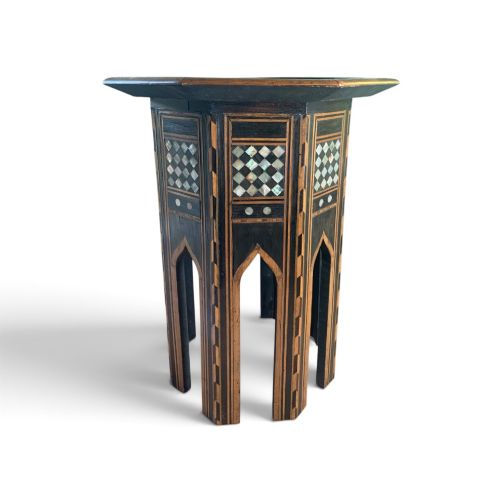
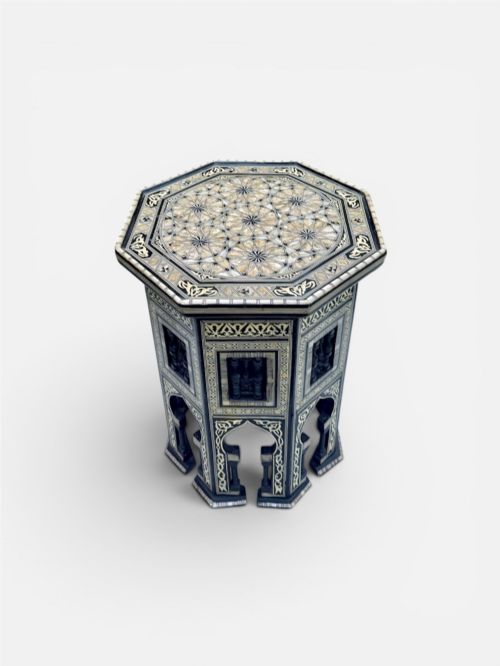
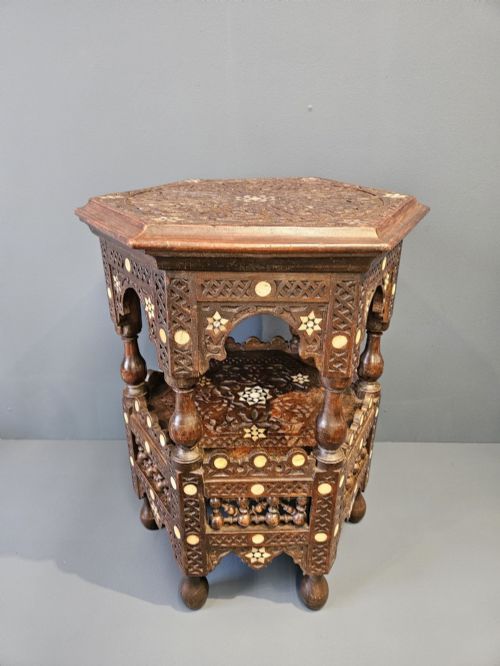
The pieces appearing on this page span several decades of production, predominantly originating from the nineteenth and early twentieth centuries. Makers worked within distinct regional idioms, including Moorish Revival, Mamluk Revival, and Syrian Islamic Revival styles.
Most examples function as versatile side tables, lamp tables, or occasional tables suitable for sitting rooms and hallways. Buyers frequently encounter hexagonal and octagonal surfaces designed to fit comfortably beside seating.
How they were made
Craftsmen built the underlying structures using timber bases such as walnut and hardwood, providing a stable foundation for intricate decorative schemes. These wooden frames were then meticulously decorated with detailed surface work.
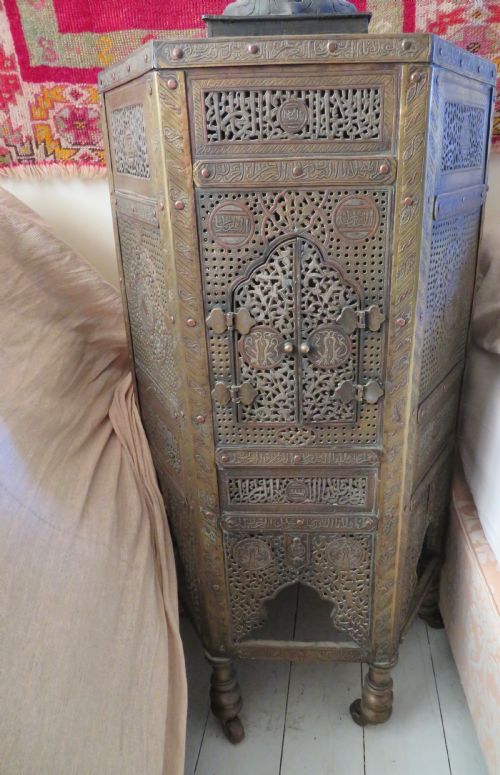
Workers applied contrasting materials by hand, setting pieces of mother-of-pearl and bone directly into the wooden framework. Metal elements also appear, incorporating brass, copper, and white metal through openwork and inlay techniques.
Listings feature walnut, hardwood, mother-of-pearl, bone, brass, copper, and white metal across nineteenth and early twentieth-century periods.
What varies in quality
Quality rests upon the precision of the geometric inlay and the tightness of the joints where different materials meet. Finer examples maintain crisp alignment between the mother-of-pearl, bone, and timber elements.
The complexity of the surface pattern dictates the level of craftsmanship, with dense mosaic arrangements requiring greater skill than simpler compositions. The selection of timber also influences the overall weight and durability of the piece.
Liberty and Co
The Islamic Inlaid Side Table Glossary
- Kursi
- A low occasional table or stool often used as a Quran stand or general support surface. These hexagonal or octagonal forms frequently showcase intricate metal or mother-of-pearl inlay.
- Cairoware
- Metalwork pieces originating from Cairo, typically made of brass and inlaid with copper, silver, or gold. The term describes items featuring dense Islamic or orientalist decorative motifs.
- Mother-of-Pearl
- The iridescent inner layer of mollusc shells, harvested for decorative inlay. Craftsmen cut this material into tiny geometric tesserae to catch the light.
- Moorish Revival
- An architectural and decorative style popular in the nineteenth century that reinterprets traditional North African and Spanish Islamic design. Furniture in this style uses horseshoe arches, intricate carving, and dense surface patterns.
- Occasional Table
- A small, movable table designed for specific, intermittent uses within a room. These pieces provide surface space without dominating the room's layout.
Islamic Inlaid Side Table: Frequently Asked Questions
What is a kursi table?
A kursi is a traditional low table or stand, often hexagonal or octagonal in shape. These pieces frequently served multiple purposes, including supporting sacred texts or functioning as everyday coffee and occasional tables.
The form is deeply rooted in Middle Eastern craftsmanship, traditionally featuring openwork metal or detailed wood inlay. They sit comfortably in modern living spaces as striking central accents.
How do I care for mother-of-pearl inlay?
Maintaining inlaid furniture requires keeping the wood and shell elements away from direct heat sources and excessive moisture. Regular dusting with a soft, dry cloth preserves the polished surface without damaging the delicate tesserae.
Applying a mild, appropriate wax occasionally helps nourish the surrounding walnut or hardwood base. Avoid harsh chemical cleaners that can degrade the adhesive holding the bone and pearl in place.
Where were these tables made?
These pieces originate from various centres of Islamic craftsmanship, including workshops in Cairo, Syria, and North Africa. European demand during the nineteenth century also inspired local makers to produce items in revivalist styles.
Craftsmen in these regions utilised local timbers and traditional geometric patterns passed down through generations. This created a rich exchange of design ideas between Eastern workshops and Western retailers.
How do I date an inlaid table?
Dating relies on examining the construction methods, timber choice, and the specific style of revivalism present in the piece. Nineteenth-century examples often display hand-cut bone and shell work fitted into solid hardwood frames.
Later pieces from the early twentieth century may show subtle shifts in hardware, finish, and the standardisation of geometric motifs. Comparing the decorative vocabulary to documented revival periods helps narrow down the decade.