
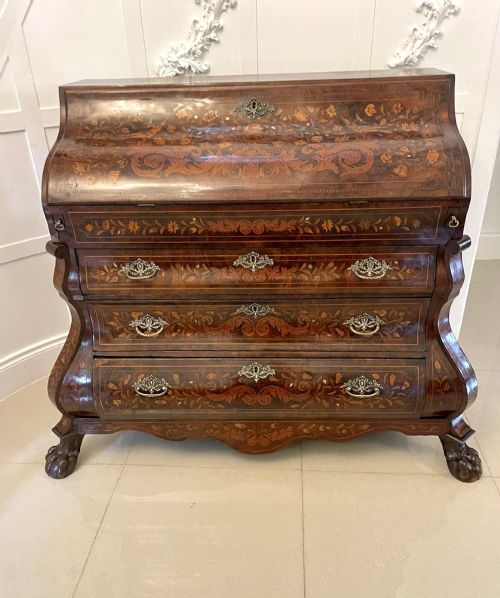


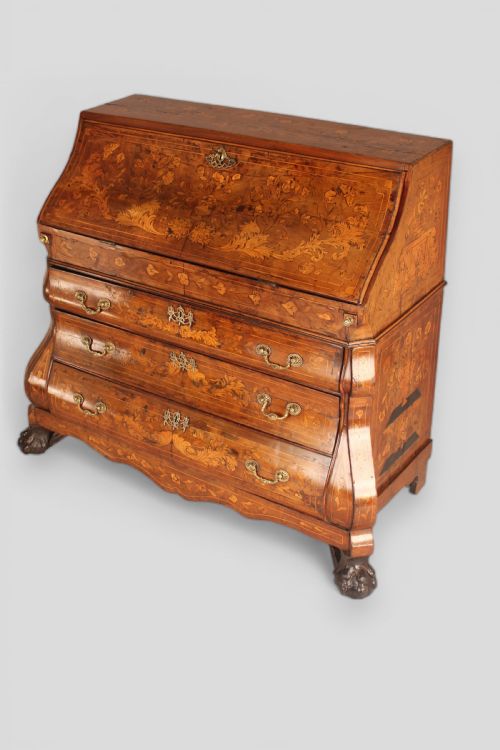


Bombe Marquetry Writing Desk
A bombe marquetry writing desk brings curved mahogany, walnut and floral inlay into a room with seventeenth-century spirit.
Bombe Marquetry Writing Desk
A bombe marquetry writing desk presents a distinctive swelling outline that sets it apart from straight-sided furniture. Bureau desks and bureau bookcases form the primary types found here, often built with sloping lids or cylinder fronts.
Most examples originate from the eighteenth century or belong to nineteenth-century revivals. Dutch Baroque and Rococo influences shape the dominant forms, bringing floral marquetry across walnut and mahogany surfaces.
Judging quality and craftsmanship
The sophistication of the floral marquetry dictates the visual weight and artistic merit of a piece. Finer examples display meticulous cutting of fruitwoods, creating naturalistic shading and botanical detail across the walnut or mahogany ground.
The execution of the swelling bombé profile reveals the maker's skill in handling curved timber carcases. Substantial proportions and coherent styling from periods like the eighteenth century elevate certain pieces above later revival work.
Morison of Edinburgh
The Bombe Marquetry Writing Desk Glossary
- Bombé
- A swelling or bulging contour found on the front and sides of furniture. This billowing profile originated in continental cabinetmaking during the eighteenth century.
- Marquetry
- Decorative veneer work forming pictures or patterns using various coloured woods. Craftsmen assemble these thin wood sections into floral designs on the desk surface.
- Burr Walnut
- Timber taken from a walnut tree growth, showing intricate and swirling grain patterns. It provides a highly textured surface for cabinet fronts.
- Bureau Bookcase
- A writing desk with a fitted bureau section below a glazed or panelled cabinet top. These tall combination pieces offer dual storage and writing functions.
Bombe Marquetry Writing Desk: Frequently Asked Questions
What is a bombe marquetry writing desk?
A bombe marquetry writing desk is a form of antique furniture featuring bulging, curved sides and intricate floral wood inlay. These pieces typically incorporate a sloping writing flap or cylinder front hiding internal compartments.
Originating largely in eighteenth-century workshops, they combine functional writing surfaces with ornamental burr walnut or mahogany veneers.
How do I date a bureau bookcase?
Dating relies on examining the timber species, construction methods, and stylistic details such as floral marquetry and hardware. Eighteenth-century models often display distinct Dutch baroque or rococo proportions.
Later nineteenth-century revival pieces utilise similar forms but reflect the manufacturing standards and design preferences of their specific production era.
Where were these desks made?
Many examples originate from the Netherlands, reflecting strong Dutch design traditions in floral marquetry and swelling cabinet forms. Other pieces emerge from British workshops influenced by continental styles.
Specific regional makers and broader European movements both contributed to the variety seen across these writing desks.
How should I care for walnut veneer?
Walnut veneer requires stable indoor humidity and protection from direct sunlight to prevent drying and fading. Regular dusting with a soft, dry cloth preserves the polished surface.
Avoid placing these desks near heat sources to protect the delicate fruitwood inlay and underlying timber carcase.