
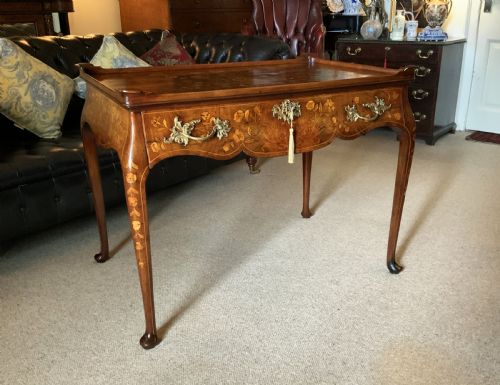


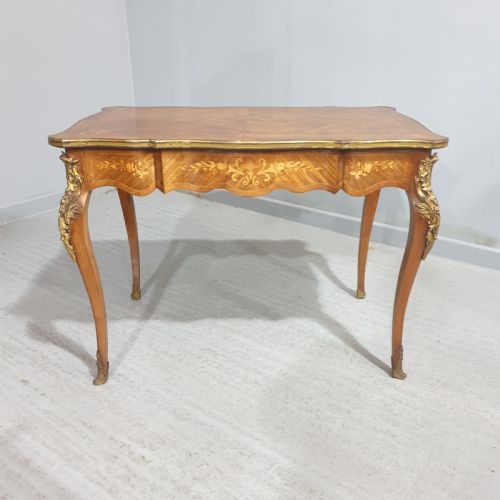


Warm Brown Marquetry Desk
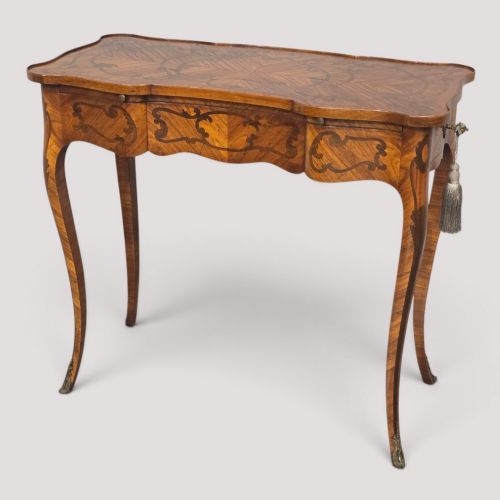
A warm brown marquetry desk brings rich floral and geometric veneers into a room, offering both a functional workspace and a striking decorative centrepiece.
Warm Brown Marquetry Desk
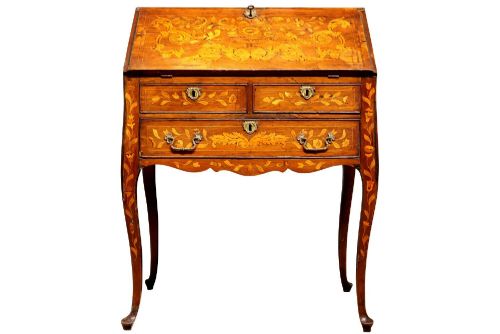
A warm brown marquetry desk combines intricate wood inlay with practical writing surfaces, spanning periods from the eighteenth century to the Edwardian era. These pieces range from substantial Dutch bureaux to compact French writing tables and delicate ladies writing desks.
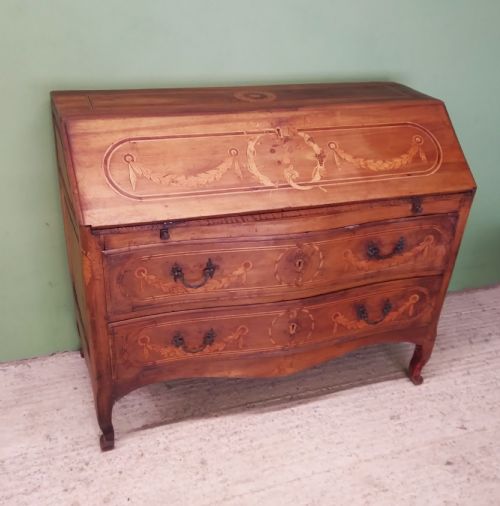
The most common examples encountered here are continental pieces featuring floral and bird motifs, alongside Edwardian satinwood and mahogany creations. Desks and bureaux form the core of the selection, offering fitted interiors and drawers alongside decorative veneer work.
Materials and construction
Cabinet makers utilised a foundation of walnut, mahogany, fruitwood, and satinwood, applying marquetry veneer across the surfaces to create detailed pictorial and geometric patterns. Ormolu mounts and brass hardware frequently accent the woodwork, particularly on French revival and Dutch rococo forms.
Veneers were carefully cut and fitted by hand, allowing craftsmen to contrast deep brown tones with lighter woods like satinwood and fruitwood. This meticulous cutting technique produced the elaborate floral, bird, and scroll designs visible across the eighteenth and nineteenth century pieces.
Listings span the eighteenth century through the Edwardian era, incorporating walnut, mahogany, fruitwood, satinwood, and kingwood veneers.
Assessing quality and craftsmanship
Quality rests in the precision of the veneer work and the depth of the timber tones, where superior examples exhibit seamless integration of floral and bird motifs across curved surfaces. The complexity of the internal fittings, such as secret drawers and compartments within a bureau, further separates standard pieces from finer examples.
The choice of secondary woods and the refinement of brass or ormolu mounts indicate the original workshop standard. Finer desks maintain crisp inlay lines and rich patination on the walnut, mahogany, and fruitwood surfaces over centuries of use.
The Warm Brown Marquetry Desk Glossary
- Marquetry veneer
- Thin slices of decorative wood applied to a furniture structure to form intricate pictures or patterns. These veneers define the visual appeal of these writing pieces.
- Bureau
- A sloping desk used for writing, typically opening to reveal internal pigeonholes and small drawers. Many examples in this selection incorporate elaborate floral inlay across the fall front.
- Bonheur du jour
- A light ladies writing desk featuring a small tiered superstructure with shelves or drawers above the main writing surface. These pieces often showcase fine kingwood and marquetry work.
- Ormolu
- Gilded bronze mounts applied to furniture for decorative effect. They frequently accent the corners and legs of French style desks.
- Satinwood
- A durable, lustrous wood with a yellow-brown sheen used extensively in Edwardian writing furniture. It provides a bright contrast to darker walnut and mahogany elements.
Warm Brown Marquetry Desk: Frequently Asked Questions
Can I use this desk daily?
These desks served practical writing functions historically and remain suitable for regular use when treated with care. Placing a protective blotter on the writing surface prevents ink stains and surface scratches on antique veneers.
Ensure the room maintains stable humidity levels to prevent the timber from expanding and causing the marquetry veneer to crack or lift. Heavy items should be kept away from delicate sloping writing flaps.
How do I distinguish French styles?
French desks from the nineteenth century often display fluid cabriole legs, asymmetrical rococo curves, and polished ormolu mounts. Makers utilised kingwood and satinwood alongside intricate floral marquetry to emulate earlier royal court aesthetics.
In contrast, Dutch pieces typically feature more robust proportions with extensive floral and bird marquetry covering every available surface. Understanding these distinct decorative traits helps identify the regional origin of each desk.
What is a bureau platt?
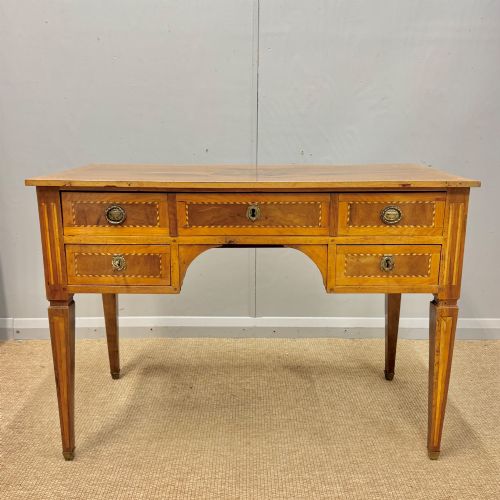
A bureau platt is a large, flat-topped writing table featuring drawers within the frieze rather than a sloping fall-front lid. These tables were designed to stand free in the middle of a room, finished with marquetry on all sides.
They provide an expansive writing surface while maintaining decorative elegance through detailed wood inlay and bronze or brass mounts.