
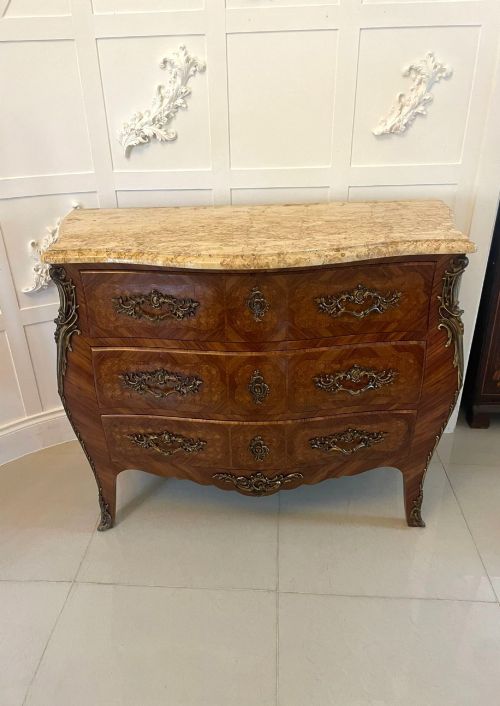
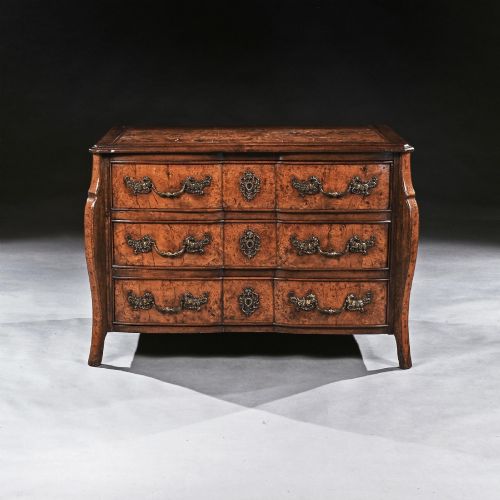
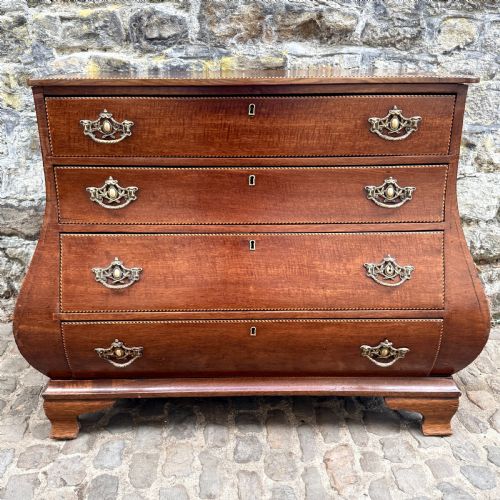
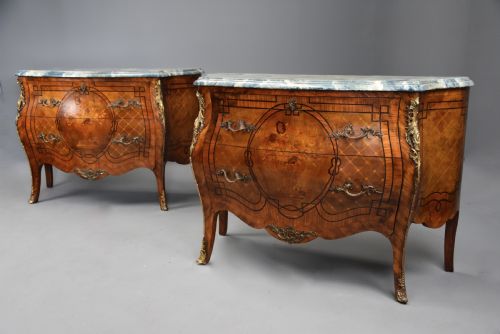
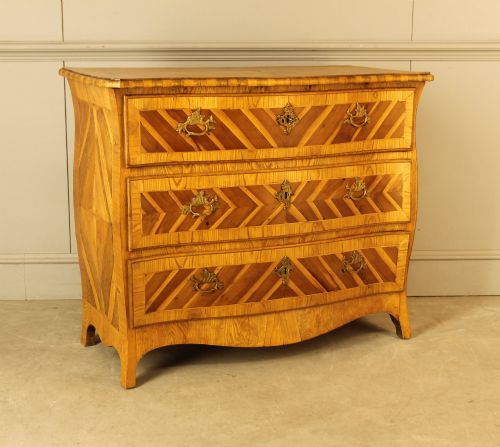
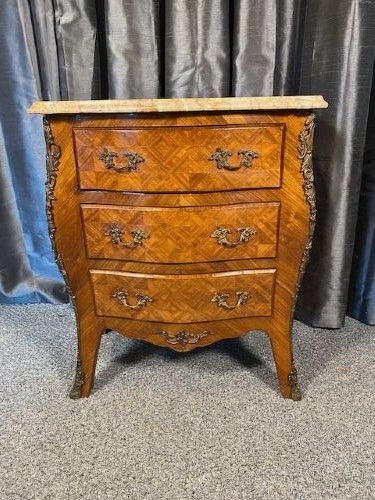
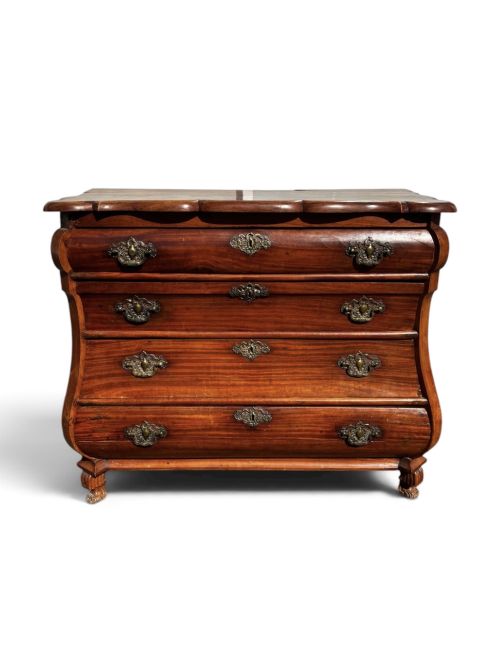
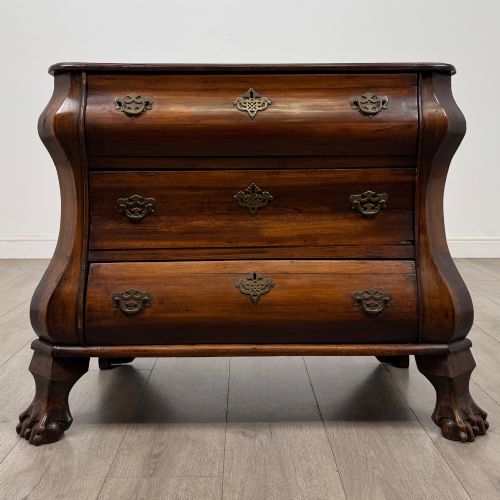
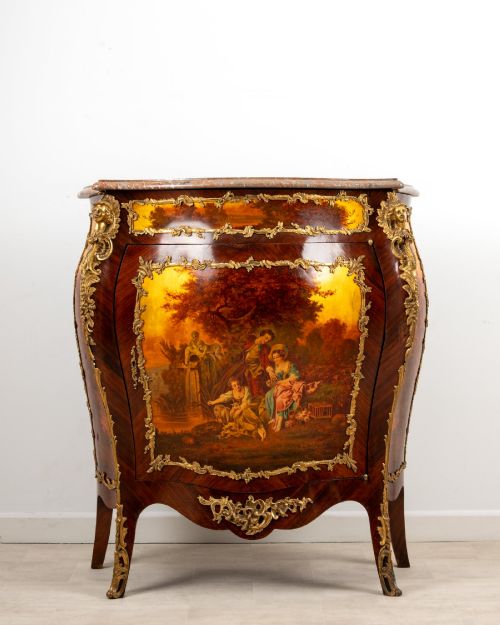
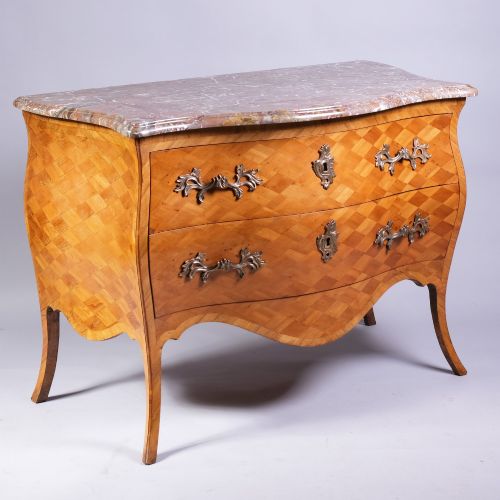
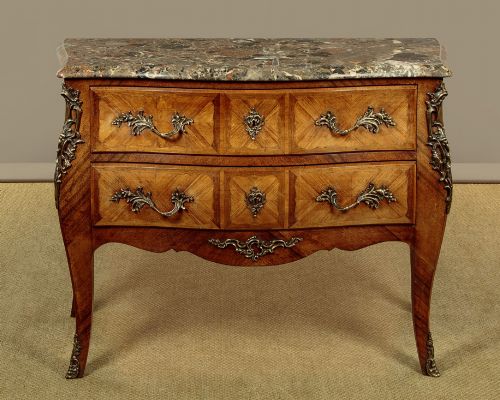
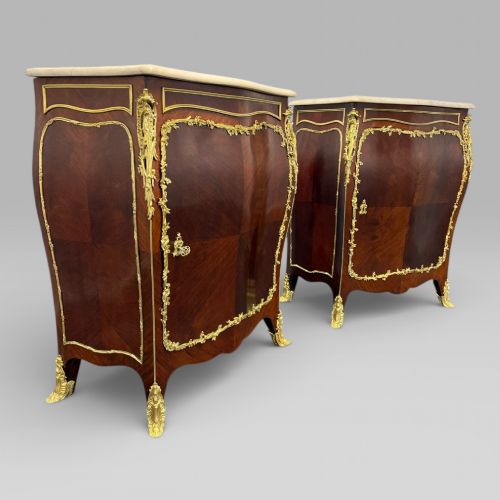
Bombe Commode Chest
When seeking a bombe commode chest, you are looking at swelling profiles and rich veneers designed for formal rooms.
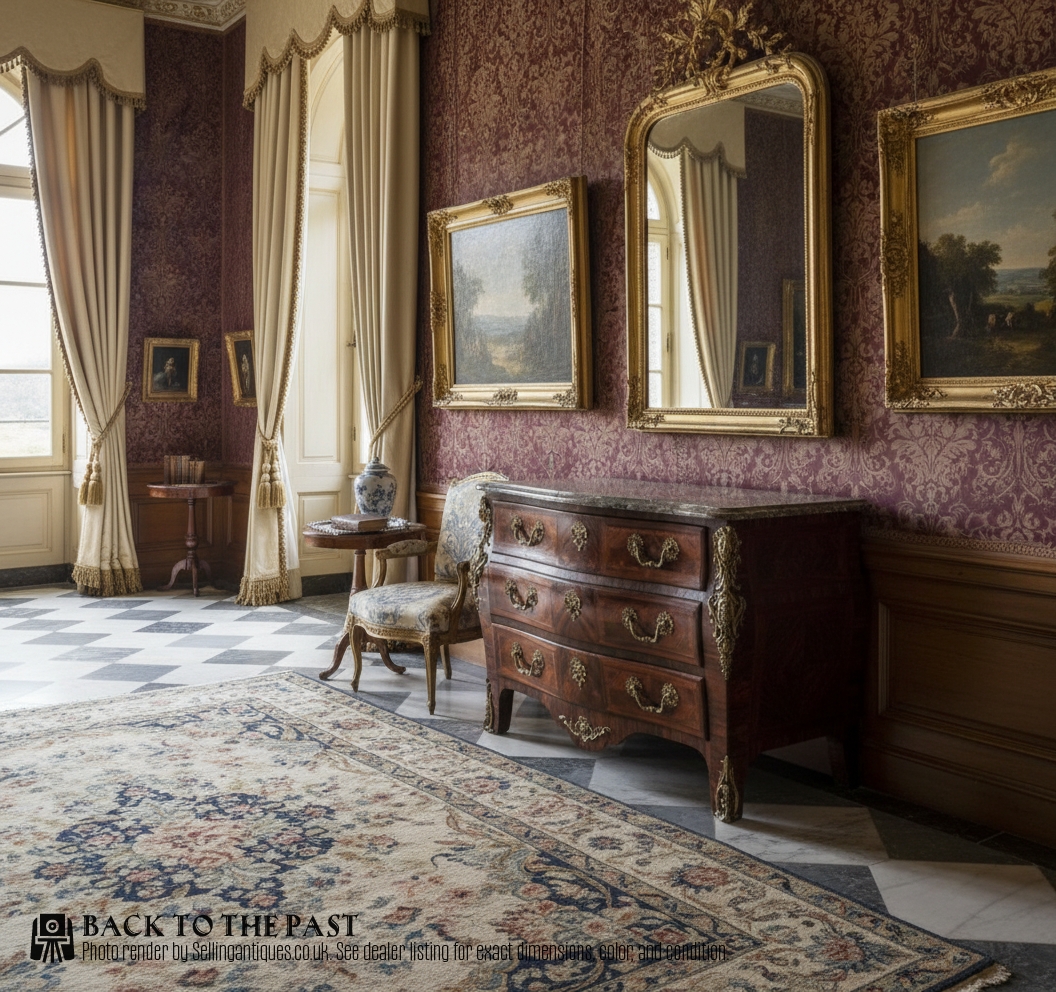
Bombe Commode Chest
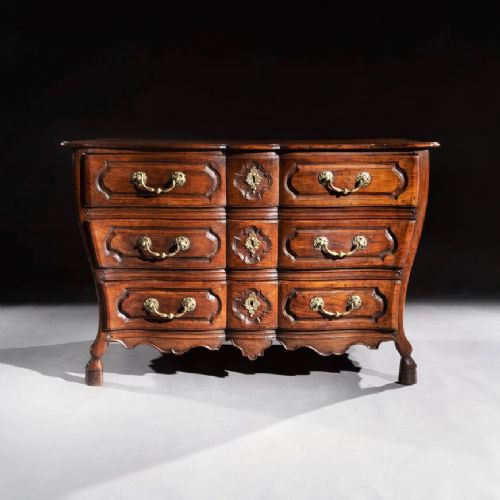
A bombe commode chest displays a distinctive outward-swelling front and sides, originating primarily from eighteenth-century cabinet-making traditions across France, the Netherlands, and Sweden.
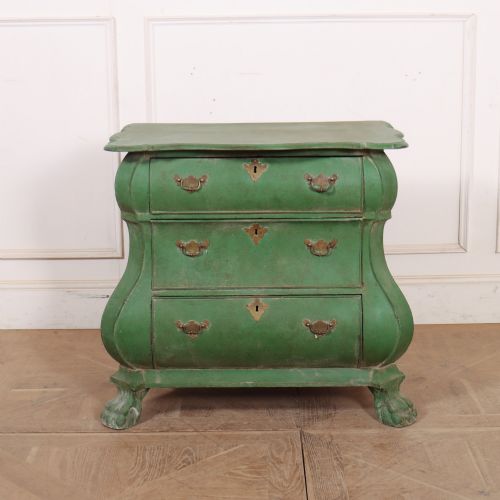
The most common examples encountered on this page date from the nineteenth and early twentieth centuries, drawing heavily upon earlier Louis XV and Dutch Baroque styles.
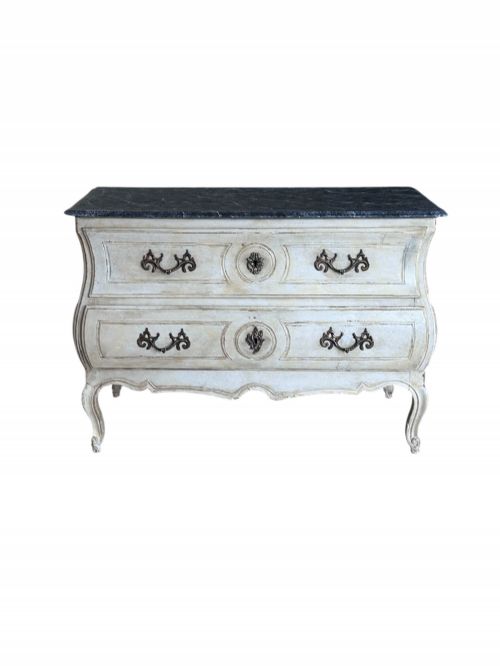
These pieces function principally as decorative storage units, frequently topped with shaped marble slabs and fitted with deep drawers for domestic use.
How They Were Made
Cabinet-makers constructed the complex curved carcasses using native and exotic timbers such as oak, walnut, mahogany, and chestnut as a supportive base.
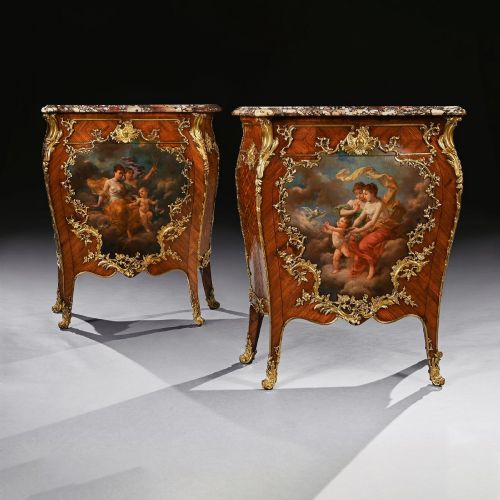
Surfaces were finished with intricate marquetry and parquetry veneers, often combining kingwood, burr walnut, and fruitwoods in geometric or floral patterns.
Gilt bronze, ormolu mounts, and heavy brass handles were cast and chased to accent the sweeping contours, while marble tops were cut and polished to match the serpentine outlines.
Materials recorded across the archive range from solid satinwood and burr elm to exotic kingwood veneers paired with shaped Italian marble.
What Varies in Quality
The standard of execution depends heavily on the precision of the veneer work and the fluidity of the carcass curvature, where stiffer lines indicate simpler production.
Ornate cast mounts and heavy marble tops distinguish high-end commissions from simpler provincial pieces built for utilitarian domestic settings.
The integrity of the internal drawer construction and the preservation of original mounts and surface patination determine the overall standing of an individual piece.
E. Kahn
The Bombe Commode Chest Glossary
- Bombe
- A swelling, bulging contour of the front and sides of a piece of furniture. This characteristic shape requires advanced carpentry to construct curved drawers and frames.
- Ormolu
- Gilded bronze used for decorative mounts and handles. Makers cast and chased these metal fittings to ornament the corners and aprons of fine cabinets.
- Marquetry
- Inlaid patterns of wood veneers forming pictorial or geometric designs. Craftsmen assembled contrasting timbers like kingwood and walnut into thin sheets before applying them to the carcass.
- Parquetry
- Geometric wood inlay arranged in repetitive patterns such as cubes or chequers. This technique demonstrates precision joinery across flat and curved surfaces.
- Vernis Martin
- A type of simulated Japanese lacquer developed in France during the eighteenth century. It employs multiple layers of resin varnish to create glossy painted finishes.
Bombe Commode Chest: Frequently Asked Questions
What is a bombe commode chest?
A bombe commode chest is a set of drawers characterised by outward-curving fronts and sides. These pieces originated in continental Europe as decorative storage furniture for formal chambers.
Craftsmen shaped the timber frames to create organic, sweeping silhouettes, often finishing them with marble tops and elaborate metal mounts.
How were they used historically?
These chests served primarily as principal storage furniture in bedrooms and parlours. Wealthy households utilised them to hold linens, clothing, and valuables.
Due to their decorative presence, they were positioned prominently against walls in reception rooms to display status and artistic taste.
How do I style one in a modern home?
A bombe commode chest works well as a focal point in a hallway, living room, or bedroom. Placing a mirror or artwork above the piece balances its heavy visual weight.
Keep surrounding decor simple to let the curved wood veneers and detailed mounts remain the central visual feature.
How can I tell different periods apart?
Eighteenth-century examples typically display hand-cut construction details and native timbers relevant to their specific region of origin. Later nineteenth- and twentieth-century revivals often incorporate machine-cut elements and stylized interpretations of earlier motifs.
Examining the underside, drawer linings, and the crispness of the bronze mounts helps establish the era of manufacture.