


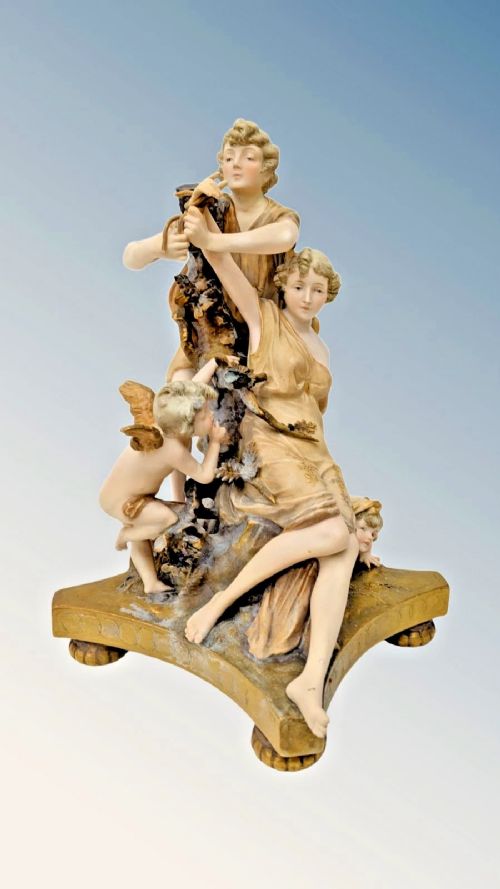


Bohemian Porcelain Statue
A bohemian porcelain statue brings tactile elegance to a room, capturing the graceful curves of Art Nouveau maidens and detailed animal studies.
Bohemian Porcelain Statue
When you search for bohemian porcelain statue, you encounter sculptural ceramics spanning the nineteenth and early twentieth centuries, dominated by figures and figurative groups. These pieces range from monumental maidens and classical water carriers to rural workers, sporting dogs, and modernist flapper girls.
The selection on this page centres heavily on works produced in Bohemia during the late Victorian, Edwardian, and Art Deco periods. Figures of graceful women, shepherdesses, and animals predominate, often modelled with considerable attention to gesture and costume.
Makers such as Royal Dux and Ernst Wahliss define the forms available, offering everything from single character studies to large pairs and elaborate figural centrepieces. Buyers find both glazed and biscuit porcelain finishes reflecting the shifting aesthetic tastes from historicism to sleek modernism.
How they were made
The manufacture of these statues relies on high-grade porcelain, ceramic bodies, and bisque porcelain, shaped into intricate moulds to capture delicate folds of drapery and facial expressions. Glaze and biscuit surfaces are frequently enriched with enamel painting and touches of gilt or gold leaf.
Modelling requires skilled artisans who shape figures such as water nymphs, animals, and classical youths before firing at high temperatures. Detail work includes hand-painted enamel colours and applied metallic highlights that define the transitional styles from the nineteenth century into the Art Deco era.
Bohemian Porcelain Statue Retail Price Guide 2026
Typical asking prices for bohemian porcelain statue among the pieces listed under this phrase on Sellingantiques today, from the lower quarter to the upper quarter. They describe what is for sale here now, not the wider market.
Several figures depict dogs carrying game or puppies, proving that Victorian households appreciated a well-modelled hound just as much as a graceful water nymph.
What varies in quality
The application of enamel and gilt distinguishes standard production from exceptional work. Finer examples display subtle tonal shading in the glaze and carefully burnished gold leaf that accentuates the stylistic lines of Art Nouveau and Neoclassical designs.
Royal Dux Bohemia·Ernst Wahliss·Alois Hampel·H Schubert
The Bohemian Porcelain Statue Glossary
- Bisque porcelain
- Unglazed ceramic material that produces a matte, marble-like surface texture. This finish highlights fine sculptural details and delicate modelling.
- Art Nouveau
- A design style characterised by flowing, organic lines and floral motifs. It heavily influences the graceful female figures and water nymphs of the period.
- Art Deco
- A later aesthetic defined by stylised geometric forms and streamlined shapes. It appears in figures representing modern women of the interwar years.
- Gilt
- A thin layer of gold applied to the porcelain surface. It highlights decorative elements and trims on garments or bases.
- Figurine
- A small carved or moulded statuette representing a human or animal form. These objects serve primarily decorative functions in domestic interiors.
Bohemian Porcelain Statue: Frequently Asked Questions
What is a bohemian porcelain statue?
It is a decorative sculptural ceramic piece created in the Bohemian region during the nineteenth and early twentieth centuries. These works include figures of maidens, animals, and allegorical subjects modelled in porcelain.
They reflect prevailing artistic movements such as Victorian Orientalism, Art Nouveau, and Art Deco. Makers utilised fine glazes, enamel, and gilt to finish the surfaces.
How were these figures used?
These statues functioned primarily as indoor ornamentation for mantelpieces, sideboards, and dedicated display tables. Larger examples served as dramatic centrepieces in domestic interiors.
Animals, water carriers, and literary figures provided narrative interest for Victorian and Edwardian collectors. They added colour and sculptural presence to formal reception rooms.
How do I care for my statue?
Keep porcelain figures away from direct sunlight and areas prone to heavy moisture or temperature fluctuations. Dust them gently with a soft, dry brush.
Avoid using harsh cleaning agents or water on gilded and enamelled surfaces. Handle the pieces by their main body rather than protruding limbs or delicate accessories.
How can I date a piece?
Examine the stylistic markers such as classical drapery for nineteenth-century works or streamlined attire for 1920s examples. Form, modelling style, and factory marks provide key chronological clues.
Art Nouveau curves indicate the turn of the twentieth century, while geometric clothing points towards later Art Deco production. Model numbers and factory stamps help confirm the exact era of manufacture.