



Art Nouveau Ceramic Statue
An art nouveau ceramic statue brings organic line and sculptural presence into a room, capturing the flowing grace typical of the turn of the twentieth century.
Art Nouveau Ceramic Statue
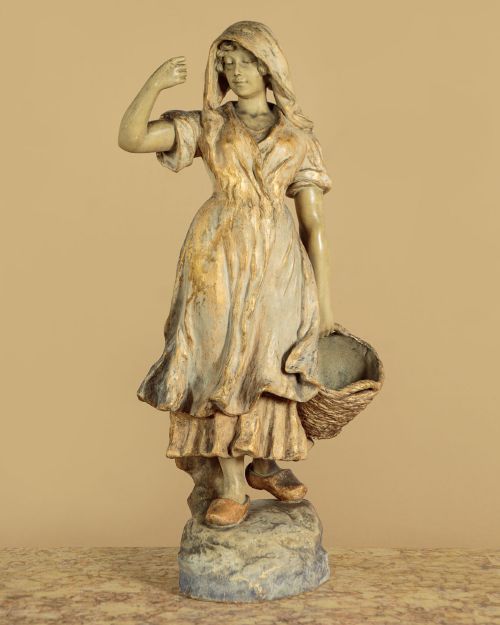
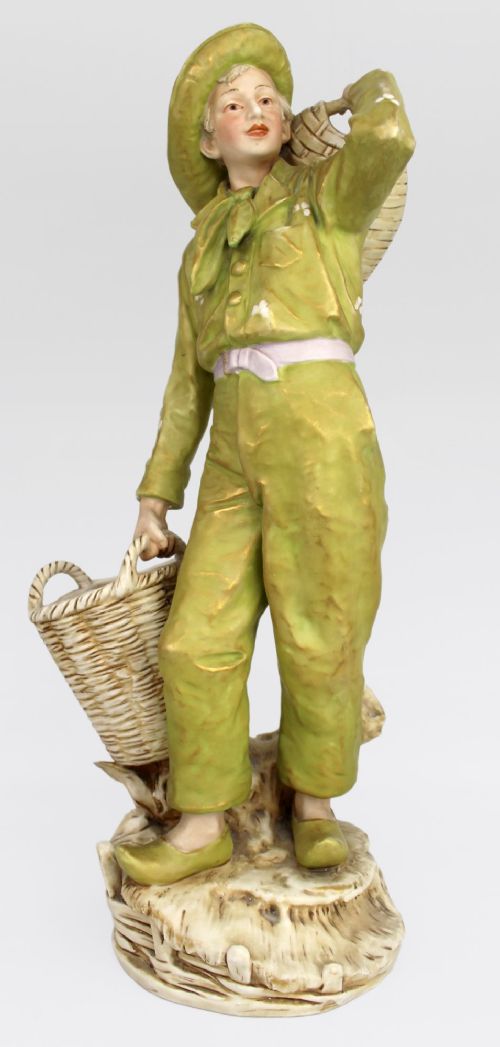
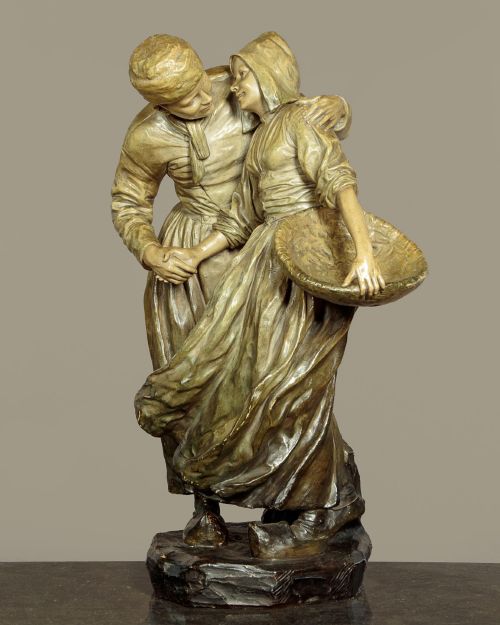
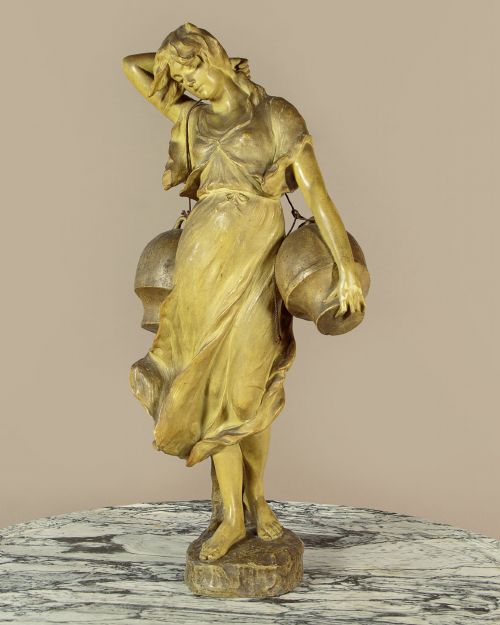
When searching for an art nouveau ceramic statue, collectors encounter figural works shaped during the late nineteenth century and the early decades of the twentieth century. These pieces predominantly take the form of graceful maidens, water carriers, nymphs, and pastoral figures modelled with characteristic sinuous curves.
The versions most commonly met on this page span the 1890s through to the 1910s, originating primarily from Austrian and French workshops. Figures range from modest shelf-height statuettes to monumental centrepieces and figural groups.
How they were made
Makers utilised porcelain, earthenware, and terracotta as the primary bodies for these sculptures, often shaping them through slip casting or terracotta moulding. Surfaces were then finished with detailed glazes, painted highlights, or occasionally bronzed slip coatings.
Many works incorporate delicate touches of gilt or biscuit porcelain to accentuate the texture of hair, drapery, and natural elements.
Puppies and kittens frequently share the stage with maidens, proving that turn-of-the-century sculptors knew the undeniable appeal of small animals.
What varies in quality
The distinction between ordinary and exceptional pieces lies in the crispness of the modelling and the sensitivity of the hand-painted surface details. Sculptures modelled by recognised designers display finer anatomical articulation and more dynamic drapery than standard factory output.
Larger monumental figures and numbered early models demand greater technical skill in firing and typically exhibit superior glaze control and presence.
Goldscheider·Royal Dux Bohemia·Ernst Wahliss·George Kemper·Luca Madrassi·Georges Morin
The Art Nouveau Ceramic Statue Glossary
- Slip cast
- A manufacturing technique where liquid clay slip is poured into a plaster mould to create hollow figures. This method permitted mass production of complex sculptural forms while maintaining consistent proportions.
- Terracotta
- Baked red or buff earthenware clay used extensively for figurative sculpture. It provides a warm, porous surface that accepts paint and bronzed finishes effectively.
- Gilt
- A thin layer of gold applied to specific areas of the ceramic surface to highlight ornaments, borders, or clothing details. It creates a subtle contrast against matte glazes.
- Centrepiece
- A large decorative figural grouping designed to sit centrally on a table or pedestal. These pieces often feature elaborate water nymphs, maidens, or allegorical subjects.
Art Nouveau Ceramic Statue: Frequently Asked Questions
What materials are these statues made from?
These figures are constructed primarily from porcelain, terracotta, and earthenware bodies. Makers finished them using various glazes, paint, and occasionally bronzed slip or gilt highlights.
Some delicate works use unglazed biscuit porcelain to achieve a matte, marble-like finish that emphasises the sculptural modelling.
How do I identify an art nouveau piece?
Look for flowing, organic lines inspired by natural forms, such as cascading hair, swirling drapery, and motifs involving water plants or maidens. The postures of the figures tend to be graceful and asymmetric rather than rigid.
The modelling reflects the aesthetic movements prevalent between the late nineteenth century and the Edwardian era.
How were these statues used originally?
Many of these pieces served as decorative ornaments, mantelpiece displays, or large figural centrepieces for affluent homes. Sculptures depicting maidens, water carriers, or pastoral subjects added an artistic and cultured atmosphere to domestic interiors.
Larger monumental works were often displayed on pedestals in reception rooms or halls.
How should I display them at home?
Place statues on sturdy surfaces away from high-traffic areas where they might be accidentally knocked. Stable mantelpieces, sideboards, or dedicated display pedestals provide suitable support for heavier terracotta and porcelain figures.
Keep them out of direct sunlight to protect painted surfaces and delicate glazes over time.
Can I tell the age from the markings?
Factory stamps, impressed model numbers, and artist signatures often appear on the base or reverse of the sculpture. Comparing these numbers and impressed marks with period records helps narrow down the production era.
Early numbered models and specific factory applied stamps provide reliable clues to the date of manufacture.