






Bocage Ceramic Figure
A bocage ceramic figure brings a dense canopy of modelled foliage behind eighteenth and nineteenth century figures in porcelain and earthenware.
Bocage Ceramic Figure
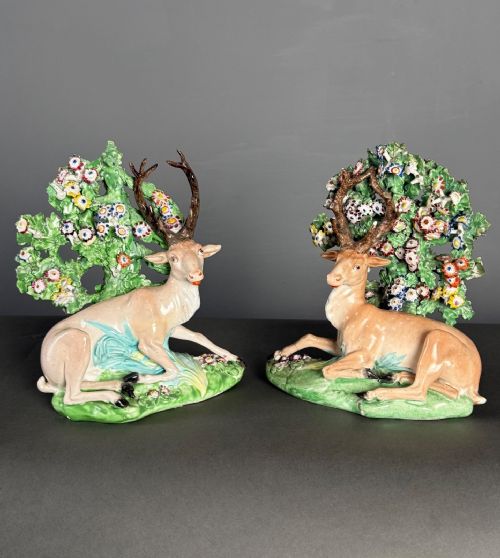
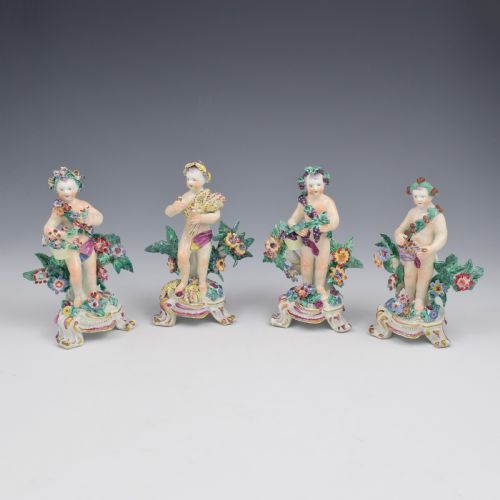
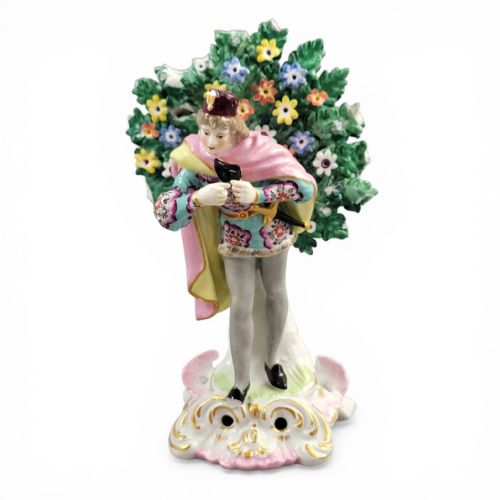
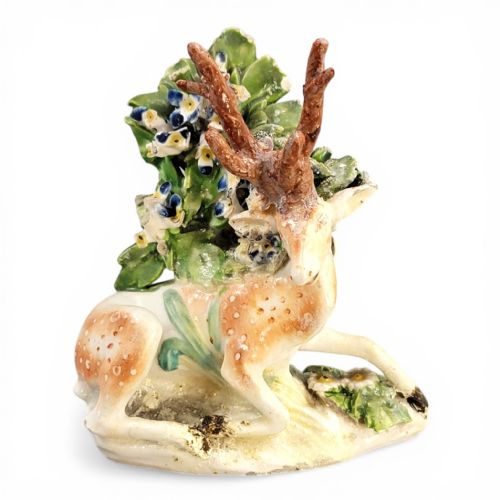
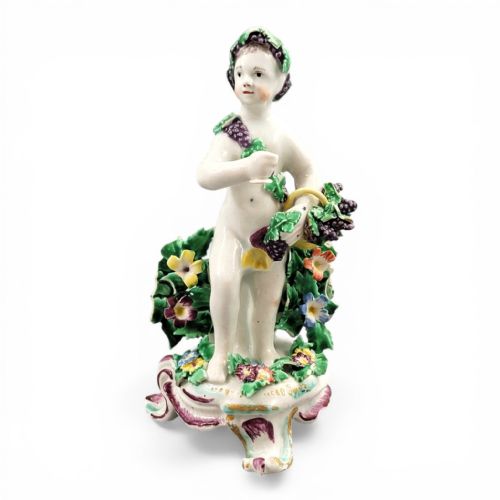
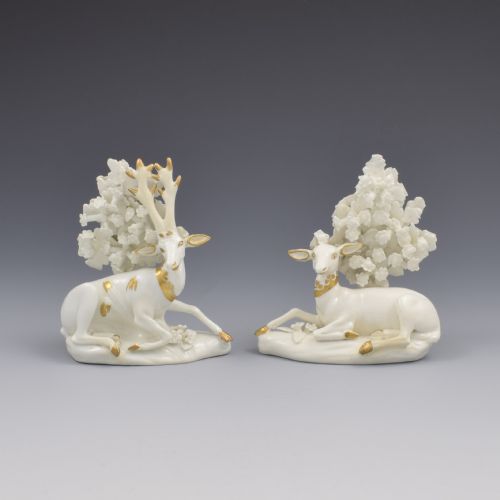
A bocage ceramic figure depicts subjects such as putti, musicians, actors, and animals framed by applied leaves and branches. These pieces span the eighteenth and nineteenth centuries, originating from English factories like Derby, Bow, and Staffordshire, alongside later French and continental interpretations.
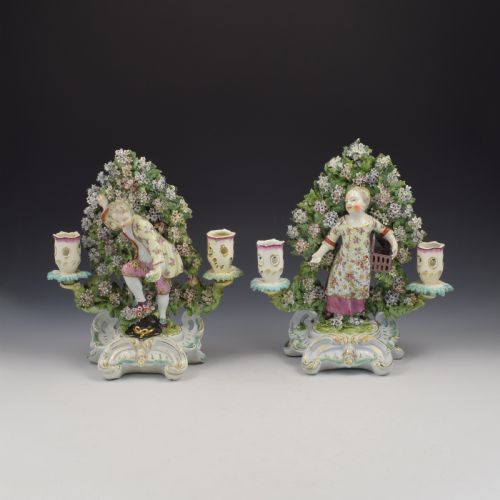
Most examples on this page comprise porcelain and earthenware figurines, candlestick figures, and spill vases shaped in Georgian and Victorian workshops. The leafy background acts as a structural support and a decorative arbor for pastoral and allegorical scenes.
How They Were Made
Makers shaped soft-paste porcelain and earthenware by hand and in moulds, building up intricate background foliage leaf by individual leaf. Enamel colours and gold leaf were applied over or under the glaze before a final firing fixed the palette.
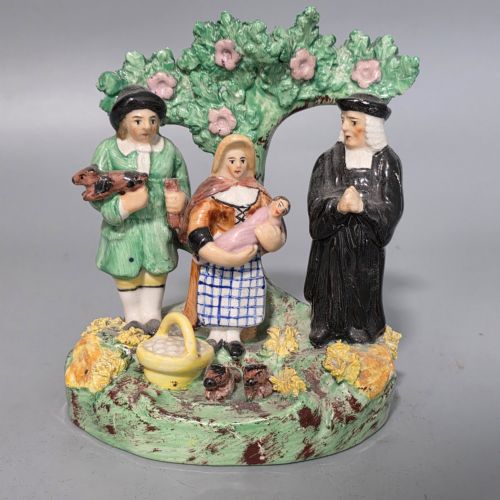
Some nineteenth-century potters included loyal dogs sitting faithfully beneath weeping sheep and musicians.
What Varies in Quality
Quality rests on the crispness of the modelling in the foliage and the delicacy of the painted details on the figures. Early eighteenth-century pieces often show finer hand-forming in the leaves, whereas later nineteenth-century versions rely on different moulding techniques.
The survival of the fragile leafy branches determines the standing of a piece, as the intricate porcelain and earthenware leaves are vulnerable to loss over centuries of handling.
Derby·Bow·Edmé Samson·Walton
The Bocage Ceramic Figure Glossary
- Bocage
- An applied background of ceramic leaves and branches that frames porcelain or earthenware figures. It is characteristic of eighteenth and nineteenth century pastoral designs.
- Soft-Paste Porcelain
- A vitreous ceramic composition fired at lower temperatures than hard paste, developed by early English and continental factories. It yields a warm, slightly translucent body.
- Pearlware
- A fine earthenware developed in the late eighteenth century with a bluish glaze that pooled in recesses. It formed the body of many Staffordshire figures.
- Spill Vase
- A hollow ceramic figure incorporating a small cylinder designed to hold wooden spills for lighting fires. These combine utility with decorative modelling.
- Patch Mark
- A small unglazed scar on the base of a porcelain figure left by the kiln furniture supporting the piece during firing. This mark helps date eighteenth-century Derby works.
Bocage Ceramic Figure: Frequently Asked Questions
What is a bocage figure?
A bocage figure is a ceramic sculpture featuring a leafy arbor background behind human or animal subjects.
These pieces were produced in porcelain and earthenware by factories across England and Europe during the Georgian and Victorian eras.
How do I clean my ceramic figure?
Dust these delicate pieces gently with a soft, dry brush to protect the fragile applied leaves.
Water and cleaning agents can damage painted enamel surfaces and historical glazes.
How do I date a porcelain figure?
Examine the paste, glaze characteristics, and any factory marks on the unglazed base.
Early pieces show soft-paste bodies and patch marks, while Victorian examples often display heavier moulding and different enamel palettes.
Were these figures used as candlesticks?
Many examples incorporate sockets designed to hold candles alongside the central sculptural group.
Makers combined illumination with decorative pastoral scenes for dining tables and mantelpieces.