



Earthenware Spill Holder
An earthenware spill holder is a functional ceramic vessel designed to hold taper candles for lighting pipes or lamps, prized for its charming figurative sculpture.
Earthenware Spill Holder
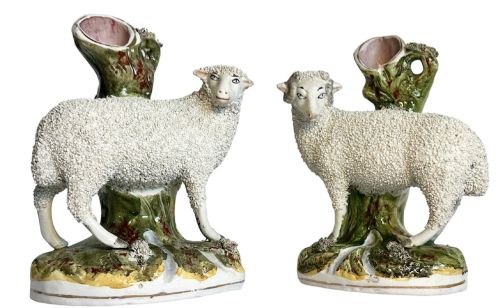
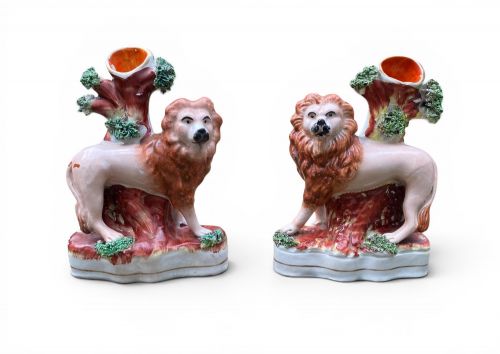
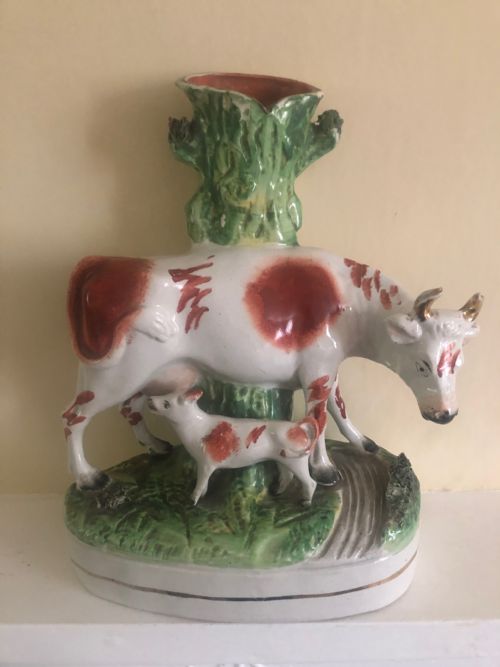
When you search for an earthenware spill holder, you encounter decorative ceramic vessels shaped as animals, human figures, and architectural follies from the Georgian, Regency, and Victorian eras. These Victorian Staffordshire pieces and earlier Pearlware examples often depict sheep, lions, deers, swans, dogs, cows, and literary or pastoral scenes.
The version you are most likely to meet on this page is a nineteenth century Staffordshire pottery figure or pair, incorporating a hollow cylindrical tube for holding wooden spills beside the main sculptural subject. Many of these take the form of flatback figures designed to stand neatly against a mantelpiece wall.
Materials and manufacture
Makers utilised earthenware bodies shaped by moulding or pressing clay into earthenware forms, which were then finished with lead glaze, pearlware glaze, or enamel paint. These materials provided a smooth surface for hand-painted details in rich colours that brought the figures and animals to life.
The earthenware was fired and glazed to create a protective, glossy finish that highlighted the contours of the moulded figures, from the turret and bridge architectural details to the fine wool on sheep and lambs.
Deers, sheep, and swans guard your mantelpiece, proving that nineteenth century Victorians loved their livestock ceramic-sized.
The markers of quality
Quality in these pieces rests upon the crispness of the original moulding and the care taken with the hand-painted enamel decoration. Superior examples display expressive faces, clear botanical or architectural modeling, and rich, even glazing without excessive pooling or dry patches.
The presence of early pearlware glaze, subtle hand-finishing, and well-preserved painted details distinguish finer Victorian Staffordshire and Regency productions from simpler, later commercial outputs.
Walton·Ernst Wahliss
The Earthenware Spill Holder Glossary
- Earthenware
- Porous pottery fired at lower temperatures, requiring a glaze to become impermeable to liquids. It forms the structural body of nearly all these spill holders.
- Pearlware
- A refined earthenware developed in the late eighteenth century featuring a subtle bluish glaze that pooled pleasingly in crevices. It appears on earlier Regency and nineteenth century pieces.
- Spill
- A thin slip of wood or rolled paper used for transferring a flame from a fireplace to a candle or pipe. The holder kept these handy beside the hearth.
- Flatback
- A style of Staffordshire figure modelled with a finished front and a largely unadorned, flat rear side. This allowed the piece to sit flush against a wall or mantelpiece.
- Lead glaze
- A shiny glass coating applied to pottery before firing to seal the porous earthenware body. It gives these antique figures their characteristic glossy sheen.
Earthenware Spill Holder: Frequently Asked Questions
How were spill holders used?
They sat upon mantelpieces near the fireplace, keeping wooden spills within easy reach for anyone wishing to light a pipe or candle. Users pulled a single spill from the cylindrical vase attached to the figure.
This saved trips to the hearth fire and kept the lighting materials neatly contained in a decorative ceramic container.
How do I date a spill holder?
Dating relies on examining the ceramic body, the type of glaze used, and the style of the figure. Earlier Regency pieces often feature pearlware glazes and distinct architectural forms, while Victorian examples frequently use flatback construction.
Subject matter, such as specific literary scenes or animal pairings, also helps narrow down the production era within the nineteenth century.
Are these figures glazed?
Yes, nearly all examples feature a glossy lead or pearlware glaze applied over the fired earthenware body. This coating protected the porous clay and gave the painted enamel colours a vibrant appearance.
Glazing techniques varied over the decades, helping collectors distinguish between earlier pearlware productions and later Victorian iterations.