


Blush Ivory Porcelain Urn
A blush ivory porcelain urn brings soft, creamy tones and delicate floral hand-painting to a room, offering a distinct Edwardian aesthetic.

Blush Ivory Porcelain Urn
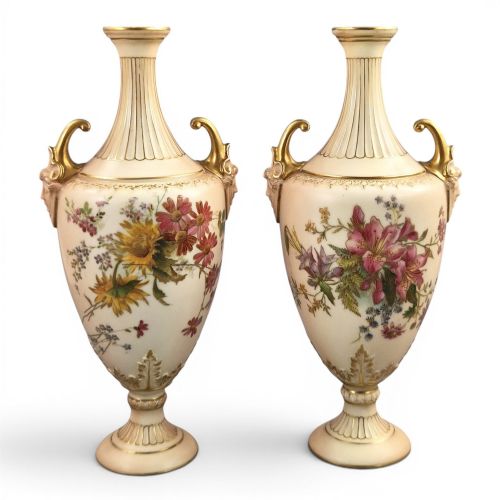
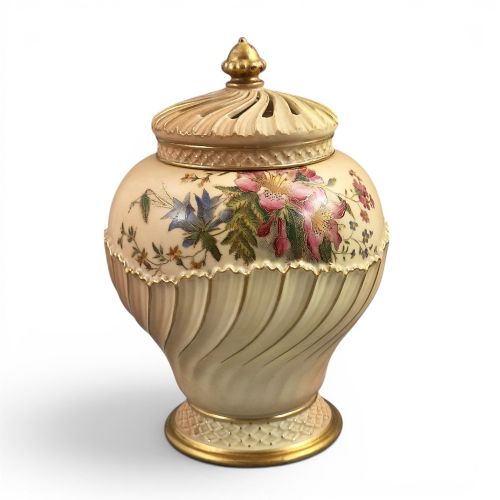
When you search for a blush ivory porcelain urn, you encounter vessels produced primarily by Royal Worcester during the late nineteenth and early twentieth centuries. These pieces span the Victorian, Edwardian, and 1920 periods, taking the form of ovoid vases, pot-pourri jars with covers, and pedestal vessels.
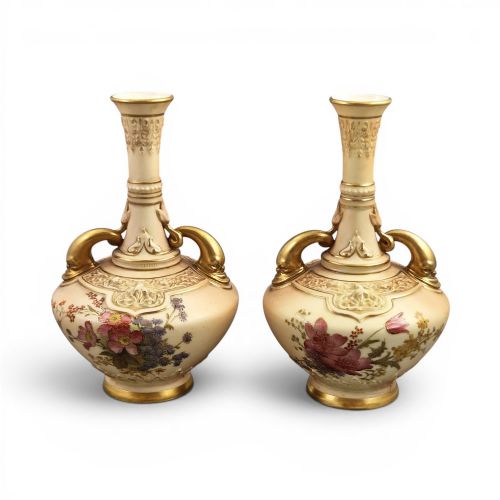
The objects on this page consist largely of vases and decorative jars with handles, shaped as urns, bowls, or ewers. Most examples date from the Edwardian era and the year 1900, reflecting the peak production period of this specific ceramic finish.

How they were made
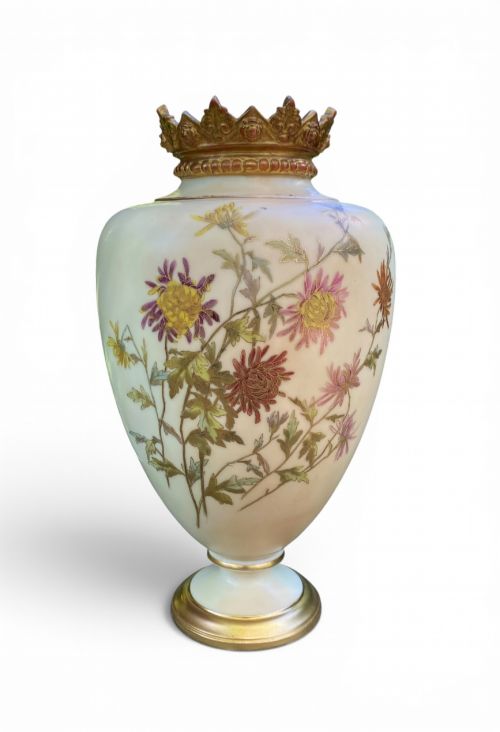
The makers utilised porcelain bodies finished with a characteristic matte ivory glaze known as blush ivory. This soft ground served as the base for hand-painted decoration, often depicting chrysanthemums, roses, and natural scenes.
Craftsmen applied gilding, gold leaf, and gold gilt to handles, rims, and accents. Many pieces also incorporate enamel work, pierced details, and hand-painted artistry by named artists.
Some Edwardian vessels feature moulded dolphin handles, proving that Victorian artisans could not resist giving fish ears.
What varies in quality
Quality in these ceramics rests on the complexity of the form and the skill of the hand-painting. Pieces featuring specific animal or floral subjects by known artists stand apart from standard production items.
The presence of pierced gilt handles, crowns, covers, and pedestals alters the character of an urn. Greater sculptural ambition, such as dolphin handles or multi-piece pot-pourri sets, distinguishes finer examples.
Royal Worcester
The Blush Ivory Porcelain Urn Glossary
- Blush ivory
- A matte, creamy porcelain glaze developed by Royal Worcester in the late nineteenth century. It provides a soft background for floral painting.
- Pot-pourri jar
- A covered ceramic vessel designed to hold dried scented plant material. These jars often feature pierced covers to release fragrance.
- Gilding
- The application of gold leaf or gold paint to ceramic surfaces. It highlights handles, rims, and moulded details on urns and vases.
- Ovoid
- An egg-shaped form frequently utilised for ceramic vases and jars. This rounded profile defines many nineteenth-century urns.
- Ewer
- A pitcher or jug with a spouted lip and a handle, adapted for decorative display. Pairs of ewers appear alongside standard urns.
Blush Ivory Porcelain Urn: Frequently Asked Questions
What is a blush ivory porcelain urn?
A blush ivory porcelain urn is a decorative ceramic vessel featuring a soft, matte cream glaze and hand-painted floral motifs. These pieces date predominantly from the late nineteenth and early twentieth centuries.
Most examples originate from the Royal Worcester pottery and take forms such as covered pot-pourri jars, ovoid vases, and pedestal urns with gilt handles.
How do I date a blush ivory urn?
Dating these ceramic pieces relies on factory date codes stamped on the underside, which indicate the year of manufacture. Stylistic clues such as Victorian aesthetic movement designs or Edwardian shapes also help determine the period.
Many pieces from this category carry specific year marks from the 1890s through the 1920s.
Where were blush ivory urns made?
These ceramic items were produced in Worcester, England, by the Royal Worcester factory. The company developed the distinctive blush ivory technique during the Victorian era.
Production continued through the Edwardian period and into the 1920s, involving skilled painters and gilders.
How should I display a pot-pourri urn?
Pot-pourri urns and jars look effective on mantelpieces, side tables, or cabinets where their hand-painted details are visible. Keeping them out of direct sunlight preserves the enamel and gilding.
Pairs of urns or matching pedestal vases create a symmetrical arrangement on a surface.