


Edwardian Blush Ivory Vase
An edwardian blush ivory vase brings soft pastel tones and delicate floral hand-painting to a room, offering a distinct late-nineteenth and early-twentieth-century aesthetic.

Edwardian Blush Ivory Vase
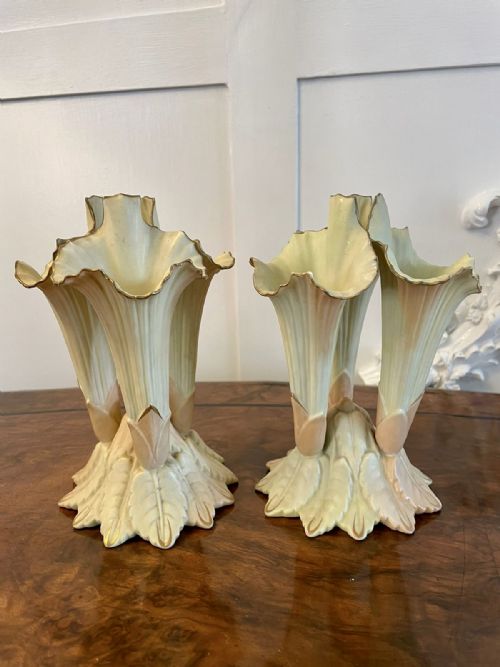
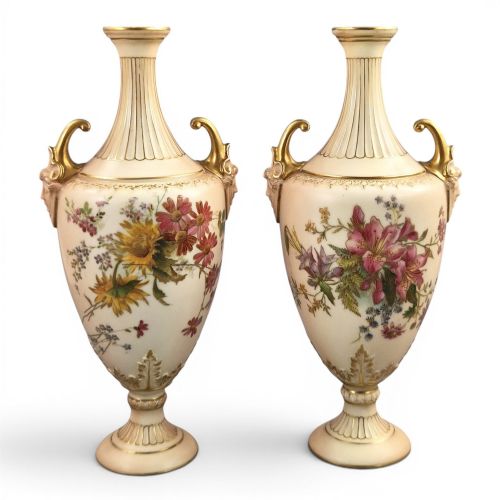
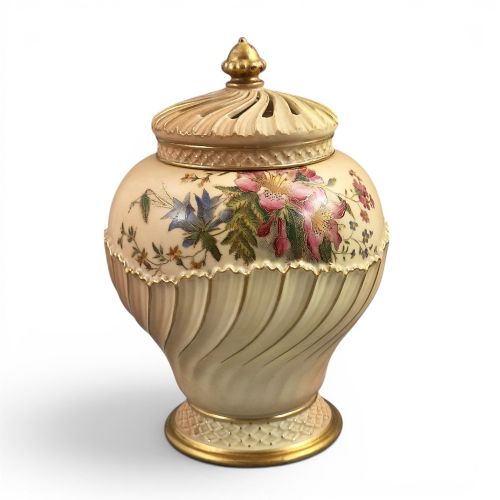
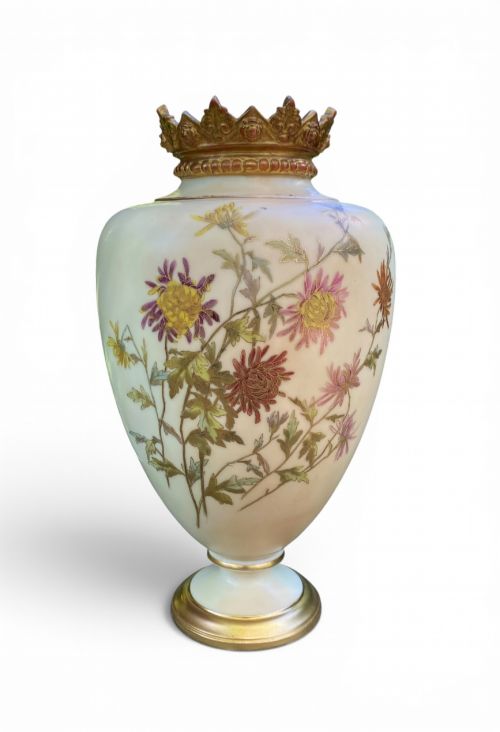
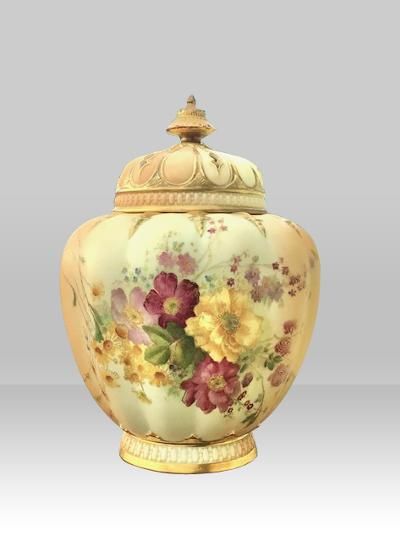
An edwardian blush ivory vase displays a characteristic soft, warm cream body that mimics ivory, forming the background for hand-painted flowers or natural subjects. These pieces span standard vases, spill vases, and lidded pot-pourri jars.
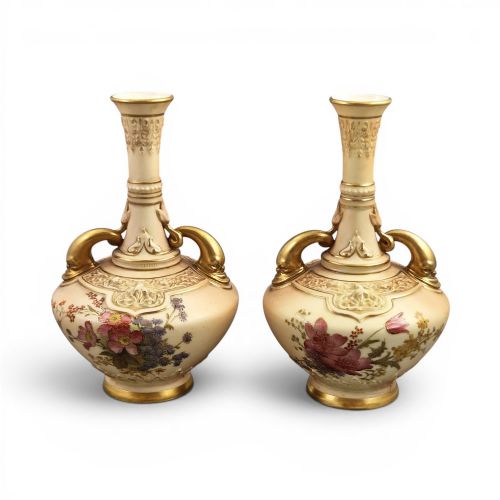
Most examples found here date from the Edwardian period and the late nineteenth century, reflecting the prevailing taste of those decades. Forms range from simple ovoid vessels to ornate pedestal vases and ewers with gilded handles.
Makers such as Royal Worcester dominate this category, alongside examples associated with Locke and Co. Buyers encounter single pieces as well as matched pairs.
How they were made
Porcelain serves as the primary body material for these objects, shaped into various vessel forms and glazed to achieve the signature matte or satin ivory surface. Enamel colours are then applied by hand to depict floral motifs, foliage, and occasionally birds.
Gold leaf and gilding highlight handles, rims, and pierced details, adding contrast to the soft ground. Firing processes fix both the glaze and the overglaze enamel painting.
Materials recorded across the inventory include gilt, gold leaf, and enamel over a porcelain body.
What varies in quality
The fineness of the hand-painting distinguishes standard production from superior examples, particularly where artists render detailed natural subjects like chrysanthemums or game birds. Named artists add notable distinction to individual pieces.
Complexity of form also alters the character of the object, with moulded details, dolphin handles, and pierced gilt elements requiring greater skill in manufacture. Preservation of the original gilding and enamel colours remains central to the integrity of each piece.
Royal Worcester·Locke and Co·Jas Stinton
The Edwardian Blush Ivory Vase Glossary
- Blush ivory
- A porcelain glaze technique that produces a soft, matte, cream-coloured surface resembling genuine elephant ivory. It acts as a warm background for floral overglaze decoration.
- Pot-pourri
- A lidded vessel designed to hold dried scented plant material, featuring pierced or perforated covers to release fragrance into a room. These often take pedestal or jar forms.
- Spill vase
- A tall, narrow vessel traditionally used to hold wooden spills for lighting fires and candles. They appear frequently in matched pairs within this category.
- Overglaze
- A method of painting where enamel colours are applied on top of the fired glaze and subjected to a lower temperature firing. This allows for rich detail and varied palettes.
Edwardian Blush Ivory Vase: Frequently Asked Questions
How do I date a blush ivory vase?
Dating relies heavily upon the factory backstamps found on the underside of the porcelain, which changed systematically by year in late nineteenth and early twentieth-century production.
Stylistic indicators such as Victorian aesthetic influences or Edwardian forms also help narrow the period of manufacture alongside any specific pattern numbers recorded.
Were these vases made as pairs?
Many of these vessels were produced as matching pairs, particularly spill vases and ornamental ewers intended for mantelpieces or side tables.
Single examples also appear frequently, often representing larger centrepiece items like pot-pourri jars or distinct floral vases.
How should I clean an antique porcelain vase?
Cleaning requires only gentle dusting with a soft, dry cloth to protect the delicate overglaze enamel and surface gilding from unnecessary wear.
Water and liquid cleaners should be avoided, as moisture can damage aged surfaces and any unglazed areas of the porcelain body.
What subjects appear on the painted decoration?
Floral designs dominate these pieces, with hand-painted chrysanthemums and roses appearing frequently across the soft ivory ground.
Specific examples also feature natural subjects such as birds and stork motifs, painted by named artists associated with the factories.