




Victorian Pot Pourri Jar
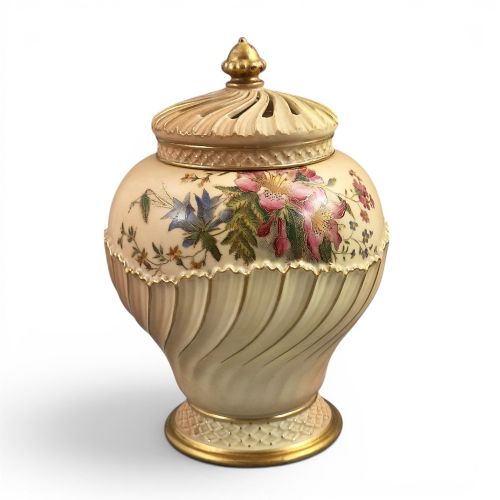
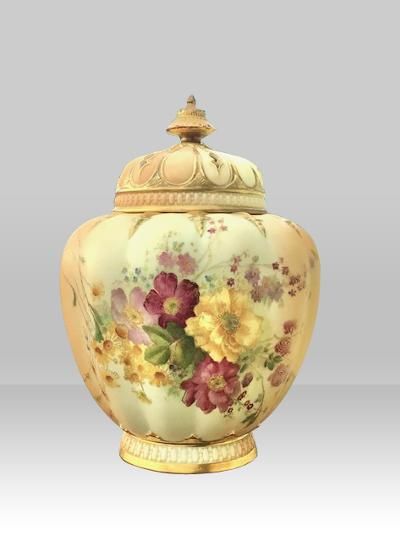
These Victorian pot pourri jar pieces bring scented dried petals into a room through pierced ceramic covers.
Victorian Pot Pourri Jar
A victorian pot pourri jar is a covered ceramic vessel designed to hold aromatic plant material and release fragrance through pierced or perforated lids. The pieces recorded here span the Victorian era, the Edwardian period, and the early twentieth century, showing substantial overlap in decorative forms.
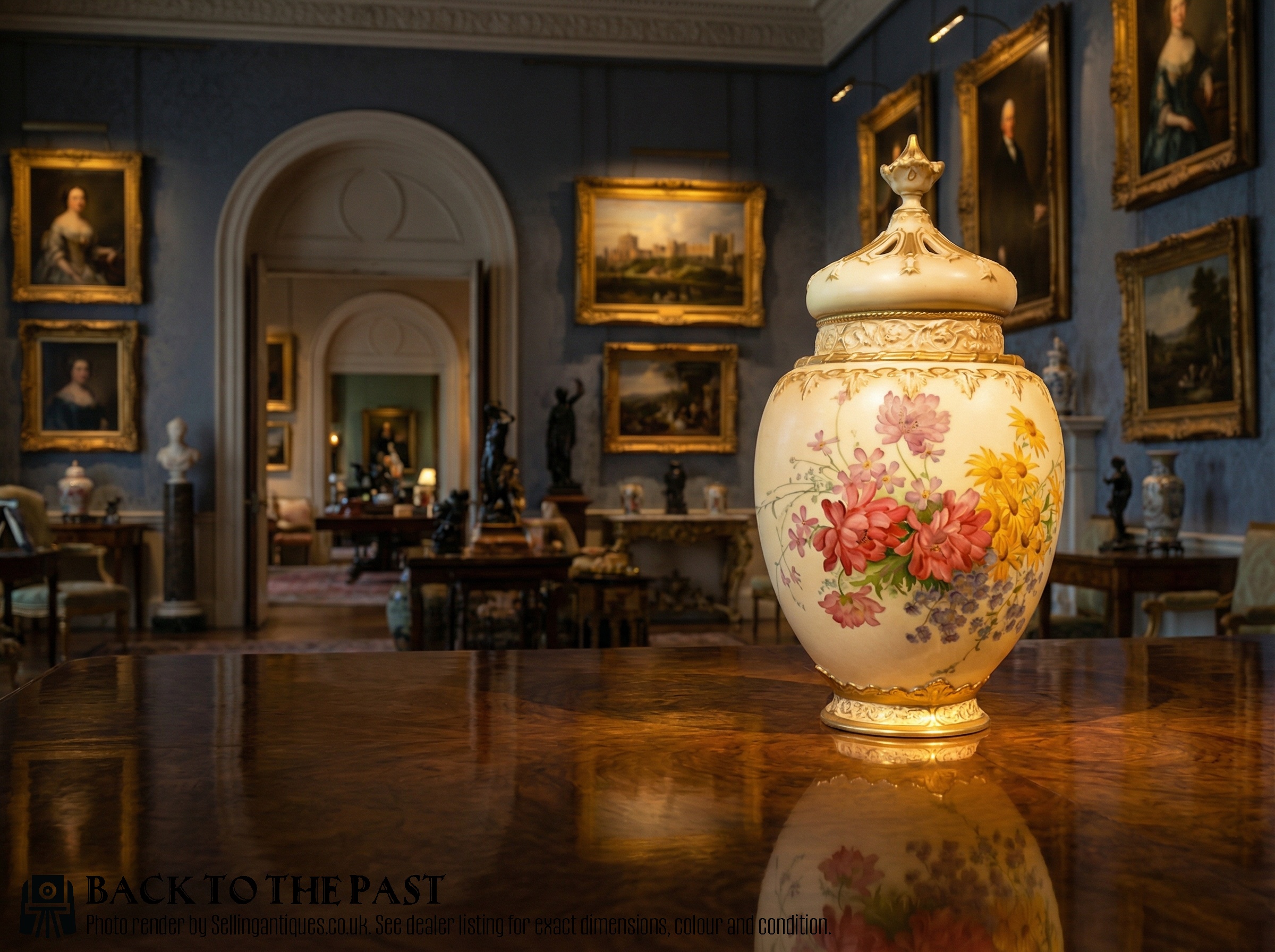
Most examples appearing in these listings belong to the blush ivory production of Royal Worcester, featuring painted floral decoration and gilt enrichment. Makers such as Samuel Alcock also contribute to the range of nineteenth-century decorative jars.
Forms vary from pedestal vases to ovoid jars fitted with crown covers. These vessels combine practical function with display utility, sitting on mantelpieces or console tables in period interiors.

How they were made
The material foundation is porcelain or ceramic, shaped into bodies and pierced covers designed to release scent. Factories applied soft-toned ivory grounds, enamel colours, and gilding before firing.
Painted details, including floral motifs and swan subjects by artists such as C. Baldwyn, demonstrate skilled brushwork over glazed surfaces. Gilt and gold leaf accents highlight rims, handles, and crown covers.
Some pot pourri jars feature painted flying swans by artist C. Baldwyn, proving that even scented flower pots need fine bird art.
What varies in quality
Quality rests on the crispness of the piercing in the cover and the delicacy of the hand-painted decoration on the ceramic body. Pieces featuring named artists or elaborate ground treatments sit higher in the scale than standard factory output.
The preservation of the gilding and the exactness of the shape determine the overall merit of an individual jar. Intact crown covers matching the main body remain essential for completeness.
Royal Worcester·Samuel Alcock
The Victorian Pot Pourri Jar Glossary
- Blush ivory
- A soft, matte cream-coloured porcelain ground developed by Royal Worcester. It provides a pale background for enamel flowers and gilding.
- Crown cover
- A pierced, multi-tiered lid resembling a crown that allows fragrance to escape from the pot pourri jar. It sits on the top of the vessel.
- Gilding
- The application of gold leaf or gold paint to ceramic surfaces. It accents handles, rims, and decorative panels.
- Ovoid
- An egg-shaped vessel form common in ceramic jars and vases. It gives the body a rounded profile.
- Pedestal vase
- A vessel elevated on a short stem and footed base. This form lifts the decorative body above the surface.
Victorian Pot Pourri Jar: Frequently Asked Questions
What is a pot pourri jar?
A pot pourri jar is a covered ceramic container designed to hold dried flowers and spices. The pierced lid allows the natural fragrance to diffuse into the surrounding room.
These vessels functioned as both household scent diffusers and decorative mantel ornaments during the nineteenth and early twentieth centuries.
How do you use them?
You fill the ceramic body with dried botanical material treated with aromatic oils. The pierced cover keeps the contents contained while letting the scent circulate.
Many collectors today keep the jars empty for display, preserving the original painted surfaces and gilded details.
Are the covers removable?
Yes, the covers lift off the main body to allow access to the interior chamber. Crown covers and pierced lids are separate components designed to rest securely on the rim.
Matching the cover to the correct base is important, as these pieces rely on their original components for completeness.