




Ivory Porcelain Pot Pourri
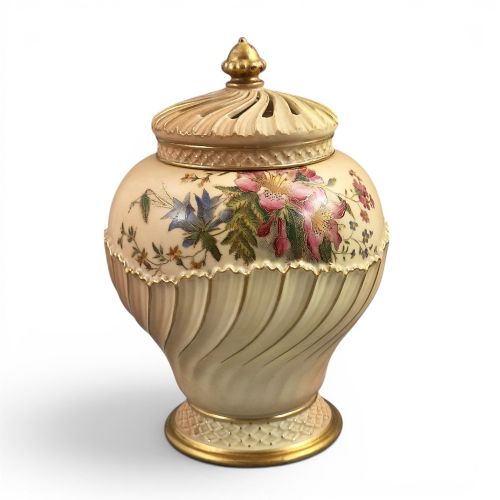
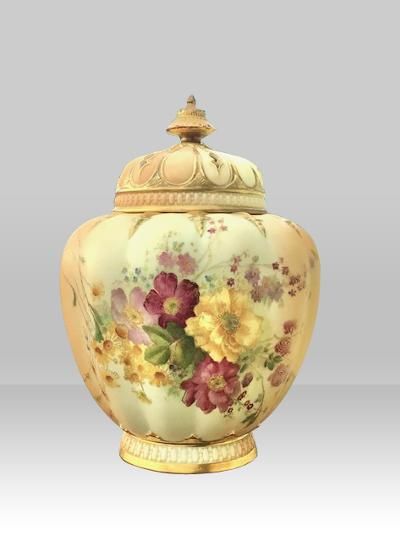
These ivory porcelain pot pourri jars and vases are decorative ceramic vessels designed to hold scented dried plant matter, bringing a classic period touch to a room.

Ivory Porcelain Pot Pourri
When you search for ivory porcelain pot pourri, you encounter decorative ceramic vessels originating from the Edwardian period and around nineteen hundred. These pieces take the form of jars, vases, urns, and rose jars, frequently featuring crown covers designed to let scent disperse. The selection focuses entirely on blush ivory ceramic forms produced by Royal Worcester, reflecting the output of that specific maker during the early twentieth century.
The objects combine standard vase and jar shapes with pierced or crown covers suited for housing dried petals and spices. Examples range from pedestal vases to ovoid jars and three piece sets, all sharing the characteristic pale glaze associated with blush ivory ware. These items serve both a decorative display function and their original aromatic purpose within a room.
How they were made
Makers shaped the ceramic bodies from porcelain and applied a soft blush ivory ground as the primary surface. Artisans then added details using enamels and hand painting, depicting natural subjects such as game birds by artists like Jas Stinton.
The decoration incorporates applied gilding, gold leaf, and rich enamel work over the porcelain body to highlight handles, rims, and floral or avian motifs. Pierced crown covers required careful ceramic cutting before firing to ensure the finished jar could hold and diffuse scent properly.
Jas Stinton signed several of these porcelain jars, leaving tiny painted game birds hidden forever inside a cloud of pot pourri.
What varies in quality
Quality rests on the complexity of the ceramic form, ranging from simple ovoid jars to large pedestal vases with elaborate crown covers and multiple components. Hand painted artistry creates a clear distinction, particularly when specific artists execute detailed scenes of birds or flora across the porcelain.
The application of gilding and gold leaf further separates standard production items from finer pieces, alongside the preservation of the delicate blush ivory ground and enamel details. Complete sets, such as three piece groupings, represent a more substantial scale of manufacture than single jars.
Royal Worcester
The Ivory Porcelain Pot Pourri Glossary
- Blush ivory
- A soft, creamy porcelain ground finish characteristic of late nineteenth and early twentieth century ceramic production, providing a muted background for floral and avian decoration.
- Crown cover
- A pierced or domed lid fitted to the top of a pot pourri jar, designed with openings to allow fragrance to escape from the dried plant material inside.
- Ovoid
- An egg shaped ceramic body form utilised for many pot pourri jars and vases, offering a rounded surface for painted enamel decoration.
- Pedestal vase
- A vessel elevated on a formal base or foot, giving the ceramic form greater height and architectural presence.
- Gilding
- The application of gold leaf or gilt paint to ceramic rims, handles, and decorative accents to highlight the contours of the porcelain.
Ivory Porcelain Pot Pourri: Frequently Asked Questions
What is ivory porcelain pot pourri?
These pieces are ceramic jars, vases, and urns finished with a blush ivory ground and equipped with pierced covers for holding aromatic dried plant matter.
Produced primarily around nineteen hundred and the Edwardian era, they combine practical scent distribution with decorative hand painted porcelain artistry.
How were these jars used?
The vessels held mixtures of dried flowers, herbs, and spices designed to fragrance domestic interiors during the Edwardian period.
The pierced crown covers allowed the enclosed scent to diffuse naturally into the room while keeping the botanical material contained.
How do I identify Edwardian pieces?
Edwardian examples date from the early twentieth century and typically feature blush ivory porcelain grounds combined with gilt accents and hand painted details.
Many bear specific shape numbers, such as shape seventeen twenty, alongside factory marks associated with this period of production.
What styles are common here?
The selection displays Victorian and Edwardian aesthetic influences applied to porcelain ceramic bodies through hand painting and gilding.
Designs frequently incorporate naturalistic subjects like birds painted by notable artists alongside traditional pedestal and ovoid vase shapes.