
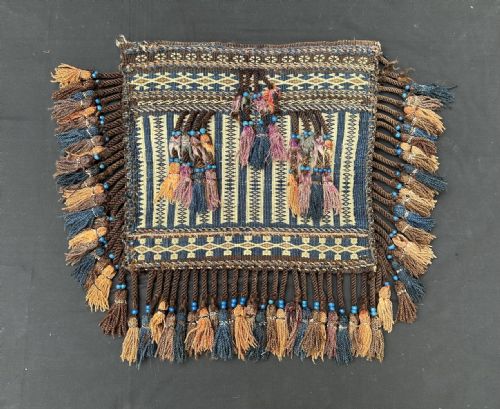
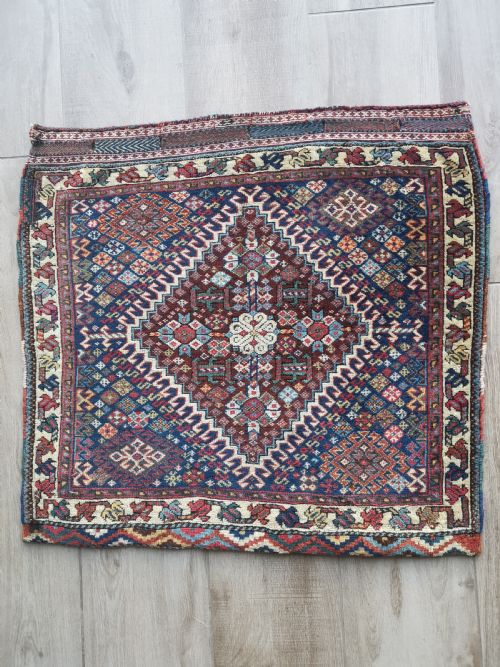
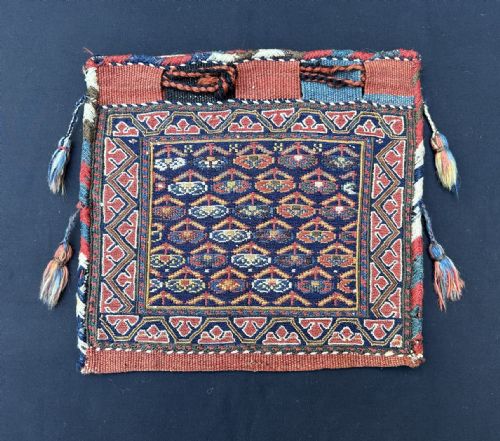
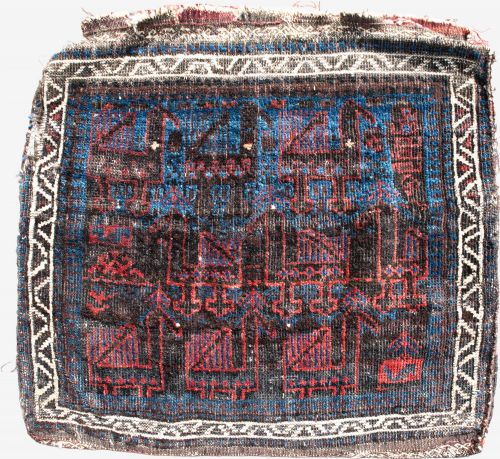
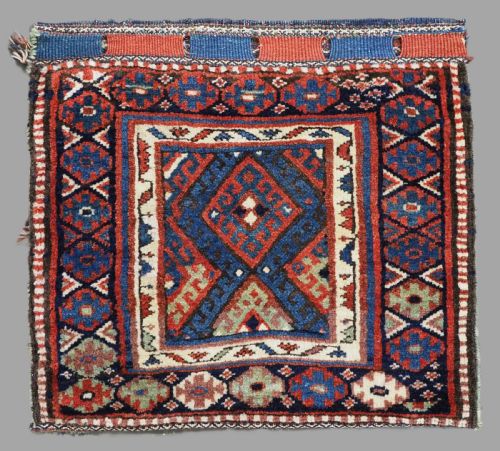
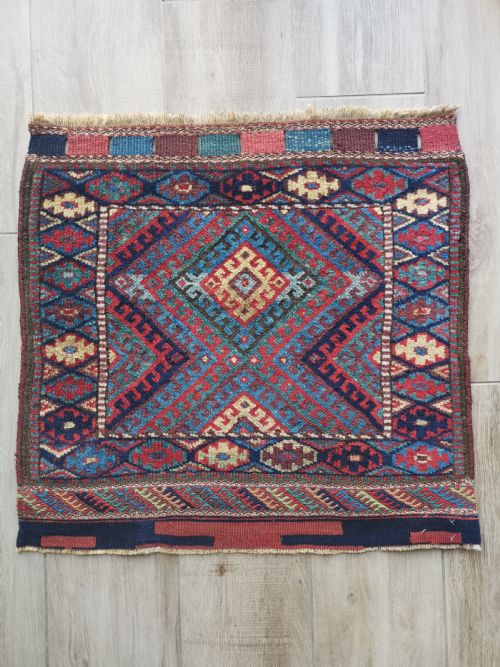


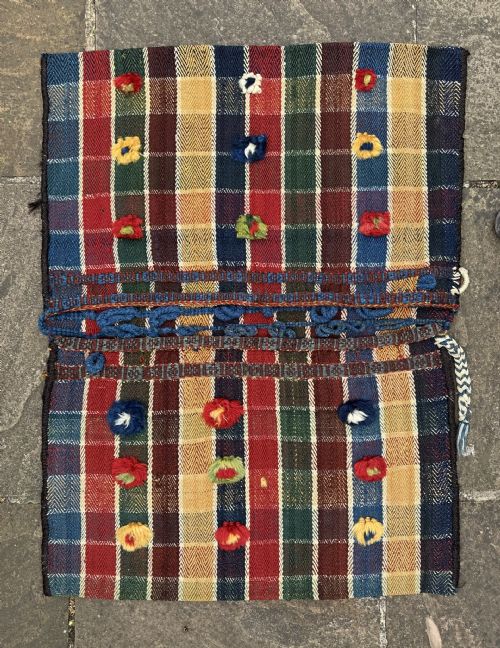
Blue Wool Khorjin
These blue wool khorjin are tribal saddlebags woven by nomadic groups across Persia and the Caucasus for practical transit.
Blue Wool Khorjin
A blue wool khorjin is a traditional tribal storage bag or saddlebag face originating from nomadic weavers in regions such as Persia, Afghanistan and the Caucasus. These utilitarian objects served to transport belongings on animals, taking the form of complete paired pouches or surviving single bag faces.
The pieces encountered on this page span the nineteenth and early twentieth centuries, reflecting the output of specific tribal groups including the Shahsavan, Afshar, Baluch, Qashqai, Kurdish and Luri peoples. Examples range from complete bags retaining their plain weave backs to individual bag faces and sumac or kilim constructions.
How they were made
Weavers relied on hand-spun wool and natural dyes, often supplemented by structural cotton foundations, goat hair for durable edges, and occasional glass beads for ornamentation. The tactile quality of the wool varies from lustrous piles to flat-woven sumac and kilim structures.
Nomadic workshops employed pile knotting and flat-weaving techniques to construct these storage items, building geometric, boteh, bird and dragon motifs. The integration of plain weave backs provided lightweight strength for daily utility on pack animals.
Glass beads occasionally turn up stitched into the weave, adding a tiny glint of light to the nomad's saddle.
What varies in quality
Quality rests in the handling of natural dyes, the fineness of the hand-spun wool, and the crispness of the tribal designs. Denser knotting and precise geometric execution separate standard utilitarian items from exceptional pieces.
Preservation of structural elements, such as surviving backs and intact borders, alters the standing of a bag. The depth and saturation of the blue wool ground dictate the visual impact of the textile.
The Blue Wool Khorjin Glossary
- Khorjin
- A traditional tribal saddlebag used by nomadic groups for carrying possessions. These were woven as pairs joined by a central web and are frequently found today as single bag faces.
- Sumac
- A supplementary weft-wrapping technique that creates a durable, textured surface without a pile. It allows for sharp diagonal pattern lines.
- Boteh
- A stylised floral motif resembling a almond or bent shrub, commonly found in Persian tribal weaving. It holds significant symbolic and decorative value.
- Bag face
- The visible, decorated front of a saddlebag. Many surviving examples are separated from their original plain weave backs.
Blue Wool Khorjin: Frequently Asked Questions
What is a blue wool khorjin?
A blue wool khorjin is a nomadic storage bag or saddlebag face woven by tribal groups in regions such as Persia and the Caucasus. They were originally designed to carry goods on animals.
Today, collectors prize these textiles for their geometric designs, natural dyes, and hand-spun wool construction.
How were these bags used?
Nomadic weavers used these paired pouches across pack animals to transport personal belongings during seasonal migrations. The robust construction handled heavy everyday utility.
Many surviving examples are now single bag faces or retain portions of their flat-woven backs.
How do I live with a khorjin?
These textiles adapt well to wall hanging, table placement, or framing as flat art. Their sturdy wool and cotton materials tolerate gentle placement in low-traffic areas.
Keep them away from direct sunlight to protect the natural dyes.
How do I tell tribal styles apart?
Tribal styles depend on recurring motifs, weave structures, and regional palettes. For instance, Shahsavan pieces often feature sumac weaving and bird or dragon patterns, while Afshar bags frequently display boteh designs.
Examining the handling of the blue wool and the structure of the borders helps identify the originating group.