


Blue White Delftware Jar
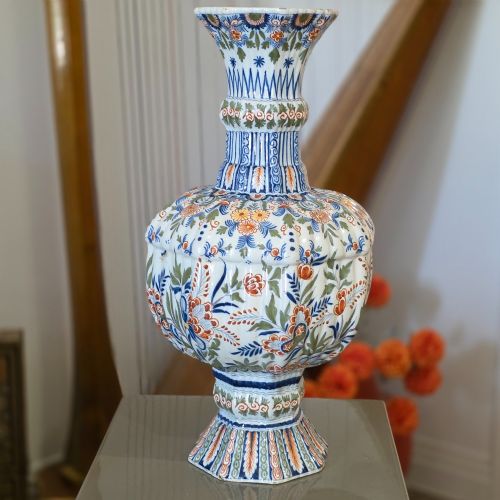
These blue white delftware jar examples bring hand-painted tin-glazed earthenware into your home, offering centuries of historic character and traditional blue and white pigment work.
Blue White Delftware Jar
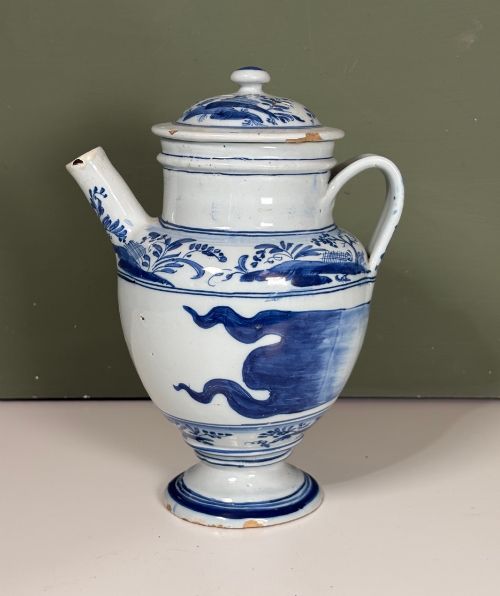
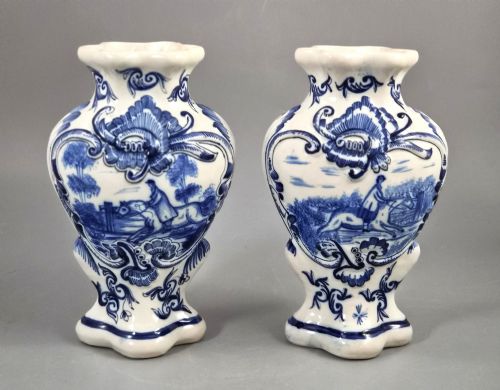
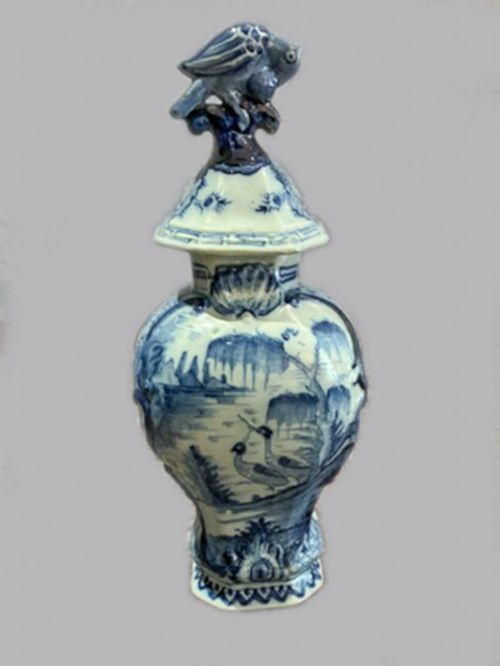
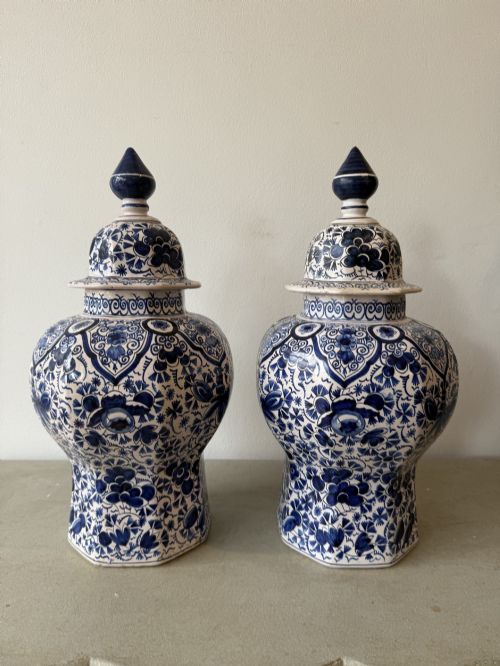
A blue white delftware jar represents a traditional form of tin-glazed earthenware that spans several centuries of European production, appearing in forms such as apothecary vessels, drug jars, and lidded vases. When searching for a blue white delftware jar, buyers encounter pieces originating from English, Dutch, French, and Italian workshops spanning the seventeenth, eighteenth, and nineteenth centuries.
The surviving inventory ranges from tall baluster vases and tobacco jars to inscribed chemist bottles and handled urns. Most examples on this page date from the eighteenth century, often displaying characteristic blue and white motifs influenced by early European interpretations of imported styles.
How they were made
Potters shaped these ceramic vessels from basic earthenware clays before applying an opaque white tin glaze that created the characteristic smooth surface for subsequent decoration. Artisans then painted directly onto the unfired glaze using cobalt pigment, which produced the deep blue coloration during the high-temperature firing process.
Certain pieces also incorporate fitted elements or replacement mounts in materials such as brass, particularly on later conversions or adapted table lamps. The interaction between the absorbent tin glaze and the fluid cobalt pigment resulted in subtle variations in brushwork and tone across each individual body.
The listings span from the seventeenth century through the nineteenth century, utilising tin-glazed earthenware and cobalt pigment across diverse European regions.
What varies in quality
Quality in these earthenware vessels rests upon the crispness of the hand-painted cobalt decoration and the stability of the tin glaze over the ceramic body. Pieces that retain their original matching lids command greater interest than those altered or adapted into lamps over time.
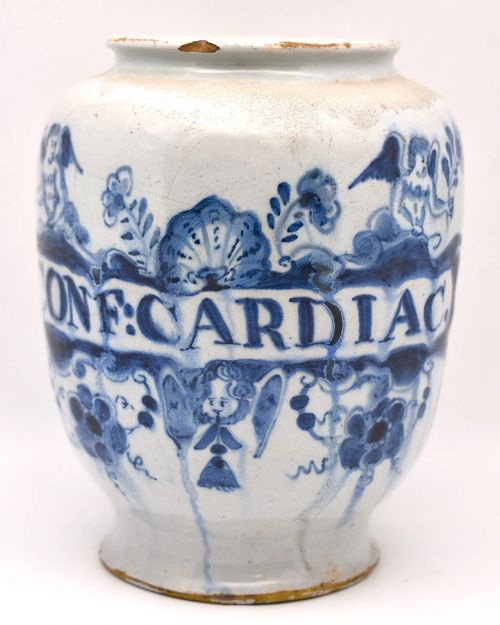
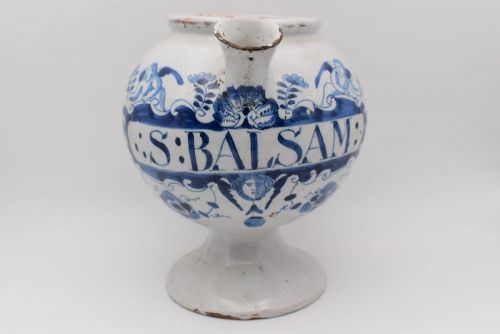
The precision of the script on apothecary and drug jars, alongside the clarity of pictorial scenes such as birds, flowers, or cherubs, separates ordinary utilitarian containers from finer workshop productions. The evenness of the white glaze layer and the depth of the blue pigment further define the standard of the piece.
Fourmaintraux-Courquin
The Blue White Delftware Jar Glossary
- Tin-Glazed Earthenware
- Pottery covered with a white glaze containing tin oxide, providing an opaque surface for painted decoration. This technique forms the foundation of all traditional delftware production.
- Albarello
- A type of majolica or delftware jar used by apothecaries to store dry drugs and ointments. Its characteristic waist allows pharmacists to grip the vessel easily on crowded shelves.
- Cobalt Pigment
- A metallic colorant applied to the unfired glaze to produce deep blue tones under high heat. It remains the defining pigment of blue and white ceramic traditions.
- Baluster Vase
- A vessel with a rounded body that tapers toward a narrow neck, resembling the architectural shape of a stair baluster. This form appears frequently among large decorative delft vases.
- Drug Jar
- A specialised ceramic container inscribed with pharmaceutical contents, categorized further as wet or dry types. Apothecaries relied on these vessels to store medicinal compounds in daily practice.
Blue White Delftware Jar: Frequently Asked Questions
How do I clean an old delft jar?
Dust the surface gently with a soft, dry cloth to prevent accumulation without introducing moisture to vulnerable historic ceramic bodies or old glazes.
Avoid using water, chemical cleaners, or submersion, as tin-glazed earthenware can absorb liquids through hairline cracks and cause further deterioration.
Were these jars used for medicine?
Many examples on the market served as apothecary or drug jars, holding dried herbs, liquid syrups, and medicinal ointments in historic dispensaries and chemists.
Inscribed lettering on the front of the body usually denotes the specific contents originally stored inside the vessel.
How can I tell the period?
Dating relies upon stylistic shifts in the cobalt painting, the thickness of the earthenware body, and the composition of the tin glaze.
Seventeenth and eighteenth-century pieces often display looser hand-painted motifs and heavier potting techniques compared to later nineteenth-century revivals.
Are original lids common?
Original matching lids survive on only a fraction of the historical inventory due to breakage and separation over centuries of domestic use.
Many surviving vessels now lack lids or feature later replacement covers fitted to match the opening of the jar.