
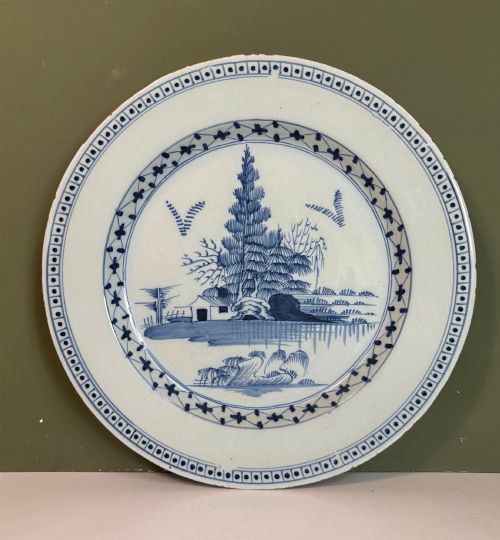

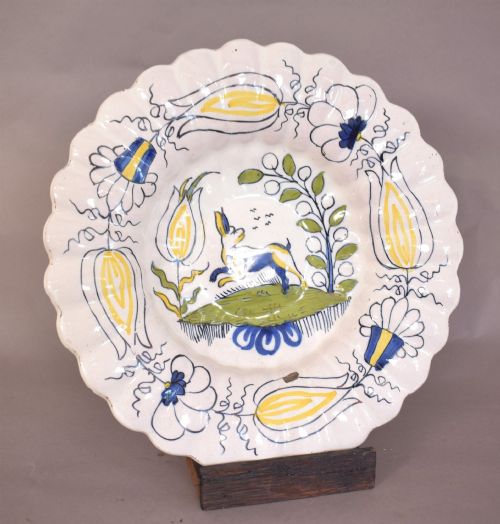
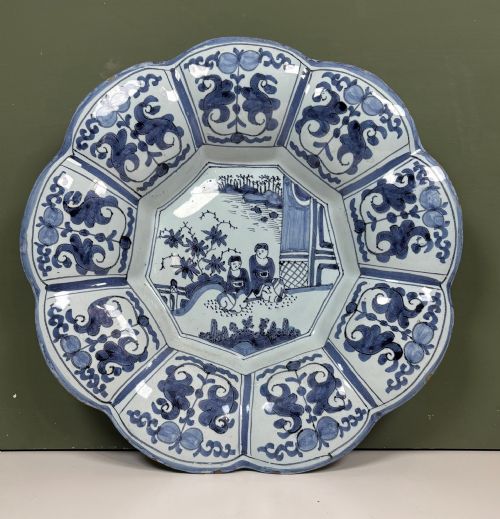
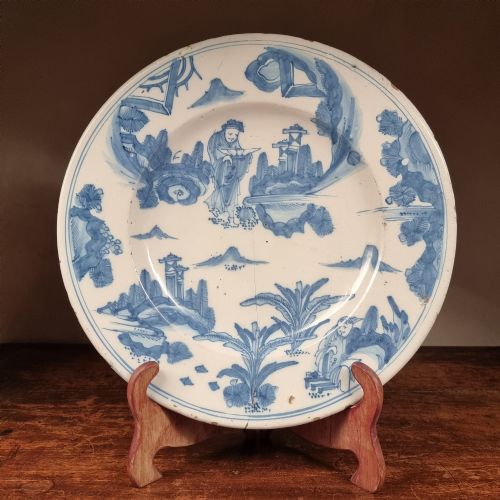
Blue Tin Glaze Dish
A blue tin glaze dish brings centuries of earthenware tradition and hand-painted cobalt pigment straight to the table.
Blue Tin Glaze Dish
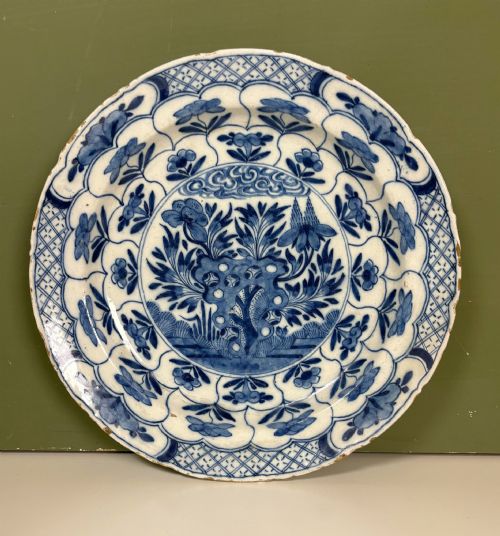
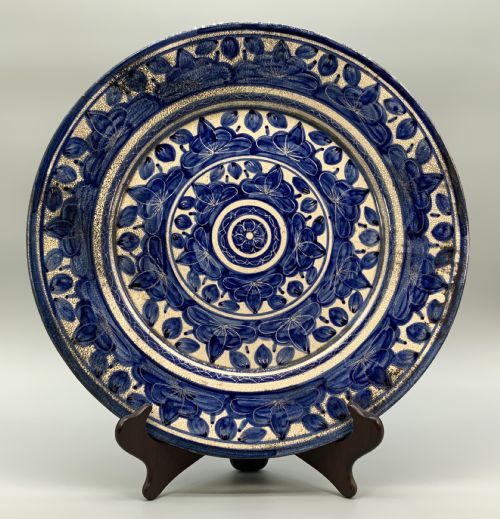
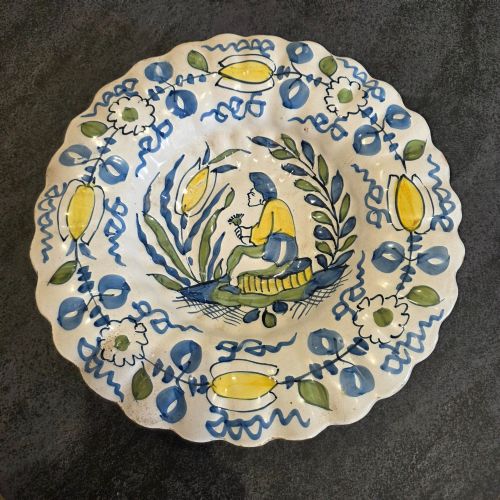
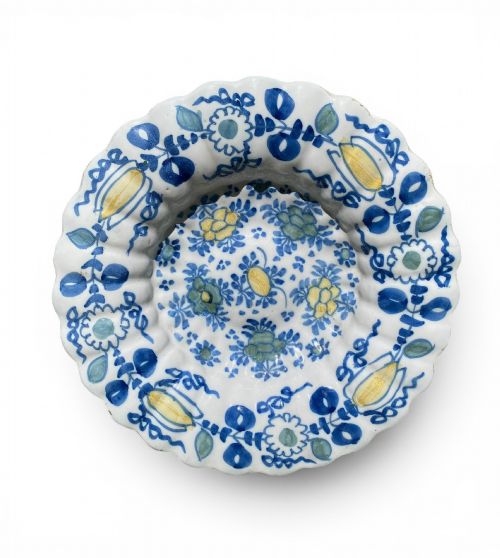
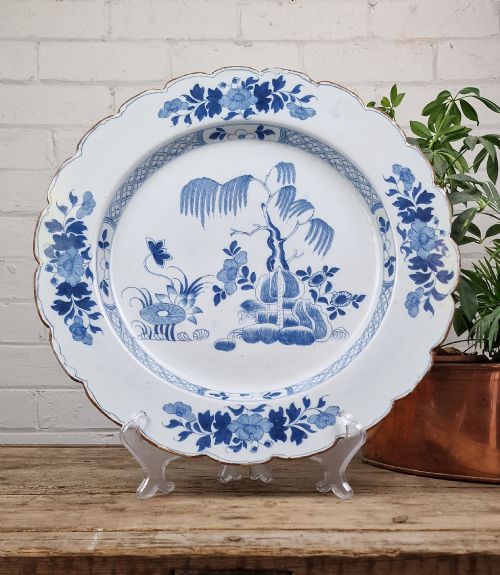
A blue tin glaze dish encompasses a wide variety of earthenware ceramics produced across Europe from the seventeenth century onward. The selection centres heavily on large chargers, decorative plates, and shallow bowls created in Dutch, English, and French workshops.
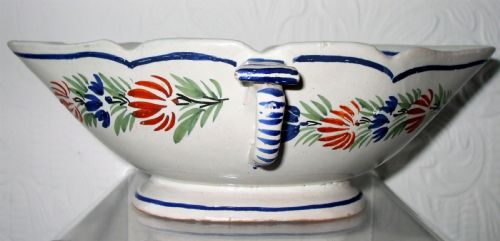
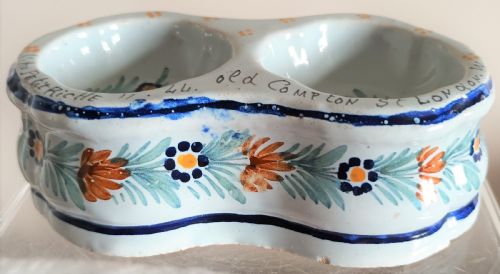
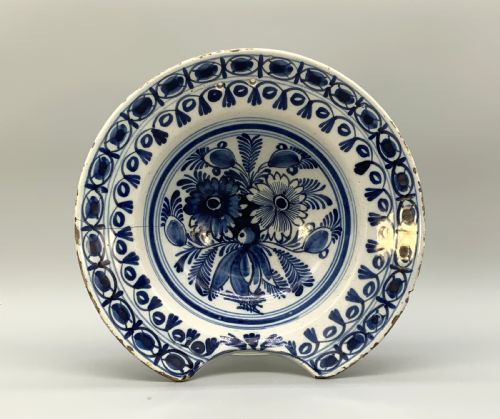
Buyers will frequently encounter traditional Delftware chargers alongside specialised forms such as barber's bowls, salt cellars, and sauceboats. The inventory spans several distinct eras, drawing deeply from seventeenth-century styles and eighteenth-century provincial designs.
How they were made
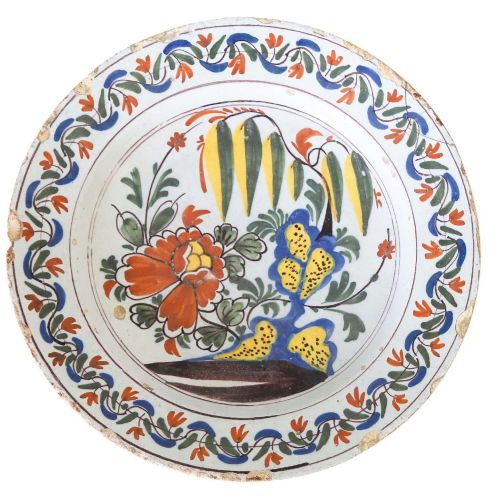
Potters shaped these items from earthenware clay before applying an opaque white tin glaze that created a smooth canvas for decoration. Artisans then hand-painted the surfaces using cobalt pigment and varied metallic oxides to achieve deep blue and polychrome designs.
Firing took place in traditional kilns where the tin glaze fused with the underlying clay body. This technique allowed for expressive brushwork ranging from formal Dutch Baroque motifs to loose French provincial scenes.
Some seventeenth-century plates arrived with such enthusiastic blue brushwork that the cobalt appears to have practically leaked off the edge.
What varies in quality
Quality rests upon the crispness of the hand-painted decoration and the fluidity of the cobalt pigment across the tin glaze. Pieces showing assured brushwork and balanced pictorial composition stand apart from simpler utilitarian output.
The stability of the earthenware body and the preservation of the glaze layer also dictate the calibre of an item. Superior examples retain strong colour definition and minimal disruption to the tin surface despite centuries of age.
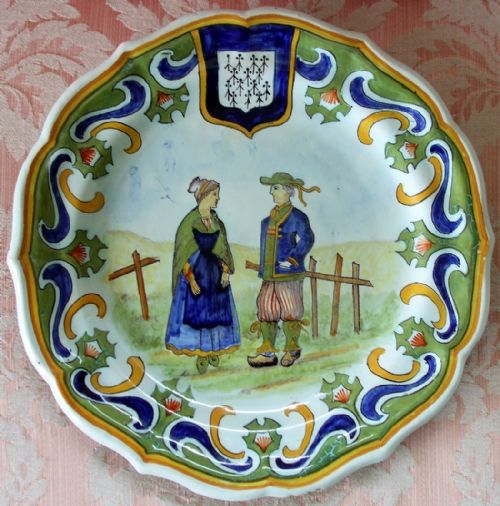
Quimper French Faience·Desvres French Faience
The Blue Tin Glaze Dish Glossary
- Tin-Glazed Earthenware
- Pottery coated with a lead glaze made opaque by the addition of tin oxide. This white surface provides the absorbent ground required for painting in cobalt and other metal oxides.
- Charger
- A large decorative plate or shallow basin intended primarily for display on a wall or dresser. These expansive surfaces allowed potters to paint complex historical or floral scenes.
- Faience
- European tin-glazed earthenware produced widely in France and other continental regions. The term encompasses diverse decorative plates, bowls, and table wares.
- Polychrome
- Decoration employing multiple colours rather than a single hue. In these ceramics, it typically describes designs combining cobalt blue with orange, green, and manganese purple pigments.
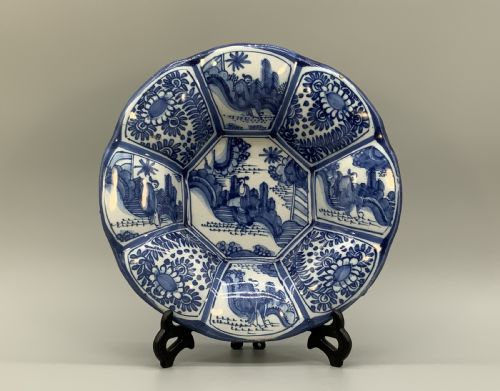
- Kraak Style
- A decorative manner inspired by imported Chinese porcelain featuring segmented panels and central botanical or avian motifs. Dutch potters adopted this aesthetic extensively during the seventeenth century.
Blue Tin Glaze Dish: Frequently Asked Questions
How do I date a blue tin glaze dish?
Dating relies on stylistic clues, palette choices, and the composition of the earthenware body. Seventeenth-century examples often display heavy potting and Kraak-inspired motifs, whereas later pieces shift toward lighter Georgian or French provincial aesthetics.
Examining the reverse of the plate or bowl can reveal typical firing scars or footring characteristics associated with specific centuries. Comparing the brushwork against documented pieces from known production centres helps narrow the timeframe further.
Were these dishes used for dining?
While many larger chargers served decorative display purposes on walls and sideboards, smaller plates and bowls saw active service at the table. Formats like salt cellars and sauceboats were manufactured strictly for functional dining use.
Over time, the porous nature of earthenware and the delicate tin glaze meant daily use often caused chips and surface wear. Surviving items that escaped heavy kitchen duties tend to display better preservation of their painted details.
How should I display my dish?
Displaying a large charger or decorative plate safely requires a secure wall bracket or a sturdy wire display stand designed for heavy earthenware. Positioning pieces away from direct heat sources and strong sunlight protects the glaze and pigments.
Because tin glaze can be vulnerable to impact along the rims, choose a stable location where the dish will not be brushed against or knocked. Periodic dusting with a soft, dry cloth is usually sufficient for ongoing maintenance.
What is the difference between Delftware and faience?
Delftware specifically refers to tin-glazed earthenware made in the Netherlands, particularly around Delft, as well as English adaptations of the same style. Faience is the broader continental term used primarily for similar tin-glazed ceramics produced in France and Italy.
Despite the regional terminology, the underlying technique of applying a white tin glaze over earthenware and painting with cobalt oxide remains fundamentally consistent. The visual differences lie in the local artistic traditions and regional motifs applied by the painters.