


Blue Porcelain Mantel Urn
A blue porcelain mantel urn brings neoclassical elegance and rich cobalt tones to a room, functioning either as a standalone centrepiece or part of a matched garniture.
Blue Porcelain Mantel Urn
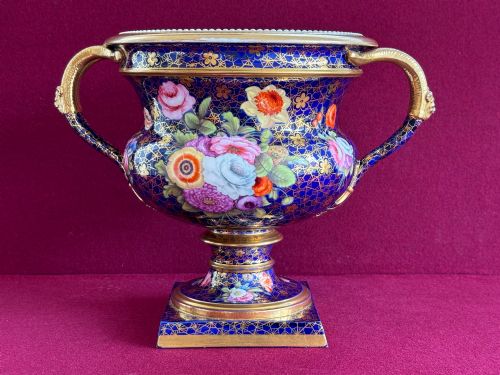
A blue porcelain mantel urn is a decorative vessel designed to sit on a fireplace mantel, often accompanied by matching vases or clock garnitures. When you search for blue porcelain mantel urn, you encounter pieces spanning the eighteenth to the early twentieth century, originating from European kilns and Japanese workshops.
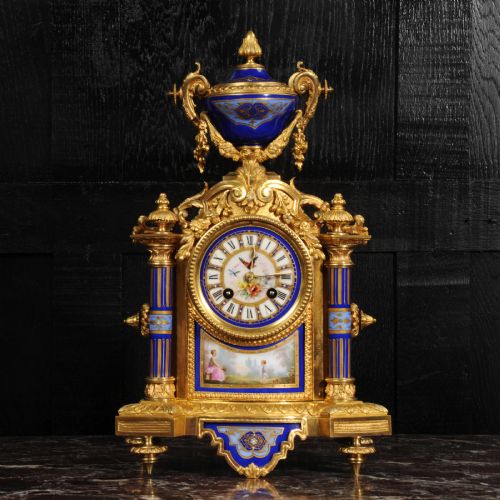
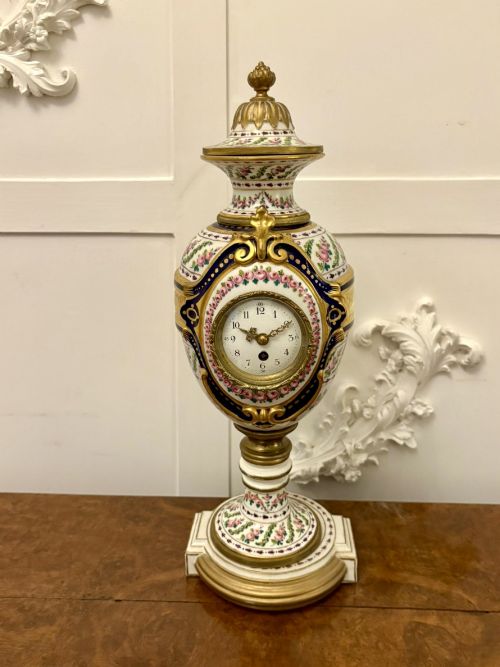
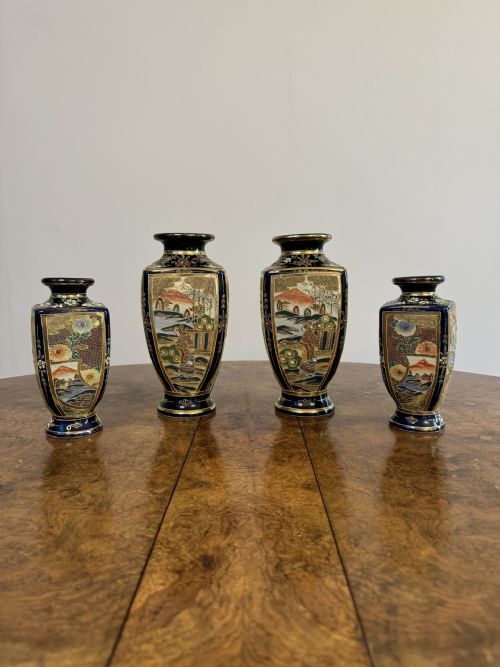
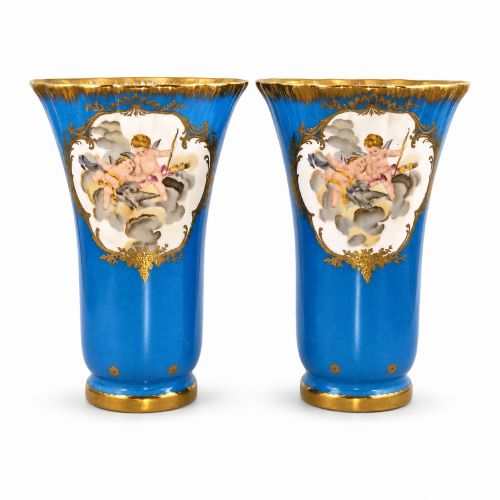
The most common examples on this page are French pieces rendered in the Sèvres style, featuring rich cobalt grounds and gilded bronze mounts. Alongside these European interpretations, Japanese Imari and Satsuma vessels appear frequently, bringing distinct earthenware traditions to the mantelpiece.
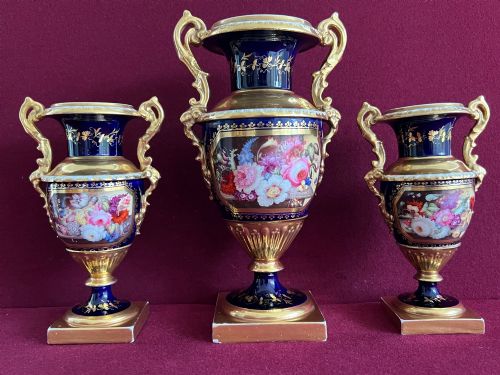
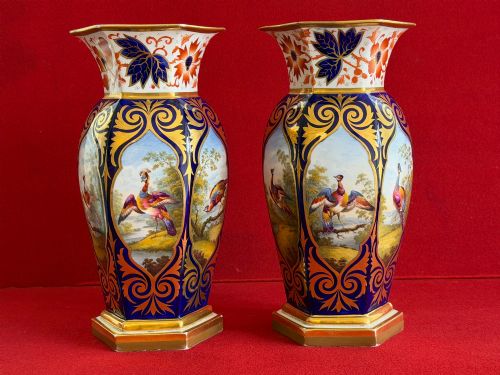
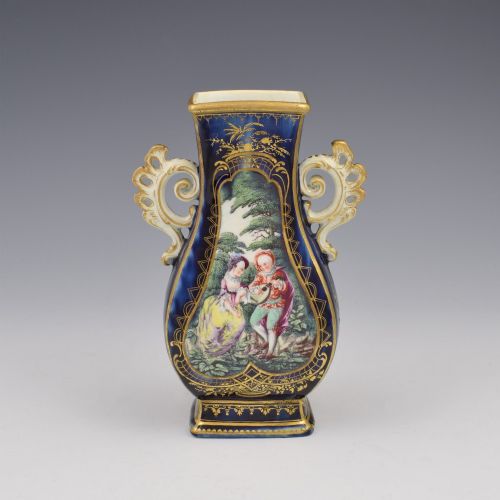
Forms vary from lidded ginger jars and classical handled urns to multi-piece garniture sets designed to balance a room's symmetry. These objects combine utilitarian vessel shapes with ornate decorative painting, often depicting pastoral scenes, floral motifs, or exotic birds.
Materials and manufacture
The foundation of each piece is fired ceramic, ranging from soft-paste porcelain and ironstone to fine bone china, glazed with cobalt to achieve deep blue grounds. Artisans then applied hand-painted enamels and gold leaf, often firing the pieces multiple times to set the vibrant colours and metallic highlights.
Metal mounts play a structural and decorative role, with ormolu and gilt bronze cast, chased, and fire-gilded to cradle the porcelain bodies. These brass and bronze fittings secure handles, bases, and lids, turning ceramic vessels into substantial architectural objects suited for prominent display.
Materials recorded across these items include porcelain, enamel, gilt bronze, ormolu, gold leaf, glass, brass, and gilding.
Assessing quality and execution
Quality rests primarily on the crispness of the hand-painting and the precision of the gilding, where refined brushwork on figural panels elevates a piece above standard factory output. The weight and detail of the ormolu mounts further distinguish finer pieces, as heavily chased bronze indicates superior craftsmanship.
The integration between the ceramic body and its metal mounts reveals the maker's skill, with top-tier examples showing custom-fitted hardware that complements rather than conceals the porcelain. Marks stamped or painted on the underside provide additional clues to the renown of the factory and the care taken in its production.
Japy Freres·Flight Barr And Barr·Samson Paris·Wolfsohn Dresden·KPM Berlin·Minton·Vincenti Of Paris·JP Delettrez·Doulton
The Blue Porcelain Mantel Urn Glossary
- Ormolu
- Gilded bronze used for decorative mounts on furniture and ceramics. This technique involves applying a mercury and gold amalgam to cast bronze before heating.
- Garniture
- A matched set of three or more decorative vases or urns designed for display together on a mantelpiece. These sets maintain uniform decorative schemes to create visual balance.
- Bleu Céleste
- A bright turquoise or sky-blue enamel ground colour developed at the Sèvres porcelain factory during the eighteenth century. This distinctive hue appears frequently on French revival pieces.
- Imari
- Japanese porcelain decorated in underglaze blue, iron red, and gold, produced in Arita and exported widely to Europe. The palette is known for its rich contrast and intricate patterns.
Blue Porcelain Mantel Urn: Frequently Asked Questions
What is a garniture set?
A garniture set consists of three or more matched vessels designed to be displayed together as a unified arrangement on a mantel or sideboard. These sets typically feature a central larger urn flanked by two smaller matching vases.
Historically, they provided symmetrical decoration for formal rooms, balancing the architectural lines of the fireplace. The pieces share identical colour palettes, motifs, and mounting styles to create a cohesive visual display.
How do I identify a Sèvres style urn?
Sèvres style urns are characterised by rich cobalt or turquoise blue porcelain grounds, elaborate hand-painted panels depicting figures or landscapes, and heavy gilded bronze mounts. They often draw inspiration from French neoclassical designs of the eighteenth century.
While genuine eighteenth-century pieces exist, many high-quality interpretations were produced during the nineteenth century by French and European potteries paying homage to the original factory's aesthetic.
Where should I place a mantel urn?
A mantel urn is traditionally displayed on the mantelpiece above a fireplace, where its height and decorative mounts can be appreciated at eye level. They also sit well on console tables, bookcases, or dedicated pedestals.
Because many of these pieces are part of multi-item garnitures, consider the surface width available to ensure the set can be arranged harmoniously without overcrowding.