
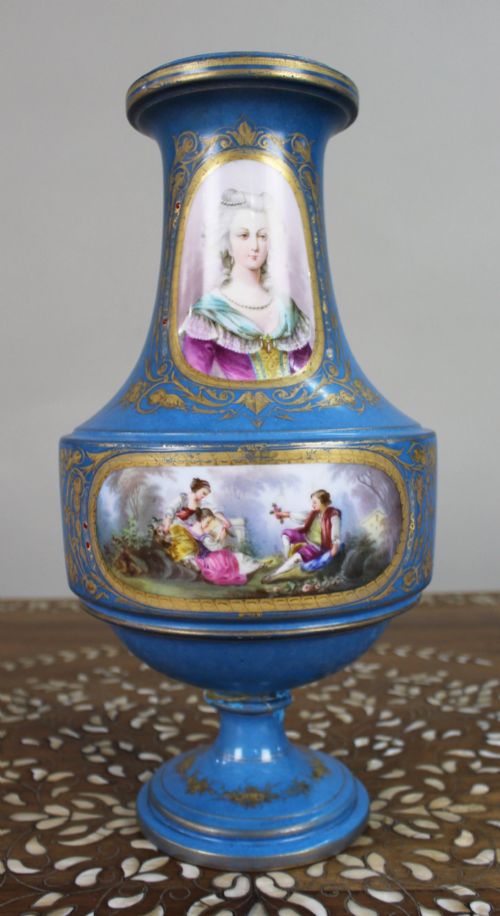
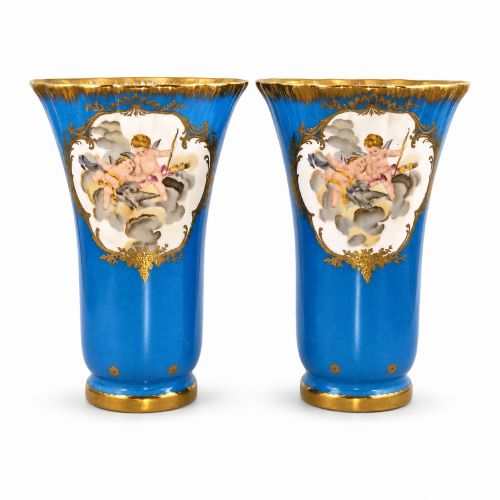


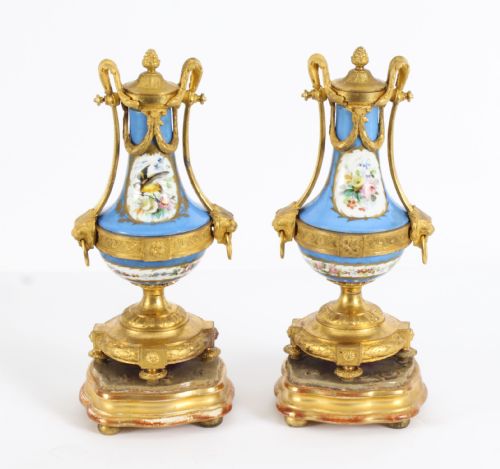


Celeste Blue Porcelain Urn
These celeste blue porcelain urns bring striking colour and grand 19th-century French presence to any room.
Celeste Blue Porcelain Urn
A celeste blue porcelain urn delivers the saturated turquoise-blue tone associated with the Sèvres factory, capturing a distinct aesthetic of the nineteenth century. Most examples found here follow French Rococo Revival or French Chateau styles, produced either by Samson Paris or in the broader Sèvres taste during the eighteen-eighties and surrounding decades.
Forms range from lidded decorative vases and classical covered vessels to table lamps, comports, and centrepieces. Buyers encounter both single statement pieces and matched pairs intended for formal mantelpieces or console tables.
The objects combine high-fired ceramic bodies with rich surface decoration, often pairing the signature blue ground with hand-painted pastoral scenes or floral reserves. Ormolu, gilt bronze, gilt metal, and gold leaf mounts frequently frame the porcelain to elevate the overall decorative effect.
How they were made
Makers shaped high-fired porcelain bodies, applying the characteristic bleu céleste glaze before firing the ceramic to achieve an even, vibrant surface colour. Artisans then added hand-painted details and gilding, often firing the pieces multiple times to set the metallic highlights and enamel pigments.
Foundry workers cast or forged ormolu, gilt bronze, and gilt metal mounts to encase the porcelain bases, rims, and handles. Skilled craftspeople secured these metal fittings with pins or screws, sometimes combining onyx elements into the structural design.
Several vessels feature elaborate metal mounts that occasionally outshine the porcelain they hold.
What varies in quality
The crispness of the hand-painted reserves and the precision of the gilding set the finest pieces apart from simpler production. Superior examples display finely detailed pastoral or floral motifs within the gilt cartouches rather than stencilled or hurried brushwork.
The weight, casting detail, and chasing of the ormolu or gilt bronze mounts distinguish higher-grade pieces. Heavier, deeply chased mounts that fit the porcelain contours precisely indicate superior craftsmanship compared to thin, stamped metal fittings.
Samson Paris
The Celeste Blue Porcelain Urn Glossary
- Bleu céleste
- A bright turquoise-blue porcelain ground colour first developed at the Sèvres factory in the eighteenth century. This distinctive hue defines the visual identity of the pieces gathered here.
- Ormolu
- Gilt bronze mounted on decorative objects, created by applying a gold amalgam to a bronze base and heating it to vaporise the mercury. The technique yields a rich, durable golden surface.
- Comport
- A decorative stand or shallow dish raised on a foot, used historically for serving fruit or sweets. In nineteenth-century porcelain, these pieces often match the glaze and mounts of companion urns.
Celeste Blue Porcelain Urn: Frequently Asked Questions
What is a celeste blue porcelain urn?
It is a decorative nineteenth-century ceramic vessel featuring the bright turquoise glaze popularized by the Sèvres manufactory. These pieces often incorporate gilt metal mounts and hand-painted panels.
Such vessels served primarily as decorative ornaments in formal interiors, reflecting French Rococo Revival tastes.
Were these urns used for flowers?
Most examples functioned as decorative ornaments rather than utilitarian vases for holding water and fresh stems. Lidded versions were designed to complete the symmetrical arrangement of a mantelpiece.
Some variations were later converted into table lamps while retaining their decorative ceramic bodies.
How do I care for gilt metal mounts?
Dust the ormolu or gilt bronze gently with a soft, dry cloth to prevent the accumulation of grit. Avoid harsh commercial cleaning products that can strip the gold leaf or damage the underlying metal.
Keep the porcelain and metal surfaces away from direct sunlight and excessive moisture to preserve the glazes and gilding.
How can I identify Sèvres style pieces?
Look for the characteristic bleu céleste ground colour paired with rich gilding and hand-painted reserves, often depicting pastoral scenes or birds. Many pieces from this tradition date from the nineteenth century and reflect revivalist aesthetics.
Examining the quality of the ormolu mounts and the weight of the porcelain helps distinguish finely made workshop pieces.