
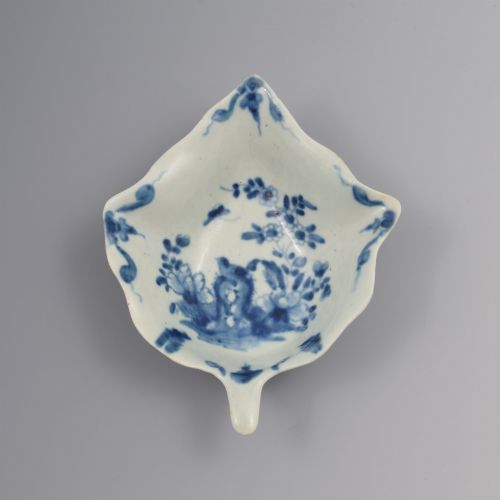


Blue Porcelain Leaf Dish
A blue porcelain leaf dish brings botanical form and cobalt painting together on the table, offering a small serving piece that collectors prize for its eighteenth-century origins.
Blue Porcelain Leaf Dish
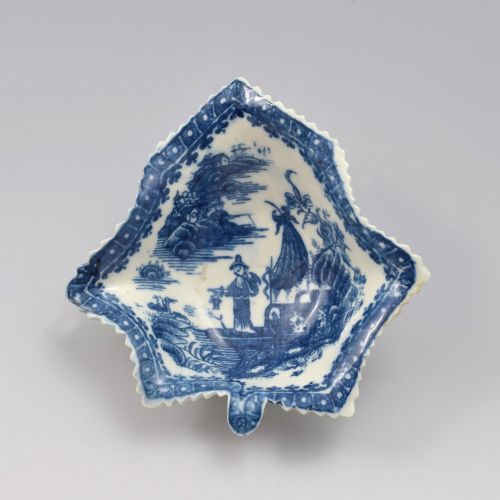
A blue porcelain leaf dish takes the natural shape of foliage, most often moulded as vine, ivy, or cabbage leaves, to serve pickles, condiments, or small desserts. You meet these primarily as eighteenth-century soft-paste porcelain pieces from factories such as Worcester, Caughley, Liverpool, and Derby, painted in cobalt underglaze with patterns like the fisherman or floral sprays.
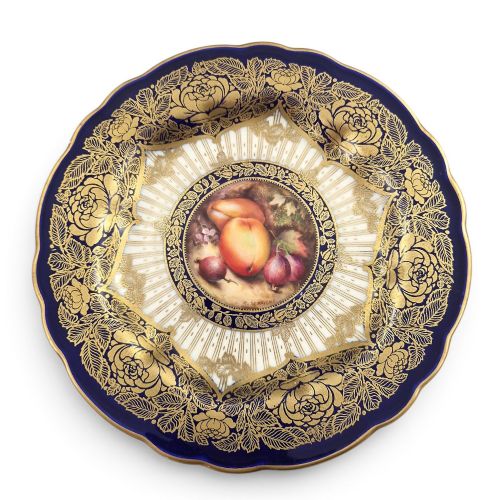
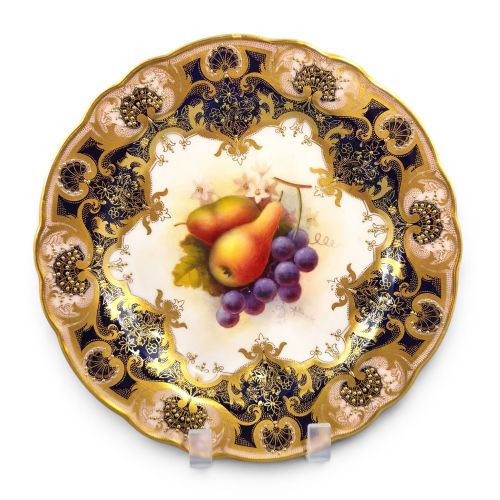
While the eighteenth-century examples dominate the early forms, the evidence also records later nineteenth-century ironstone and bone china versions alongside twentieth-century cabinet plates from Royal Worcester. These later iterations shift from functional pickle dishes towards decorative dessert and cabinet wares, yet they retain the botanical moulding that defines the genre.
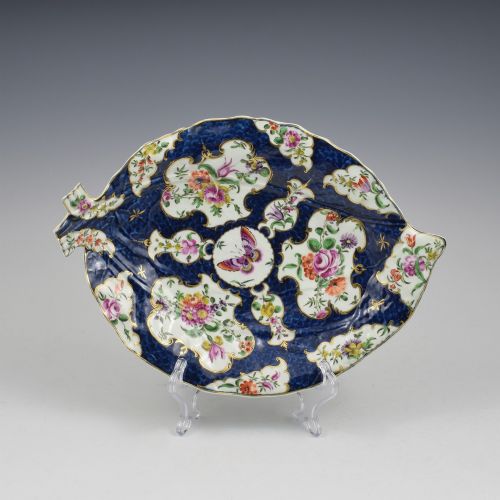
The form functions equally well within a historic table setting or displayed upright on a cabinet shelf. Buyers seek them out for their combination of naturalistic crisp moulding and hand-painted blue underglaze decoration, which ranges from simple floral sprays to elaborate scale and butterfly motifs.
Materials and methods
Potters formed these pieces using soft-paste porcelain or bone china, pressing clay into carved moulds taken from actual leaves to capture the veins, stems, and serrated edges. Cobalt underglaze was then applied by hand before glazing and firing, creating the deep blue tones characteristic of the early wares.
Later nineteenth-century pieces introduced ironstone china for greater durability, while twentieth-century dessert plates employed fine porcelain bodies painted with enamels and finished with gilding. Gilding and gold leaf occasionally accent the rims and veins on special cabinet pieces from the later periods.
Early potters pressed real leaves into wet clay to capture veins, accidentally immortalising long-dead cabbage leaves in porcelain.
Judging quality in the pieces
Quality rests upon the crispness of the original moulding and the skill of the brushwork. Superior pieces retain sharp leaf veins and well-defined petal edges without softening from worn moulds, accompanied by precise cobalt painting that sits cleanly beneath the glaze.
The prominence of the factory and the complexity of the pattern elevate certain examples above standard tablewares. Pieces bearing documented factory periods or signed artist work demonstrate a higher tier of craftsmanship within the tradition.
Caughley·Royal Worcester·Dr Wall Worcester·Liverpool Pennington·Masons Patent Ironstone·Royal Crown Derby·Royal Vienna
The Blue Porcelain Leaf Dish Glossary
- Soft-paste porcelain
- An artificial ceramic body composed of white clay, glass frit, and ground minerals, fired at lower temperatures than hard-paste porcelain. This material produced the creamy translucence seen on eighteenth-century English pickle dishes.
- Cobalt underglaze
- A metallic oxide pigment applied to the unfired ceramic body before glazing and high-temperature firing. It reacts with the glaze to produce a durable blue colour that sinks into the surface.
- Pickle dish
- A small, shallow serving vessel designed for olives, pickles, or sauces on a dining table. They were frequently moulded in leaf or shell shapes during the georgian period.
- Ironstone
- A heavy, durable earthenware patented in the nineteenth century to imitate porcelain. It offered high resistance to chipping while accommodating transfer-printed and hand-painted designs.
- Enamel
- Opaque glass-based colours applied over the fired glaze and fixed in a muffle kiln. They provided the bright palette found on later painted fruit plates.
Blue Porcelain Leaf Dish: Frequently Asked Questions
What were leaf dishes used for?
These small dishes served pickles, condiments, and relishes on eighteenth-century dining tables. Their shallow, compartmentalised or natural leaf forms kept small morsels contained.
Over time, their role shifted from functional table service to decorative cabinet display. Later nineteenth and twentieth-century versions often functioned as dessert or cabinet plates.
How do I date an early leaf dish?
Dating relies on identifying the paste, glaze characteristics, and factory marks or painting styles. Eighteenth-century soft-paste porcelain shows a warm, slightly creamy body under the glaze.
Later nineteenth-century pieces display denser ironstone or bone china bodies. Stylistic shifts from eighteenth-century cobalt blue patterns to twentieth-century enamelled fruit painting also mark the chronology.
Are these pieces safe to use?
Historic soft-paste porcelain and early earthenware are porous and delicate. Using them for serving food today risks staining the soft body or damaging the glaze.
Collectors generally preserve them as display objects rather than functional tableware. Gentle dusting maintains the surface without risking abrasion to the old glaze.
Why are some pieces called Dr Wall Worcester?
Dr John Wall established the Worcester porcelain manufactory in the eighteenth century, where workers produced fine soft-paste wares. Pieces from this period are known for their exceptional potting and cobalt painting.
Collectors use the term to distinguish these early productions from later nineteenth-century factory iterations. The butterfly, scale, and peony patterns are hallmarks of this period.