


Blue Grey Seascape Painting
A blue grey seascape painting captures the atmospheric mood of coastal waters through muted tones and maritime subjects.
Blue Grey Seascape Painting
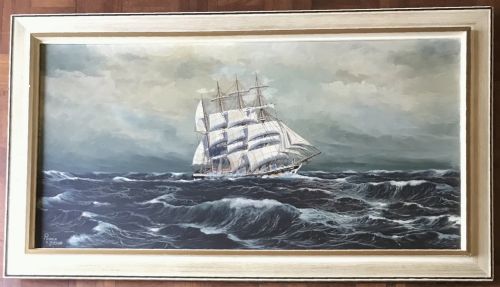
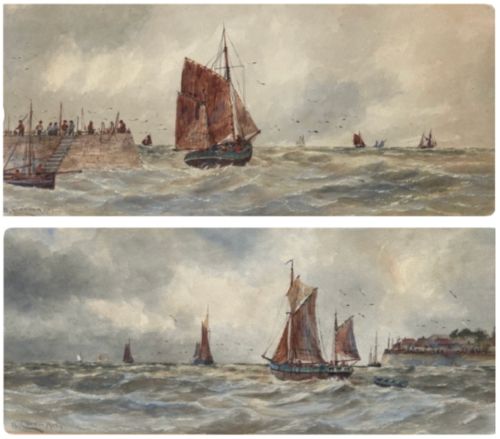
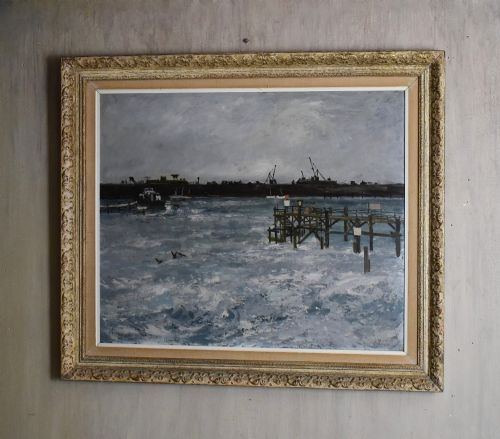
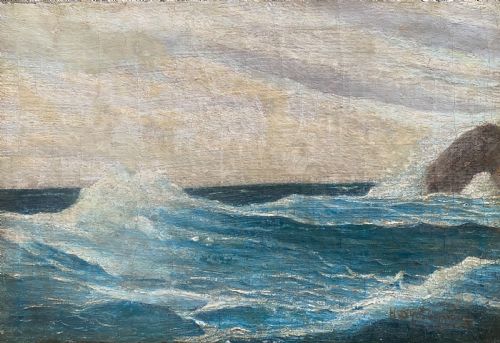
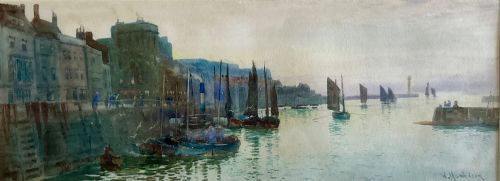
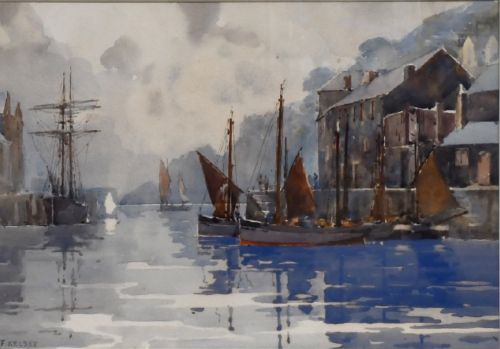
A blue grey seascape painting presents coastal views, harbours, and shipping scenes executed primarily in subdued tones of azure, slate, and charcoal. These works focus on maritime subjects such as fishing boats, stormy seas, and coastal landmarks like piers and lighthouses.
The pieces available originate across the nineteenth and twentieth centuries, encompassing Victorian marine art, Edwardian works, and mid-century modern interpretations. Buyers encounter watercolours on paper and oil paintings on canvas depicting British and European shores.
Works range from detailed historical watercolours documenting specific coastal towns to expressive oil paintings that emphasise weather and water movement. Each piece reflects the particular atmospheric conditions observed by the artist along the coast.
How they were made
Artists apply watercolour pigment onto paper to create luminous, translucent coastal scenes, often working en plein air to capture transient light and weather. This medium allows for delicate washes that render misty skies and shifting sea conditions.
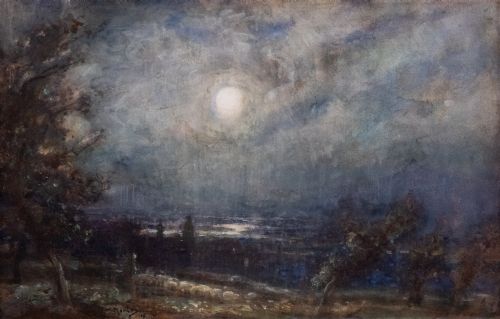
Oil paint applied to canvas provides a heavier texture and deeper opacity, suitable for building up the dramatic impasto of churning waves and turbulent skies. Wooden stretchers support the canvas while framing protects the edges of both paper and fabric supports.
Several artists clearly braved salt spray and howling gales to paint churning harbour mouths while wearing very stiff collars.
What varies in quality
The quality of a work rests upon the artist's handling of light, atmosphere, and the convincing movement of water rather than mere technical neatness. Superior pieces convey the specific damp air, weight of the sea, and coastal illumination with economy and precision.
Compositional strength separates standard topographical records from enduring art, as skilled painters balance the expanse of sky against the restless surface of the sea. The integration of maritime vessels and figures into the coastal environment reveals the depth of the painter's observation.
Thomas William Morley·Peter Brannan·William Matthison·Frank Kelsey·Charles William Adderton·Vincenzo D’Esposito·Ernest Dade·Robert Leslie Howey·Frank H. Mason·John Mitchell·Samuel Owen·Ernest F. Hill·Don Wilson·George Gregory·Frederick Stuart Richardson·Percy Brooke·William Kay Blacklock·Arthur Wilde Parsons·Frank Wasley·Paul Jean Clays·Fred Mayor·Joseph Newington Carter·Herbert James·Rowland Henry Hill·Frances E Nesbitt
The Blue Grey Seascape Painting Glossary
- Watercolour
- A painting method where fine pigment is suspended in a water-soluble binder and applied to paper. This medium produces transparent washes ideal for atmospheric skies and coastal mists.
- Oil on canvas
- A technique utilising pigments bound in drying oils applied to a stretched cloth surface. This combination permits rich colour blending and textured brushwork suited to stormy seas.
- Impressionism
- An art style focused on accurate depiction of light in its changing qualities and ordinary subject matter. Artists working in this manner use visible brush strokes to capture the immediate visual impression.
- Maritime art
- Works depicting or inspired by the sea, ships, and coastal views. This category forms the core of marine painting traditions across the nineteenth and twentieth centuries.
- Plein air
- The act of painting outdoors to directly capture the natural light and atmosphere of a landscape. Painters utilise this approach to record authentic coastal conditions.
Blue Grey Seascape Painting: Frequently Asked Questions
What subjects appear in these paintings?
These works feature coastal views, fishing boats, harbours, and stormy seas along British and European shores. Common motifs include piers, lighthouses, and maritime vessels at anchor or under sail.
Artists frequently record specific locations such as Whitby, Scarborough, and various Cornish fishing ports. The focus remains consistently upon the interaction between land, water, and shifting atmospheric weather.
How do watercolours differ from oils here?
Watercolours on paper offer a lighter, more transparent quality that suits misty coastal air and delicate skies. They capture the transient effects of light with fluid washes.
Oil paintings on canvas provide heavier textures and deeper colour saturation. This medium allows artists to build up thick impasto for turbulent waves and dramatic storm clouds.
Where were these coastal scenes painted?
The views span various coastal regions, with a strong emphasis on Yorkshire and Cornish fishing ports. Locations like Whitby, Staithes, and Polperro appear frequently across the works.
Other pieces extend across Scottish coasts, Welsh harbours, and continental European ports in France, Belgium, and Norway. Artists travelled extensively along maritime routes to find suitable subjects.
How should I frame and hang these?
Watercolours require framing behind glass with acid-free mounts to protect the paper from humidity and ultraviolet light. Oils on canvas generally need simple wooden frames that allow the canvas to breathe without glass.
Keep both types away from direct sunlight and damp environments to preserve the pigments. Proper placement ensures the muted blue and grey tones remain stable over time.