

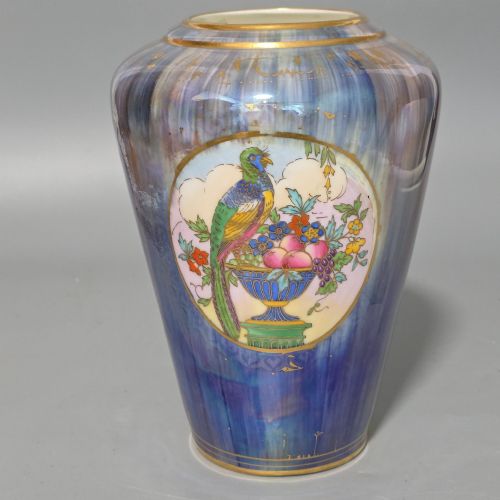

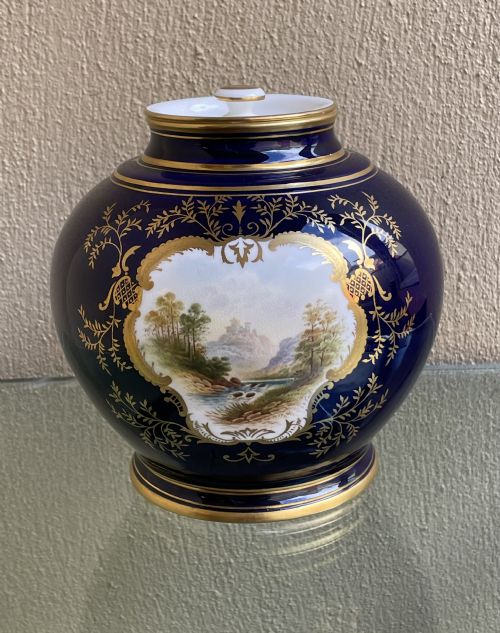
Blue Gold Porcelain Urns
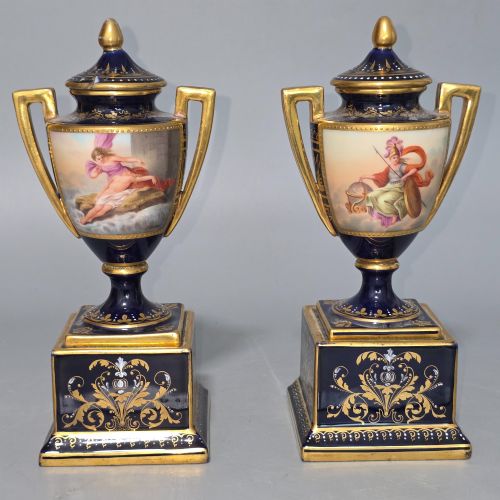
These blue gold porcelain urns and kindred lidded vases bring together cobalt grounds and gilded mounts from the nineteenth century and early twentieth century.
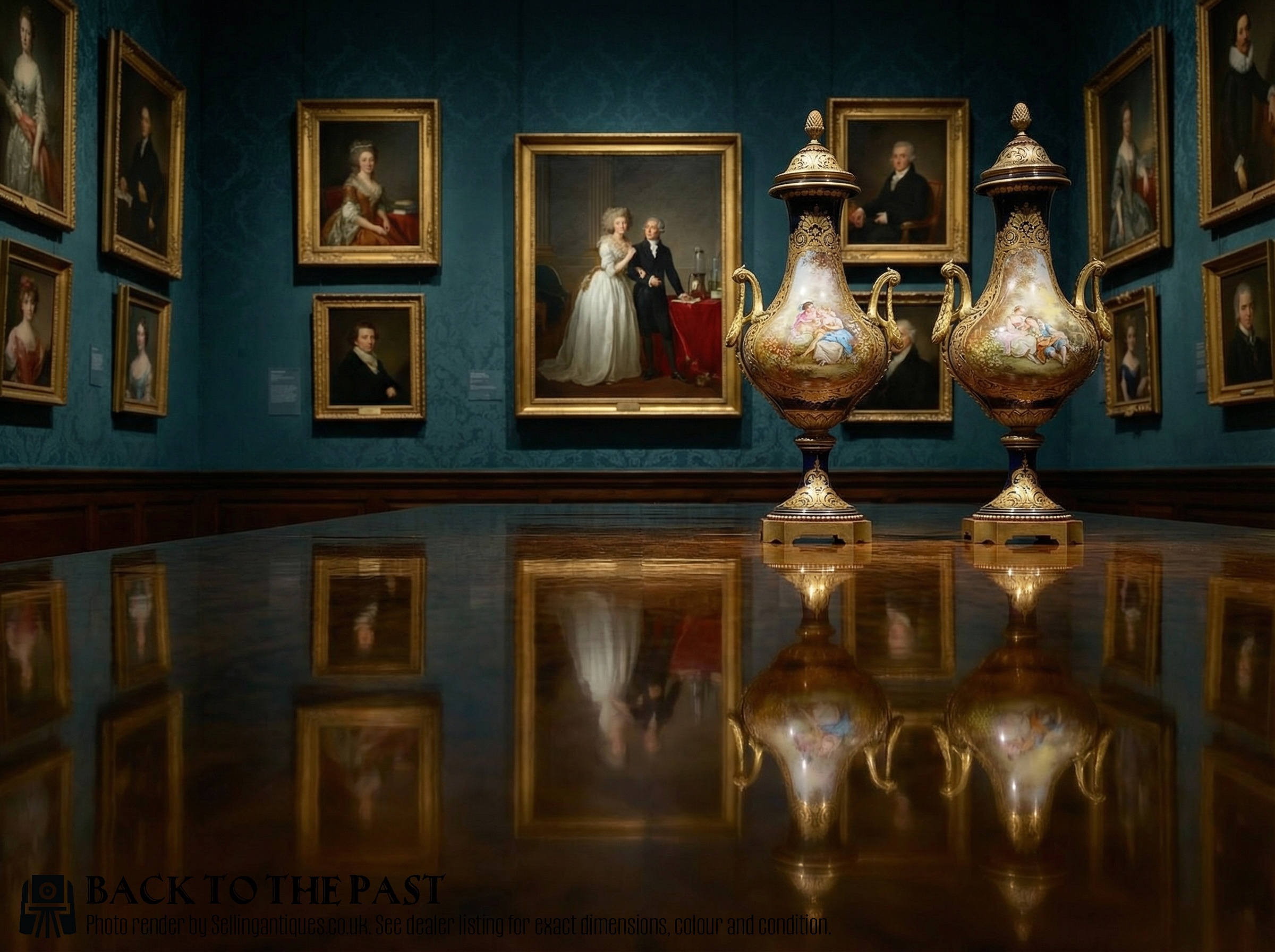
Blue Gold Porcelain Urns
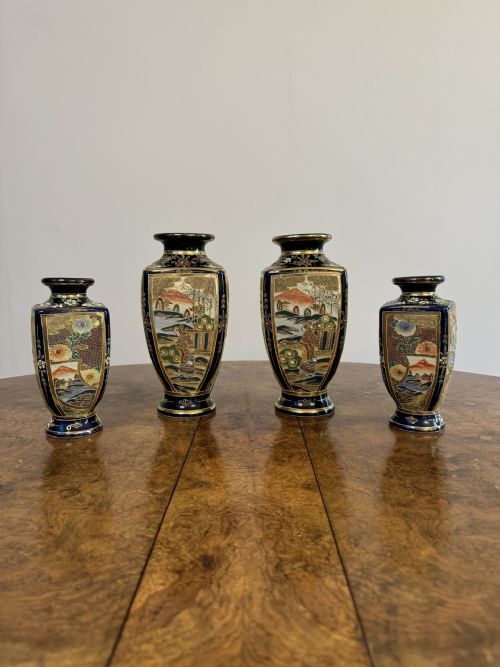
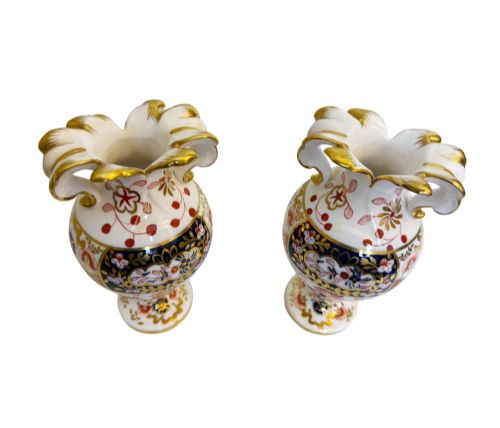
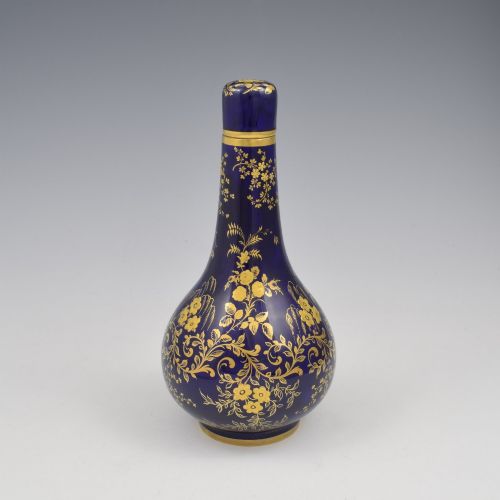
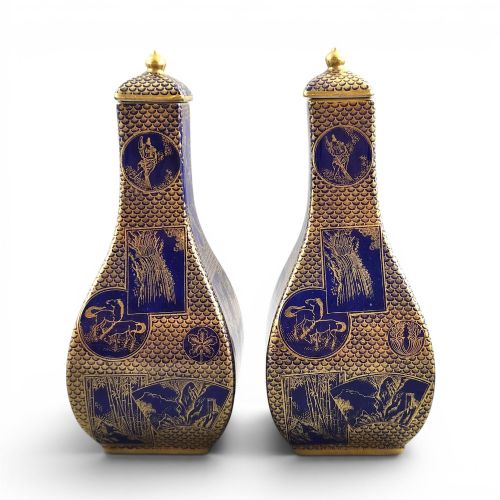
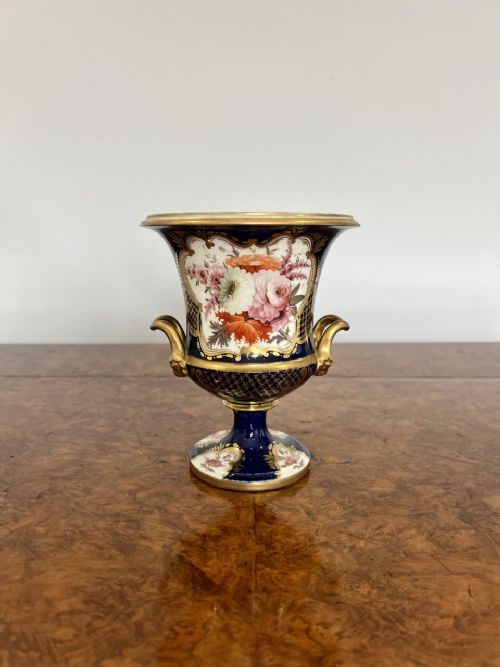
When you search for blue gold porcelain urns, you encounter a selection of lidded vases, campagna urns, and amphora forms rooted in nineteenth-century and early twentieth-century production. These pieces range from classical Vienna and Sevres style vessels to Japanese satsuma vases and English porcelain from factories such as Spode and Worcester.
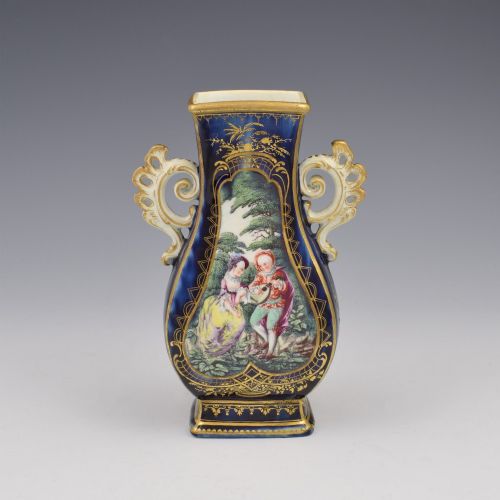
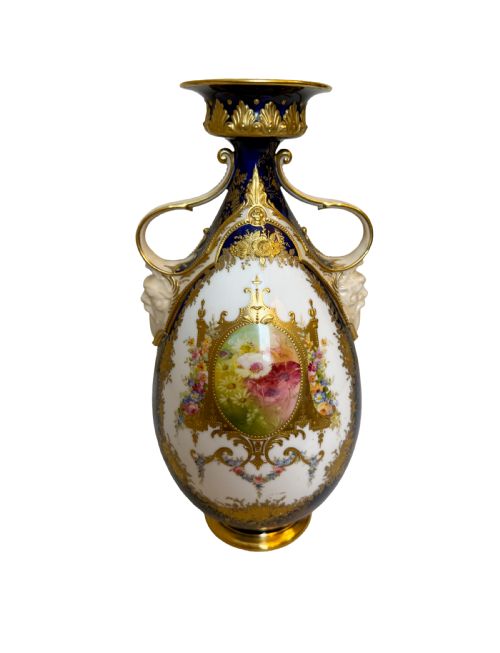
The objects frequently take the form of twin-handled vases, bottle vases, and garniture sets designed for display on mantelpieces or as centrepieces. Many carry deep cobalt, mazarine blue, or powder blue grounds paired with intricate gilding, moriage, or enamel floral decor.
Originating across Britain, France, Austria, and Japan, these pieces reflect Victorian, Regency, Edwardian, and Empire aesthetics. Buyers meet both grand symmetrical pairs intended for formal interiors and singular cabinet pieces showcasing hand-painted scenes.
Materials and technique
The foundation of these pieces relies on fired ceramic bodies, primarily porcelain, earthenware, and ironstone, shaped into vases and urns. Artisans applied rich blue glazes or enamel grounds before adding detailed hand-painted scenes, panels, or floral motifs.
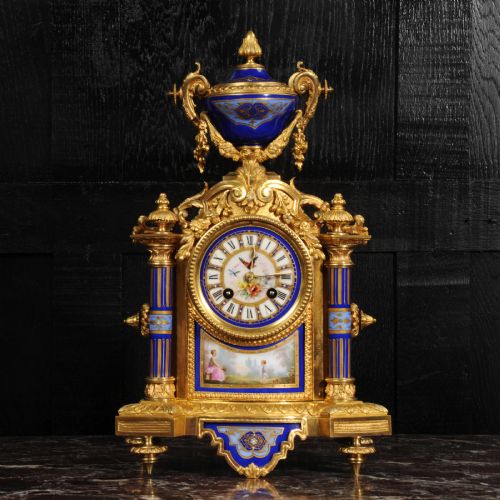
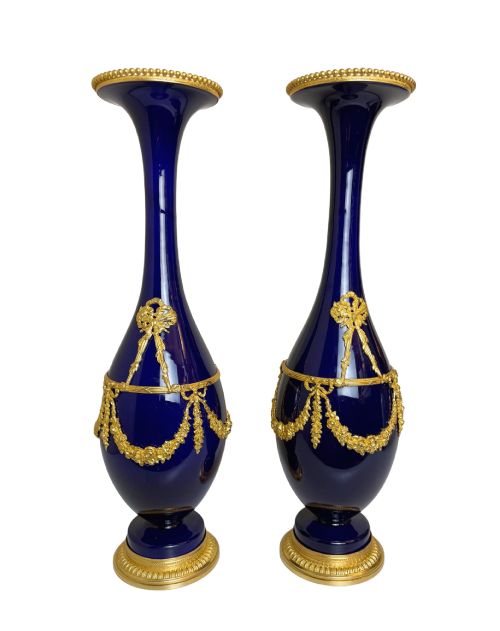
Gilding forms a defining characteristic, executed through gold leaf, gold paint, or heavy gilt work that catches the light against the dark blue ceramic. Many vessels incorporate cast metal elements, using ormolu and gilt bronze mounts to frame the porcelain bodies.
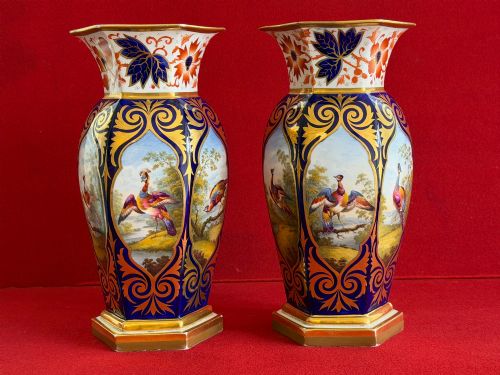
Parrots, storks, and Watteau scenes keep company with cobalt and gold.
Distinctions in quality
The upper tier of these pieces reveals itself in the precision of the hand-painting and the crispness of the gilt work. Works carrying identified artist signatures or recognised factory marks demonstrate superior execution in both the ceramic body and the decorative detailing.
Quality also rests in the integration of the metal mounts, where cast ormolu and gilt bronze fit snugly against the porcelain contours. Heavier, balanced forms with well-preserved cobalt grounds and intact gilding represent the higher end of the range.
Japy Freres·Royal Crown Derby·Flight Barr And Barr·Spode·Mason's·Vienna Porcelain·Chelsea Porcelain·Royal Doulton·Coalport·Minton·Carlton Ware·Royal Worcester·Ernst Wahliss·Wedgewood
The Blue Gold Porcelain Urns Glossary
- Ormolu
- Gilded bronze mounts applied to furniture, clocks, and porcelain vessels during the eighteenth and nineteenth centuries. This technique involved mercury gilding to produce a rich golden surface.
- Moriage
- A decorative technique used in Japanese ceramics where slip is piped onto the surface in dots or lines to create raised patterns. It frequently appears accented with gold on cobalt grounds.
- Garniture
- A set of three or more matching vases or urns designed to be displayed together on a mantelpiece or sideboard. They typically comprise a central tall vessel flanked by smaller matching pieces.
- Campagna Urn
- A classical vase shape modelled on ancient Roman stone urns excavated at Campagna, featuring a deep bowl on a pedestal base with twin handles. This form gained popularity during the Regency and Victorian periods.
- Imari
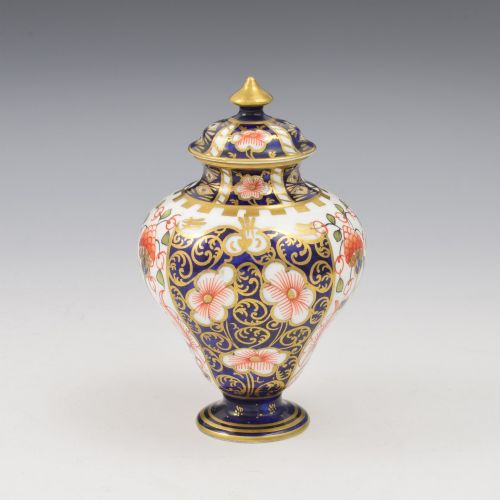
- A style of Japanese porcelain featuring a palette of underglaze blue, iron red, and gold, which European factories like Spode and Royal Crown Derby subsequently imitated. The patterns are dense and richly coloured.
Blue Gold Porcelain Urns: Frequently Asked Questions
What are blue gold porcelain urns used for?
These vessels serve primarily as decorative objects for display on mantelpieces, consoles, and tabletops within formal rooms. Historically, larger matched pairs and garniture sets functioned as architectural ornaments to anchor a room's decorative scheme.
Today, collectors use them to introduce colour and nineteenth-century craftsmanship into traditional or eclectic interiors. Certain lidded versions also double as functional storage for dried botanicals or retain their original role as centrepieces.
How do I tell periods apart?
Distinguishing the periods relies on observing stylistic markers, factory marks, and the types of gilding applied to the porcelain. Regency and Georgian pieces often lean toward classical revival shapes with neoclassical motifs, while Victorian and Edwardian examples embrace heavier floral enamelling and elaborate ormolu mounts.
Signatures, backstamps, and registry marks on the base provide concrete dates or production eras. Comparing the depth of the cobalt blue and the application of the gold leaf also clarifies whether a piece belongs to the early nineteenth century or the later Victorian revival.
How should I clean them?
Dusting these pieces requires a soft, dry brush or a feather duster to protect delicate raised gilding and hand-painted surfaces. Avoid using commercial liquid cleaners, abrasive cloths, or immersion in water, as moisture can damage old enamel and weaken historic adhesives on mounts.
If the ormolu mounts require attention, use a dry microfibre cloth to gently lift surface grime without touching the surrounding porcelain. Professional restoration is advisable for any piece with loose mounts or unstable enamel.
Are these pieces fragile?
Fired ceramic and porcelain possess inherent brittleness, meaning accidental impacts can cause chips or fractures. The attached ormolu mounts and delicate handles require careful handling when moving the pieces between display locations.
Stable placement on flat, secure surfaces prevents tipping. While durable enough for daily display in low-traffic areas, they should remain out of reach of high-activity zones and direct sunlight.