


Blue Glazed Earthenware Jug
A blue glazed earthenware jug brings rich cobalt tones and centuries of domestic utility to a room.
Blue Glazed Earthenware Jug
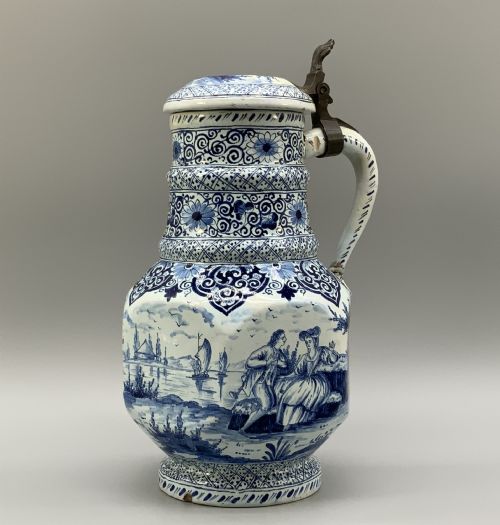
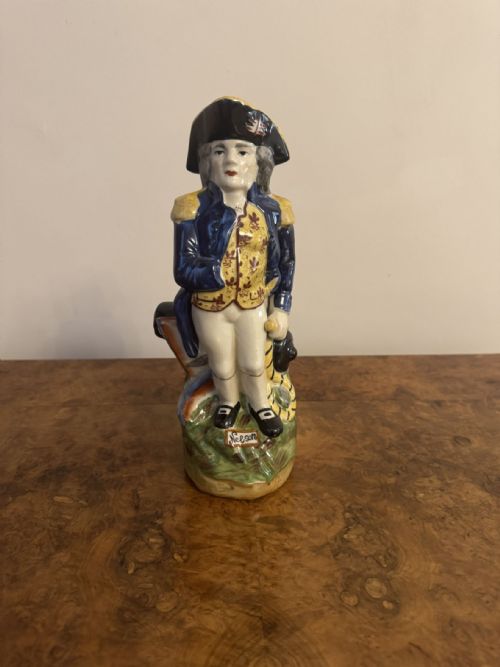
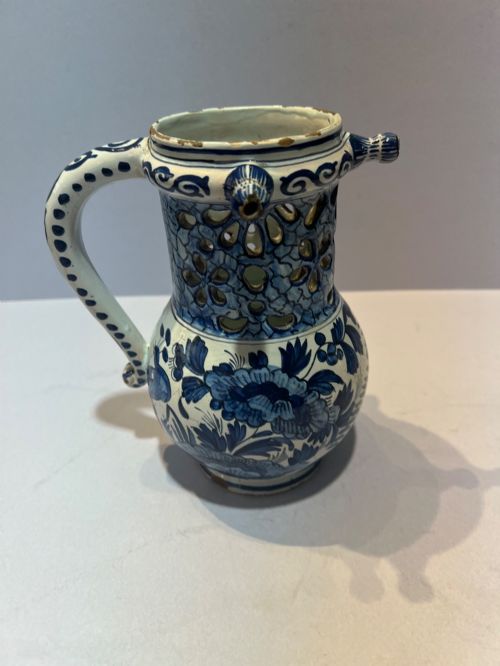
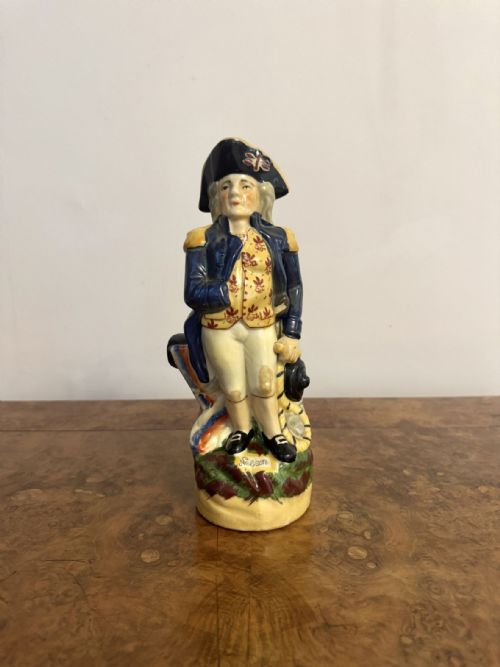
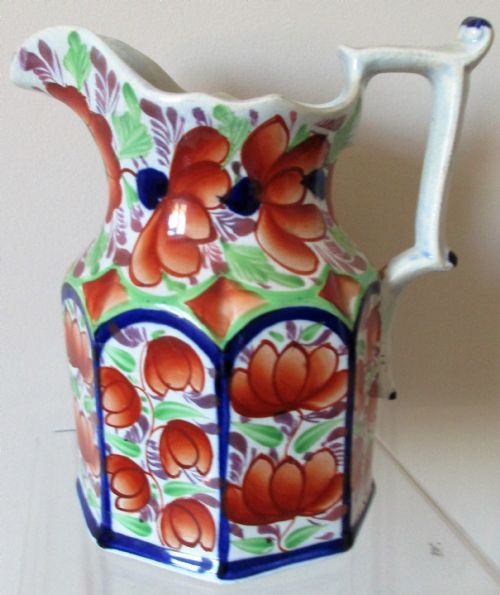
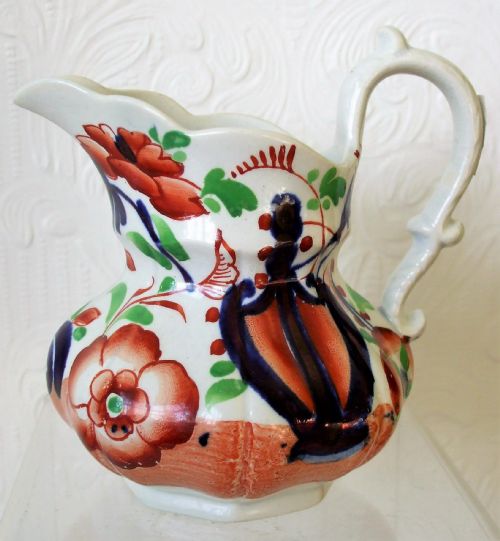
When you search for a blue glazed earthenware jug, you encounter a diverse array of ceramic vessels spanning the seventeenth through the nineteenth centuries. The selections on this page encompass Dutch Delftware, Victorian Staffordshire pottery, Gaudy Welsh patterns, and studio ceramics like those by Sir Edmund Elton. These pieces range from functional tableware and wash sets to decorative Toby jugs, puzzle jugs, and salesman's sample plaques.
You are most likely to meet nineteenth-century Staffordshire Toby jugs or eighteenth-century Dutch Delftware pitchers in this collection. The forms vary from straightforward pouring vessels to sculptural figures depicting characters like Lord Nelson. Styles shift from the cobalt Chinoiserie of early Dutch pieces to the vibrant palette of Victorian Gaudy Welsh earthenware.
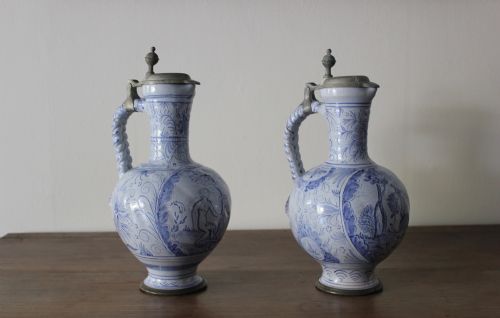
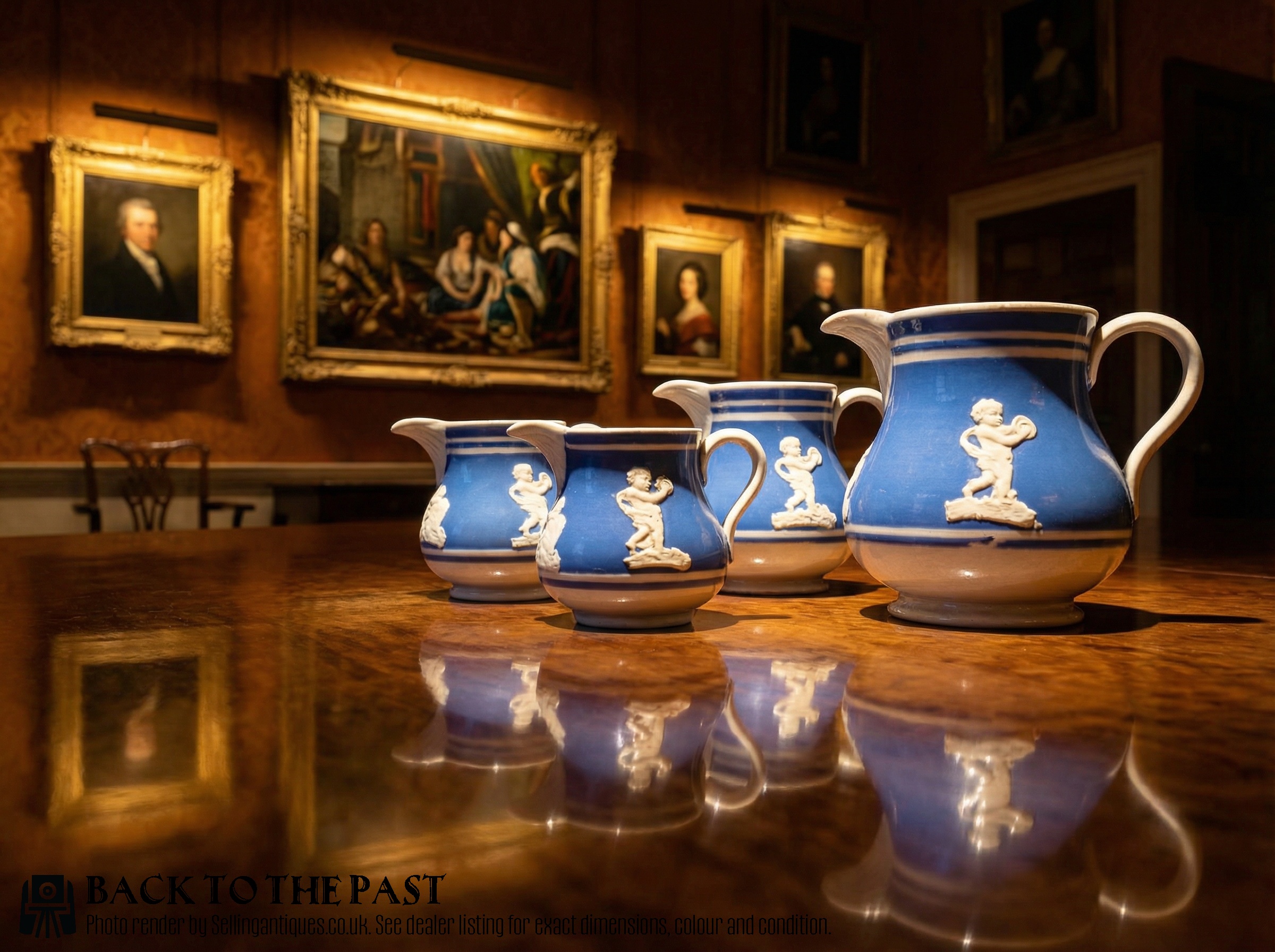
The origins of these jugs stretch across English and Dutch potteries, reflecting regional tastes and technical developments in ceramic production. Some pieces arrive as pairs or graduated sets, while others stand alone as singular decorative objects. Each item displays the characteristic blue glaze upon an earthenware body that defines this category of antique pottery.
How they were made
Potters shaped these vessels from earthenware clay, often finishing them with tin glazes or specialised ceramic coatings to create a smooth surface for painted decoration. The distinctive blue colour relies on cobalt oxides applied beneath or within the glaze before firing in the kiln. Certain Dutch and English examples incorporate pewter lids fitted directly to the ceramic rim.
The application of glaze determined the final texture and sheen of the vessel, ranging from the opaque white tin-glazes of Delftware to the rich cobalt surfaces of Victorian pieces. Hand-painted motifs, including floral arrangements and Chinoiserie scenes, required steady brushwork while the pigment settled into the porous clay body. Studio potters later experimented with slip and specialised firing techniques to achieve unique surface textures.
Materials recorded across the selection include tin-glazed earthenware, standard ceramics, and fitted pewter elements.
What varies in quality
The distinction between ordinary production and superior work lies in the crispness of the painted detail and the depth of the blue glaze. Finer examples display confident brushstrokes and harmonious composition, particularly on intricate Chinoiserie or floral designs. Early Delftware and studio pieces often reveal the individual hand of the maker more clearly than mass-produced nineteenth-century wares.
Doulton Lambeth·Pieter Verburg·Sir Edmund Elton
The Blue Glazed Earthenware Jug Glossary
- Earthenware
- A porous ceramic body fired at relatively low temperatures, requiring a glaze to hold liquids. It forms the structural base for most traditional jugs and pitchers on this page.
- Tin Glaze
- An opaque white glaze containing tin oxide, used on pottery to provide a smooth background for painted cobalt decoration. It is characteristic of Delftware production.
- Toby Jug
- A ceramic pitcher modelled in the form of a stout, cheerful person, usually wearing an eighteenth-century costume and holding a mug or jug. These figures date primarily from the Georgian and Victorian periods.
- Puzzle Jug
- A drinking vessel featuring a perforated neck and multiple spouts designed to trick the user into spilling the contents unless covered correctly. They represent clever historical earthenware engineering.
- Delftware
- Tin-glazed earthenware produced in the Netherlands and England, famous for its blue and white painting influenced by Chinese porcelain imports. Pieces often feature floral or figurative motifs.
Blue Glazed Earthenware Jug: Frequently Asked Questions
What is a blue glazed earthenware jug?
These pieces are ceramic pouring vessels and decorative figures made from earthenware clay and finished with blue glazes. They encompass centuries of pottery traditions from English and Dutch workshops.
Collectors prize them for their historical hand-painted decoration and varied forms, which range from utilitarian pitchers to sculptural Toby jugs.
How were old Toby jugs used?
Toby jugs served as drinking vessels for ale and beer in homes and taverns during the Georgian and Victorian eras. Their humorous human forms often doubled as table conversation pieces.
Over time, many transitioned from active tavern use into decorative display items collected for their characterful modelling.
How do I date a Delft jug?
Dating relies on examining the characteristics of the tin glaze, the cobalt blue pigment, and the style of the painted decoration. Early pieces from the seventeenth and eighteenth centuries often display specific Chinoiserie motifs and distinct clay bodies.
Comparing the potting technique and form against documented examples helps narrow down the period of production.
Can I use these antique jugs for serving?
Most antique earthenware jugs are delicate due to age, porous bodies, and historic glazes that may contain sensitive materials. They function best as decorative objects rather than active tableware.
Displaying them away from direct sunlight and handling them carefully preserves the fragile glaze and painted surfaces.