


Blue Earthenware Meat Dish
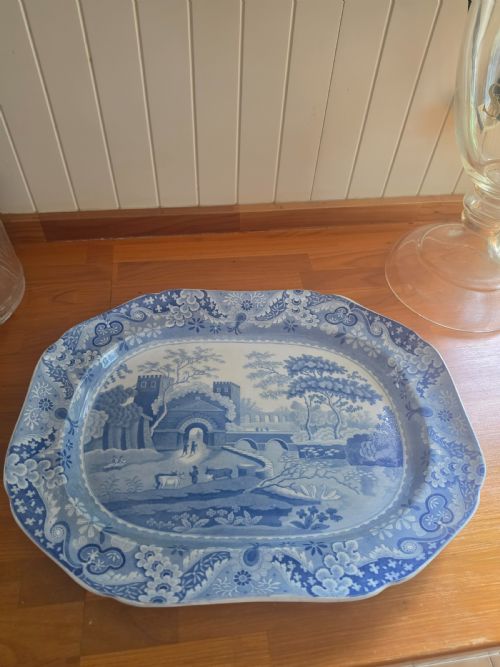
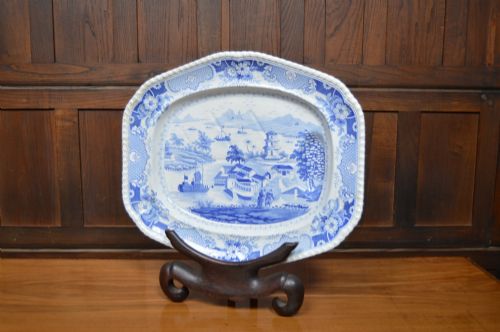
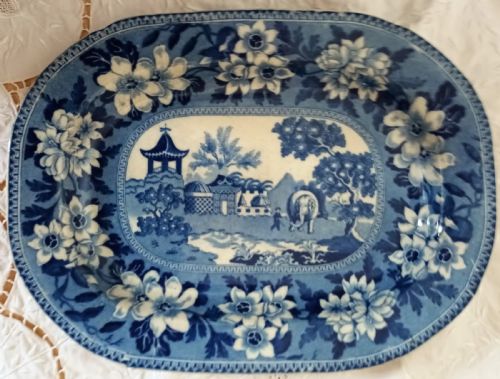
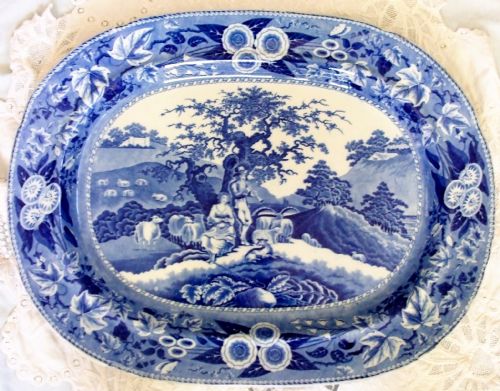
These large blue earthenware meat dish examples are robust serving platters designed for carving and presenting joints at the nineteenth century table.
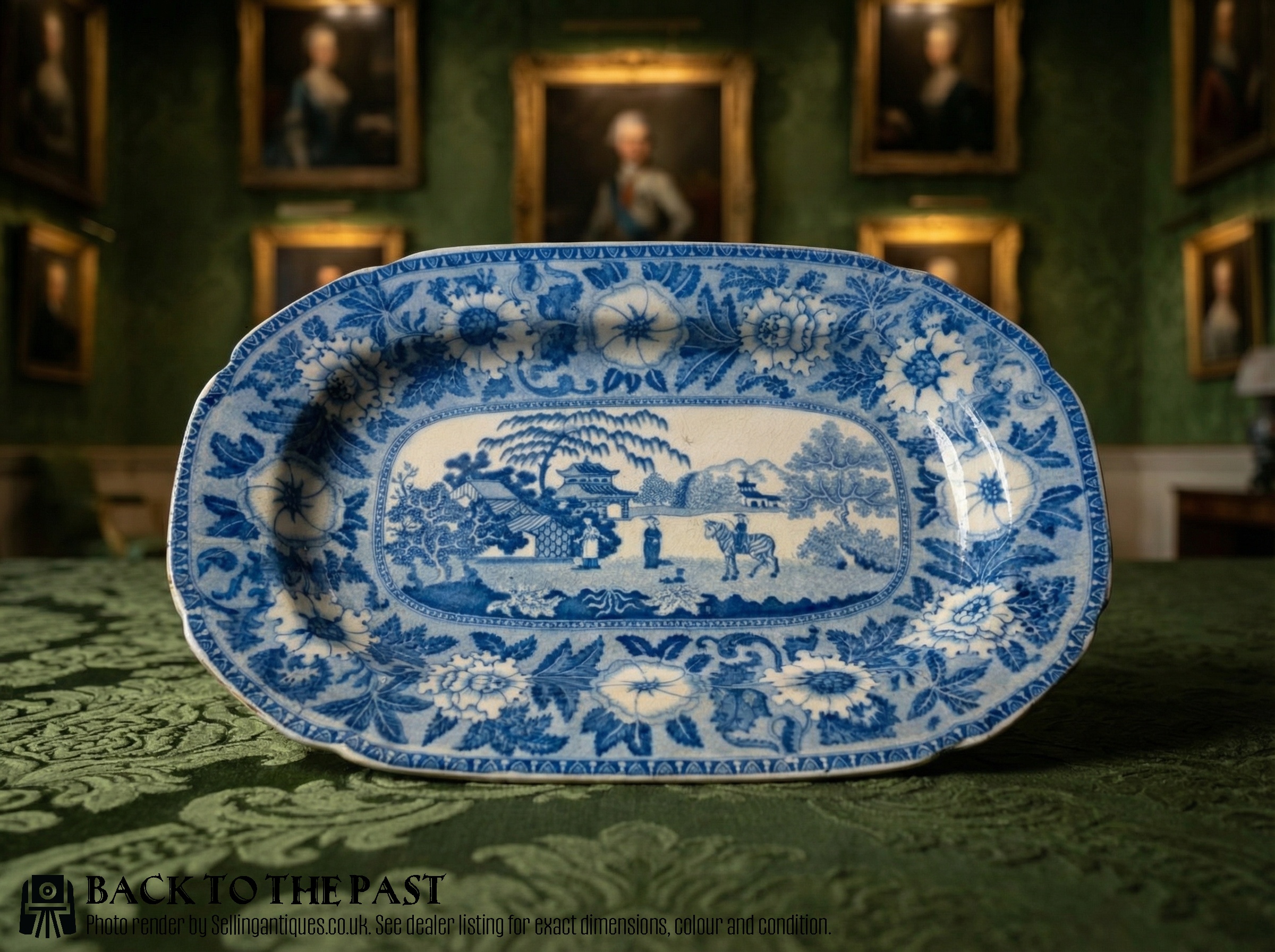
Blue Earthenware Meat Dish
The forms vary from simple oval platters to specialised shapes incorporating reservoirs, gravy wells and drainer inserts. The transfer patterns display considerable thematic breadth, including oriental motifs, British topographical views and historical buildings. Collectors encounter these serving dishes spanning the entire nineteenth century, tracking shifts in domestic dining habits and ceramic technology.
Materials and manufacture
Potteries utilised refined earthenware and pearlware bodies coated in lead glaze to create a durable surface for daily service. Cobalt pigment provided the deep blue colour for the transfer prints, applied via copper plates onto tissue paper before being transferred to the ceramic surface prior to firing.
The application of glaze protected the porous ceramic body beneath and locked the cobalt pigment into the finish. Advanced versions incorporated integrated draining wells and troughs to catch juices during carving at the dining table.
Common forms include large serving platters, chargers, and specialised dishes equipped with gravy wells and draining reservoirs.
Assessing quality and execution
The clarity of the cobalt transfer print dictates much of the visual merit, where crisp lines separate fine examples from smudged or blurred applications. The depth of the earthenware body and the crispness of moulded details such as wells and rims indicate the care taken by the pottery.
Makers known for exceptional throwing and printing standards produced dishes with balanced proportions and uniform glazes. The complexity and ambition of the pictorial transfer, from simple repeating borders to vast topographical vistas, influence the overall standing of the piece.
Spode·John Rogers And Son·Copeland And Garrett·Thomas Lakin·Don Pottery·Minton·Elkin Knight And Bridgwood·Mason's
The Blue Earthenware Meat Dish Glossary
- Transferware
- A pottery decoration technique where an engraved copper plate prints a design onto tissue paper, which is then pressed onto the unglazed ceramic. This method allowed factories to produce intricate blue patterns consistently across large serving dishes.
- Pearlware
- A refined earthenware developed in the late eighteenth century featuring a subtle bluish glaze that pooled in recesses to mimic Chinese porcelain. It forms the body of many early nineteenth century meat dishes.
- Well and tree
- A specialised platter design featuring a recessed channel system and a central well that collected juices from carved meat. This innovation kept the joint raised during carving.
- Earthenware
- A porous ceramic fired at lower temperatures than porcelain, requiring a protective glaze to hold liquids. It provided the practical foundation for heavy domestic serving platters.
Blue Earthenware Meat Dish: Frequently Asked Questions
How were these dishes used at the table?
These platters held large joints of meat, poultry or game during family meals and formal dinners in the nineteenth century. Servants brought the heavy earthenware vessel to the table where the host carved the meat directly upon the surface.
Some specialised dishes included built-in wells and draining channels to collect juices away from the meat during the carving process. After the meal, the durable glazed ceramic withstood washing for regular reuse.
How do I date a blue and white platter?
Dating relies on combining the ceramic body type, the backstamp or maker's mark, and the style of the transfer printed border. Pearlware bodies and specific romantic landscape patterns generally point towards the earlier decades of the nineteenth century.
Later Victorian examples often feature registration marks stamped into the ceramic underneath, providing exact years of design. Comparing the pattern style against known Staffordshire factory timelines helps narrow the period further.
Can I use these antique platters for serving food?
These historical ceramics remain fully functional for serving dry foods, bread or fruit at modern gatherings. However, historic lead glazes and porous earthenware bodies require careful handling and hand washing rather than modern dishwashers.
Sudden temperature changes should be avoided to protect the aged glaze and ceramic structure from thermal shock. Many collectors prefer to display them on walls or dresser plate racks rather than risking daily kitchen use.
What caused the different shades of blue in the prints?
Variations in the cobalt pigment mixture, the firing temperature in the kiln and the thickness of the glaze created different blue tones. Early nineteenth century kilns lacked precise temperature controls, leading to natural colour variations across different batches of pottery.
Some factories achieved a deep, inky cobalt blue, whilst others produced a softer, greyish blue appearance. These tonal differences help identify specific potteries and production periods.