

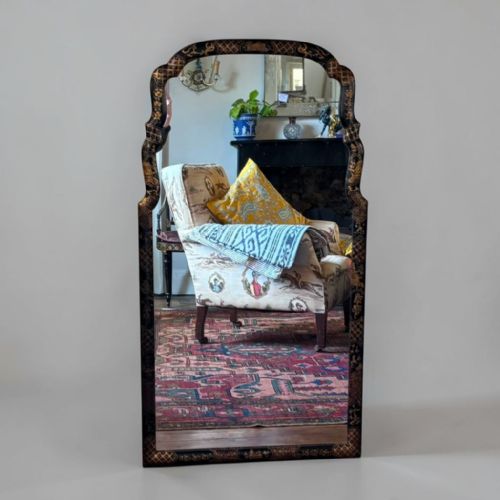


Black Lacquered Mirror
A black lacquered mirror brings depth and pattern to a room through dark polished surfaces and painted detailing.
Black Lacquered Mirror
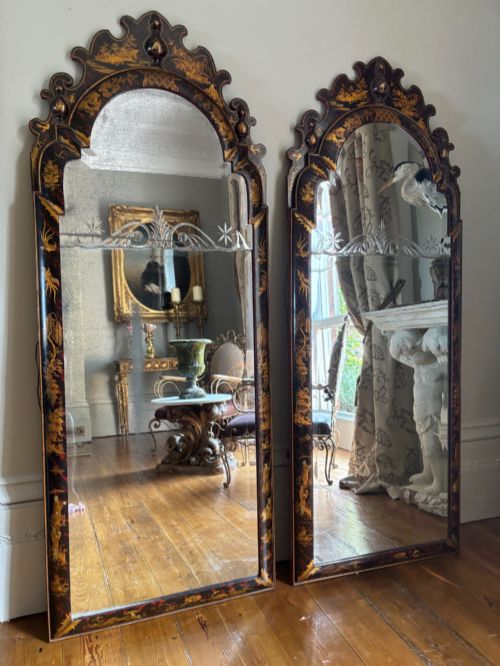
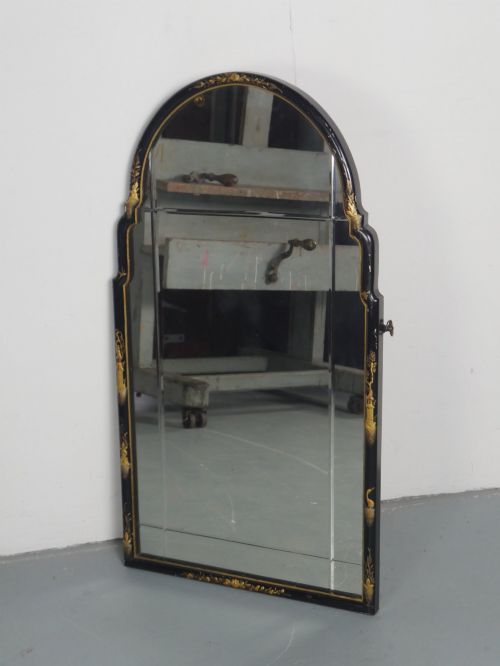
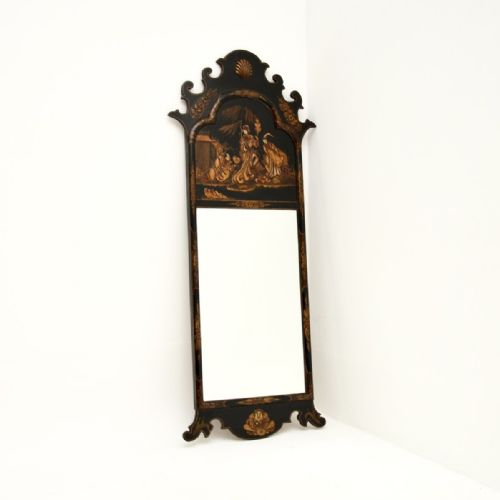
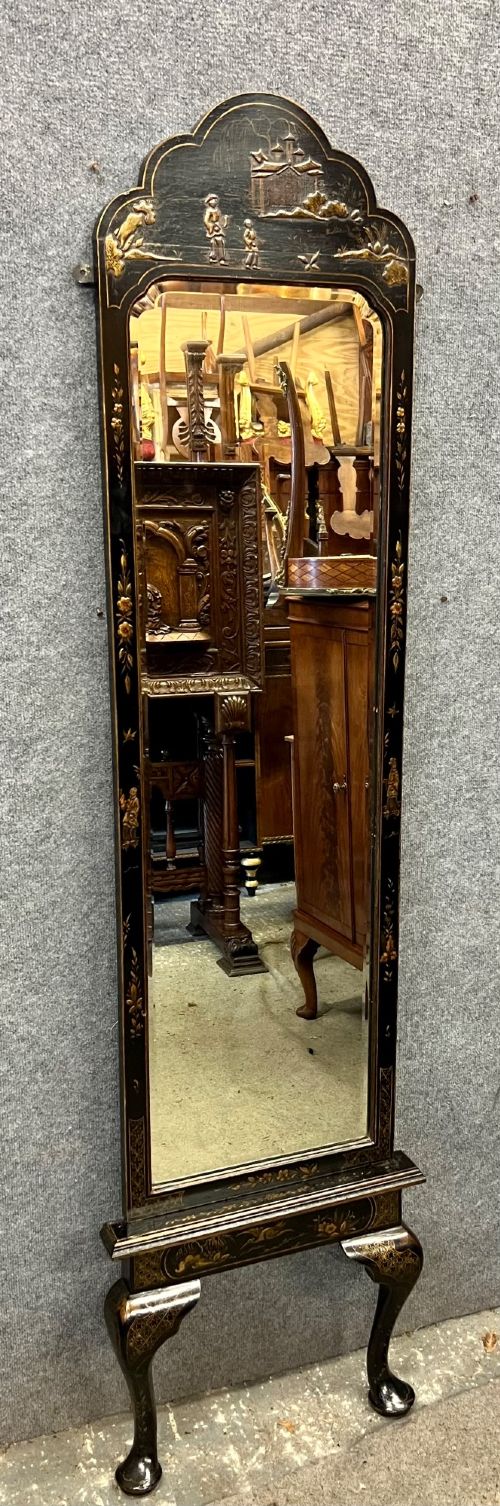
When searching for a black lacquered mirror, you are looking at pieces defined by dark glossy finishes, often decorated with Chinoiserie scenes or geometric framing. The selection ranges from wall mirrors and oval overmantels to intricate dressing table mirrors and toilet glasses.
The versions you are most likely to meet on this page span the eighteenth century to the mid-twentieth century, with strong representation from the Victorian and Edwardian eras. These include revival styles such as Queen Anne and Georgian interpretations alongside Chinese export pieces.
Materials and construction
The foundational structure relies on wood and ebonised wood, coated in layers of lacquer to achieve a deep, reflective black sheen. Many examples incorporate glass mirror plates alongside gilt or brass fittings to highlight the borders and hardware.
Decoration often involves hand-painted Chinoiserie motifs, depicting traditional landscapes and figures in contrasting tones upon the dark lacquered ground.
Black Lacquered Mirror Retail Price Guide 2026
Typical asking prices for black lacquered mirror among the pieces listed under this phrase on Sellingantiques today, from the lower quarter to the upper quarter. They describe what is for sale here now, not the wider market.
The listings span the eighteenth century to the mid-twentieth century, featuring materials such as lacquer, wood, gilt, and brass.
Understanding quality differences
Quality in these pieces rests upon the depth of the lacquer finish and the precision of the painted or gilt ornamentation. Finer examples show careful layering and polishing of the dark surface, whereas simpler versions rely on plain ebonised wood without pictorial detail.
The integrity of the frame construction and the original condition of the mirror glass also set apart superior examples from later or more utilitarian items.
The Black Lacquered Mirror Glossary
- Chinoiserie
- European interpretation of Chinese and East Asian artistic traditions, frequently featuring figures, pavilions and landscapes painted in gold or colours upon dark lacquer.
- Ebonised wood
- Timber stained or painted to imitate ebony, providing a dense black surface common in Victorian framing.
- Overmantel mirror
- A large mirror designed specifically to be hung above a fireplace mantelpiece.
- Toilet mirror
- A small mirror mounted on a dressing box, miniature bureau or pivoted frame, used for grooming on a table.
Black Lacquered Mirror: Frequently Asked Questions
How do I date a black lacquered mirror?
Dating relies on examining the construction methods of the wooden frame, the bevel or flatness of the mirror glass, and the style of the painted decoration. Earlier pieces from the eighteenth century often display specific cabinetmaking techniques and hand-beveled plates not found in later revivals.
Later Edwardian and twentieth-century versions reflect the revival tastes of their respective periods while utilising machine-sawn timber and more uniform glass production.
Where should I hang an overmantel mirror?
An overmantel mirror is traditionally placed directly above a fireplace to reflect light and anchor the wall space in a principal room. Ensure the wall fixings match the substantial weight of the wooden frame.
Consider the height of the ceiling and the proportions of the mantelpiece so the mirror balances the surrounding furniture.
Are these mirrors fragile?
The lacquer surface requires gentle care to avoid scratching or dulling the polished finish over time. Dusting with a soft, dry cloth is sufficient for routine maintenance.
Keep them away from direct sunlight and excessive moisture to protect both the wood substrate and the reflective glass plate.
What is a toilet mirror with a bureau base?
This form combines a pivoting dressing mirror with a small miniature bureau base containing tiny drawers or a sloping writing flap. It served a dual purpose for personal grooming and storing small valuables or correspondence.
Such pieces are typically associated with eighteenth-century craftsmanship and compact design.