
Black Lacquered Box
A black lacquered box brings dense layers of rich finish, gold ornamentation and historical depth to any room.
Black Lacquered Box
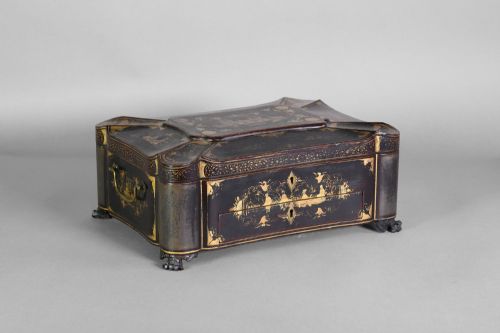
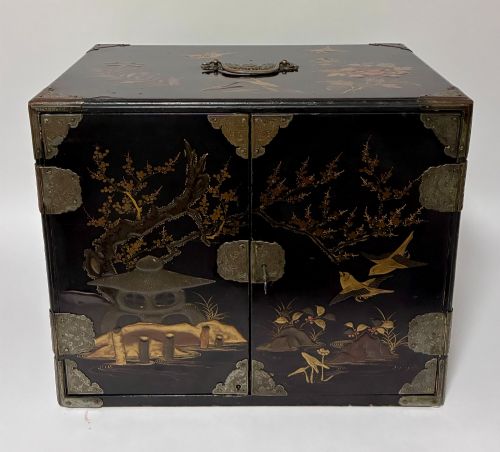
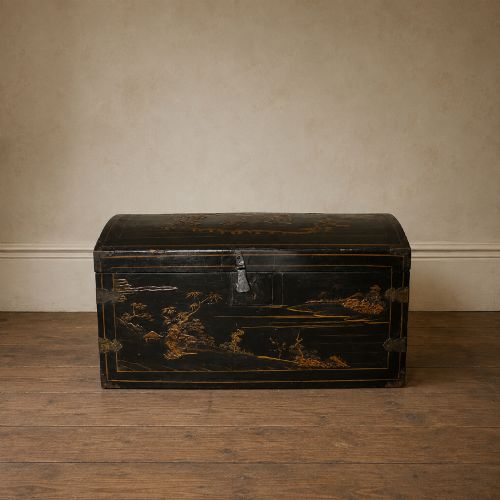
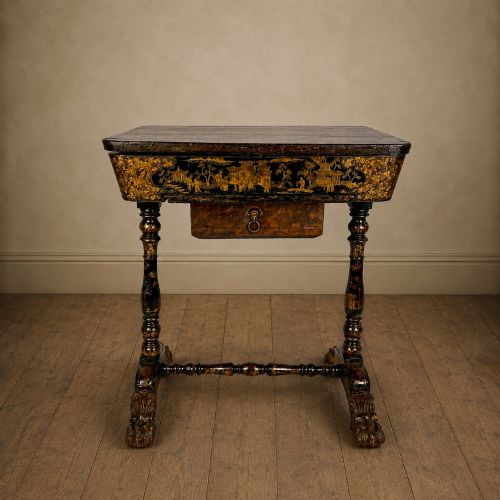
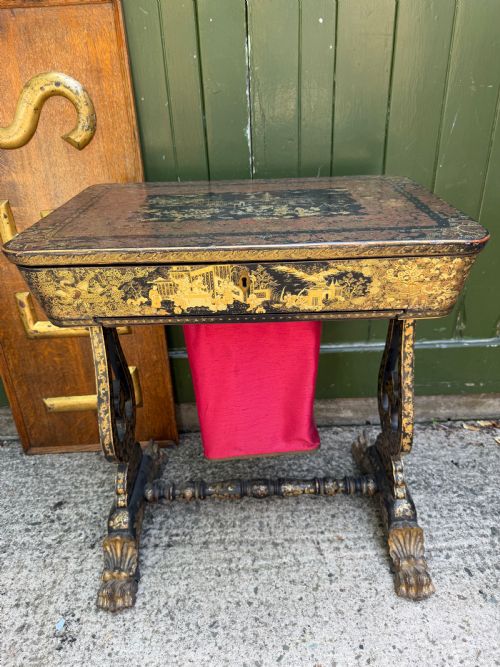
A black lacquered box encompasses a wide range of vessels designed for specific historical uses, from small personal items to large storage furniture. Tea caddies, writing boxes, snuff boxes and table cabinets appear frequently across the selection.
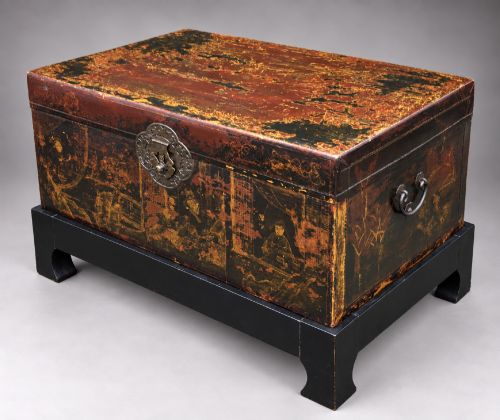
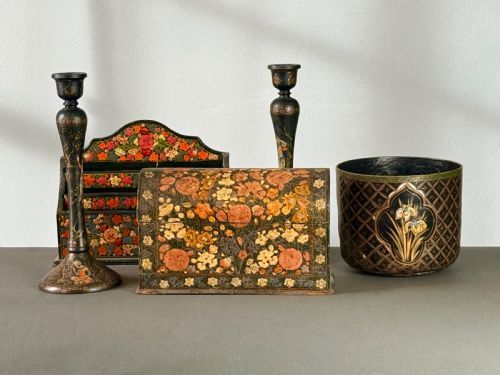
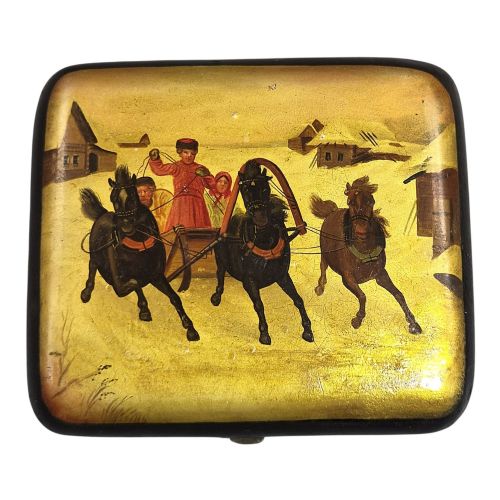
The objects originate from varied workshops across England, France, Russia, China and Japan. Victorian papier-mâché pieces and Chinese export chests represent the most common styles encountered by collectors.
Periods span several centuries, with the majority originating in the Georgian, Regency, Victorian and later nineteenth-century eras. Each piece reflects the specific domestic habits and decorative tastes of its origin.
How they were made
Construction relies heavily on wood or papier-mâché as a stable foundational core. Papier-mâché is built from layers of paper pulp or sheets pressed and dried into sturdy forms for small items like snuff boxes and stationery cases.
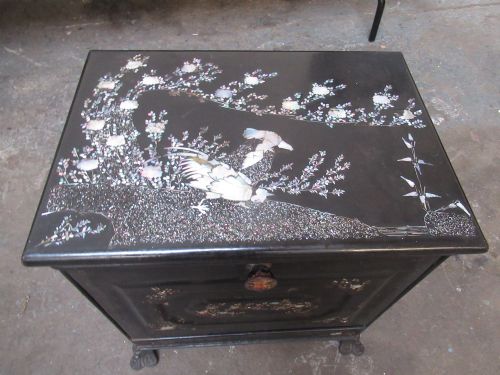
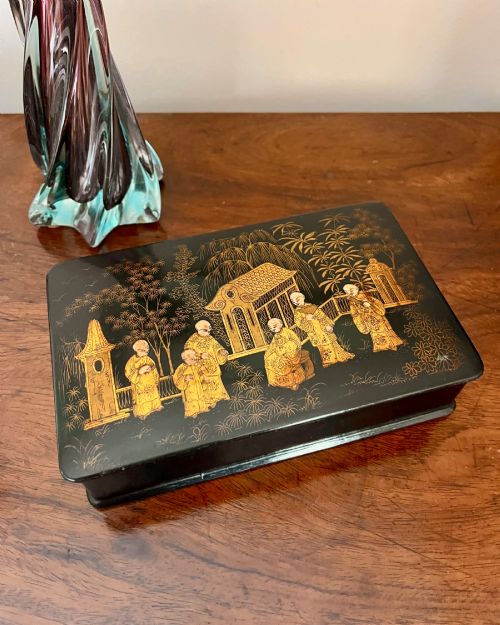
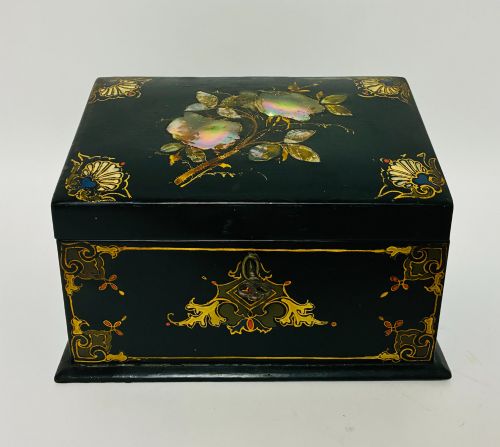
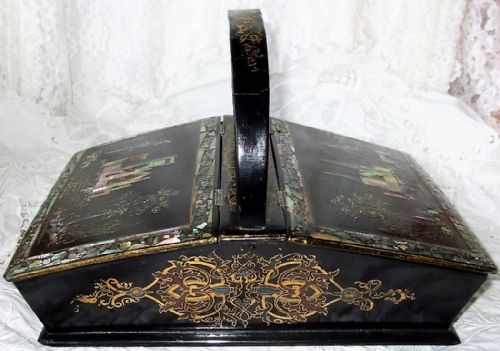
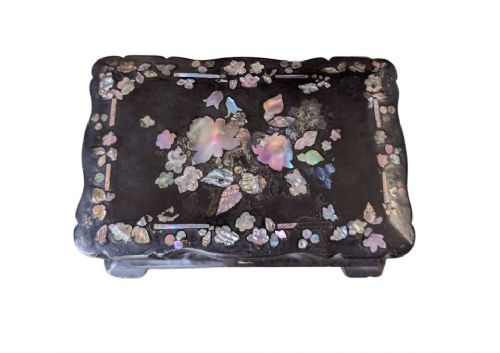
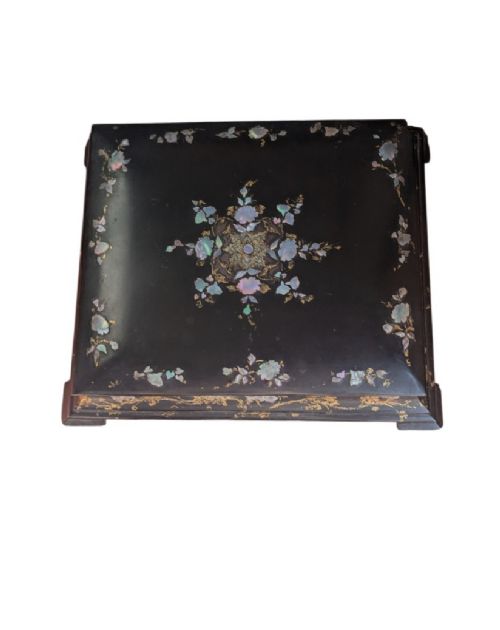
Layers of dark lacquer provide the primary protective and decorative coating, often enriched with gold leaf, paint and mother-of-pearl inlay. Artisans applied successive coats, sanding and polishing the surface to achieve a smooth sheen before adding detailed hand-painted chinoiserie or landscape motifs.
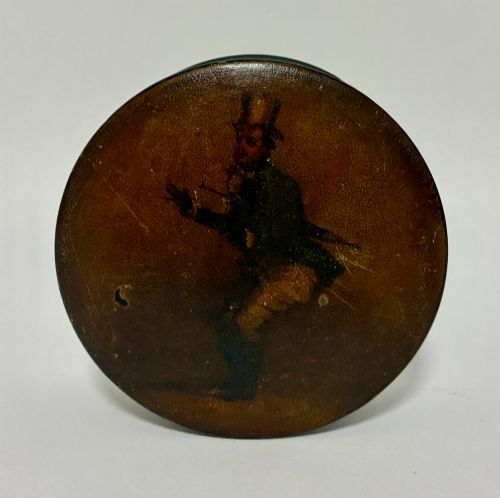
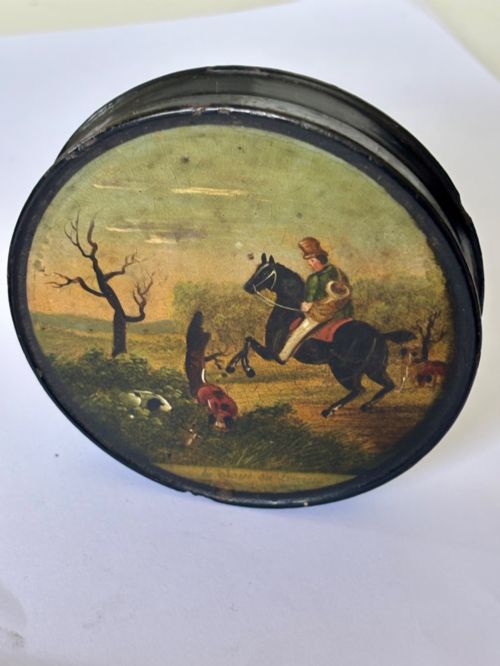
A tiny hand-painted French hunting scene hides on the lid of an early nineteenth-century snuff box.
What varies in quality
The refinement of the hand-painted decoration determines much of the distinction between ordinary and exceptional pieces. Finely brushed gold leaf details and intricate figural scenes display a higher degree of artisan skill than repetitive stencilled patterns.
The integrity of the underlying material and the preservation of the lacquer surface govern the long-term character of the object. Pieces that retain their original internal fittings, working brass hardware and smooth-sliding drawers command greater appreciation.
Vishnyakov Workshop·Stobwasser
The Black Lacquered Box Glossary
- Chinoiserie
- European artistic style reflecting Chinese motifs and decorative techniques. It appears frequently on eighteenth and nineteenth-century furniture and storage pieces.
- Papier-mâché
- Composite material made from paper pulp or reinforced paper sheets mixed with glue, then moulded and lacquered. It provided a lightweight yet durable base for Victorian boxes.
- Inro
- Small traditional Japanese tiered container suspended from a sash. These items often feature intricate lacquerwork and carved designs.
- Tea Caddy
- Container built specifically for storing loose tea leaves. They often feature internal lidded compartments and fine decorative surfaces.
- Penwork
- Decorative technique involving inked drawings on wood or bone surfaces, often finished with varnish. Regency pieces frequently utilise this detailed linework.
Black Lacquered Box: Frequently Asked Questions
What were tea caddies used for?
Tea caddies served to store expensive tea leaves securely under lock and key in the formal rooms of the house. Tea was a valuable commodity, so these boxes often included internal compartments and small fitted lids.
Over time, the tea caddy evolved from a utilitarian storage vessel into a decorative object displayed prominently on side tables. Wealthy households utilised them to portion out black and green teas safely.
How do I care for lacquer?
Lacquer surfaces require gentle dusting with a soft, dry cloth to prevent scratching the delicate finish. Avoid exposure to direct sunlight, extreme heat and excessive moisture, which can cause the material to warp or crack.
Wax polishes and chemical cleaners should be kept away from antique lacquer entirely. Preserving the original sheen relies on maintaining a stable indoor climate.
What is papier-mâché?
Papier-mâché is a composite material formed from paper pulp or layered paper bonded with adhesive, then pressed into rigid moulds. It offered a smooth, durable surface that accepted dark lacquer and paint exceptionally well.
Victorian makers utilised this technique extensively for lightweight boxes, trays and desk accessories. The resulting items combine structural rigidity with a fine surface texture.
How do I date a box?
Dating relies on examining the construction methods, materials, hardware styles and decorative motifs used on the piece. Georgian and Regency examples often feature distinct penwork or neoclassical lines, while Victorian pieces frequently employ papier-mâché and mother-of-pearl.
Comparing the internal fittings, hinges and key escutcheons with documented examples helps narrow down the period of manufacture. Regional export traits also provide clear clues regarding origin and era.