




Antique Lacquer Keepsake Box
An antique lacquer keepsake box is a small, hand-decorated container designed to house letters and trinkets, bringing centuries of craftsmanship into a modern interior.
Antique Lacquer Keepsake Box
The forms on this page range from small trinket cases and tea caddies to larger tabletop caskets and turban boxes. Papier-mâché and wood serve as the primary foundational bodies for these decorative pieces.
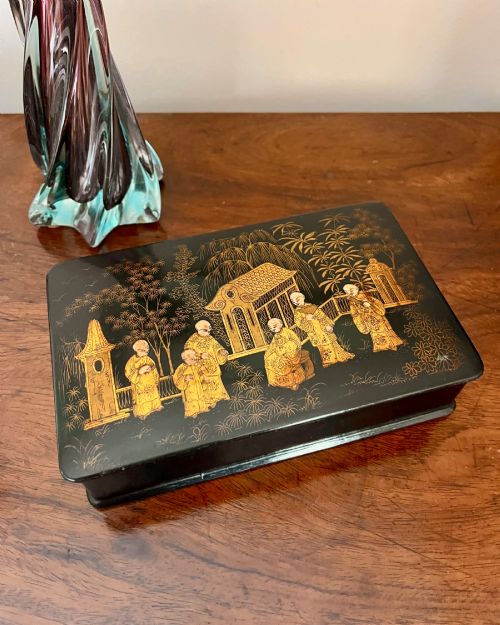
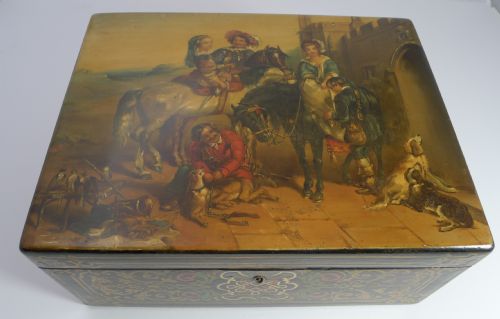
Chinoiserie and penwork emerge frequently across the selection, alongside hand-painted Russian and Qajar surfaces. These boxes reflect domestic storage habits from the nineteenth century onwards, functioning simultaneously as decorative objects and practical receptacles.
How they were made
Makers built the structural foundation of these boxes using timber such as oak, or compressed layers of paper pulp to form papier-mâché. Artisans then applied successive coats of lacquer to seal and protect the surface before decorating it.
Decoration involved intricate techniques including hand-painting with pigments and ink, applying gold leaf highlights, and executing penwork designs. Japanese Meiji examples and English Regency penwork boxes demonstrate the variety of global finishes applied to these wooden and papier-mâché carcasses.
Current listings feature pieces spanning the Georgian, Regency, and Victorian periods, constructed from wood, papier-mâché, and metal.
What varies in quality
Quality in an antique lacquer keepsake box lies in the refinement of the painted surface and the stability of the foundation. Boxes with crisp, detailed hand-painting and intact gold leaf ornamentation demonstrate superior execution by the maker.
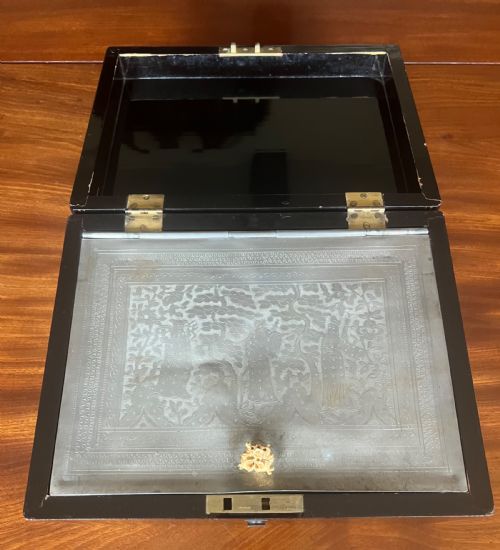
The integrity of the lacquer finish and the precision of the box joints dictate the overall standard. Pieces retaining their original interior fittings and hinges display a higher degree of preservation.
Jennens & Bettridge
The Antique Lacquer Keepsake Box Glossary
- Lacquer
- A durable resin finish applied to wood or papier-mâché to create a smooth, glossy protective surface.
- Papier-mâché
- A composite material made from paper pulp mixed with glue and oil, pressed into moulds and hardened for box construction.
- Penwork
- A detailed decorative technique using ink applied with a pen to create fine monochrome line drawings on treated surfaces.
- Chinoiserie
- European artistic interpretations of Chinese and East Asian decorative styles, commonly featuring figures, pagodas, and landscapes.
- Qajar
- Pertaining to the Iranian dynasty spanning the nineteenth century, known for distinct painted lacquerwork goods.
Antique Lacquer Keepsake Box: Frequently Asked Questions
What were antique lacquer keepsake boxes used for?
These boxes served as secure desktop or tabletop receptacles for holding personal valuables, correspondence, jewellery, and small keepsakes.
Owners kept them in private chambers or public reception rooms depending on the size and intended function of the specific box.
How do I care for an antique lacquer surface?
Protect the finish by keeping the box away from direct sunlight, excessive heat, and moisture fluctuations which can crack the lacquer.
Dust the exterior gently with a dry, soft cloth and avoid using chemical cleaning products or polishes.
How can I tell a Regency box from a Victorian one?
Regency boxes often feature delicate penwork or classical Chinoiserie motifs reflecting tastes from around eighteen hundred to eighteen twenty.
Victorian examples tend to incorporate heavier papier-mâché construction, mother-of-pearl inlay, or bolder floral painted decoration from the mid to late nineteenth century.
Are these boxes suitable for daily use?
While structurally sound, antique lacquer keepsake boxes require gentle handling due to their age and delicate painted surfaces.
They function well for storing lightweight items like rings or letters rather than heavy daily wear objects.