




19th Century Chinoiserie Box
A 19th century chinoiserie box brings ornate painted scenes and exotic motifs into a room, offering a decorative container for tea, work items or keepsakes.
19th Century Chinoiserie Box
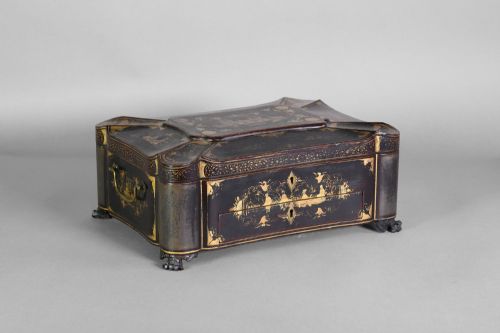
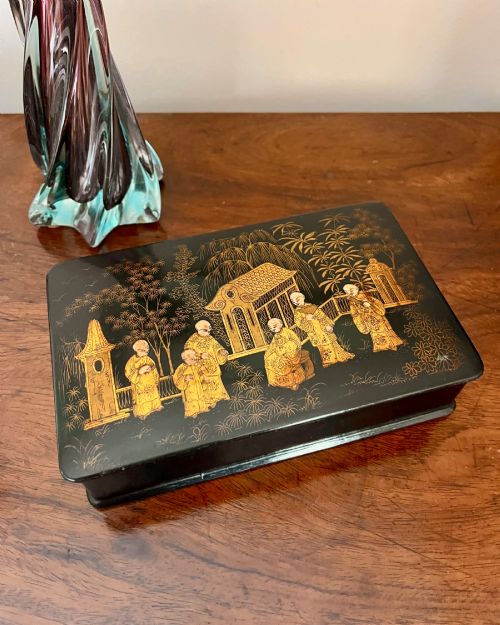
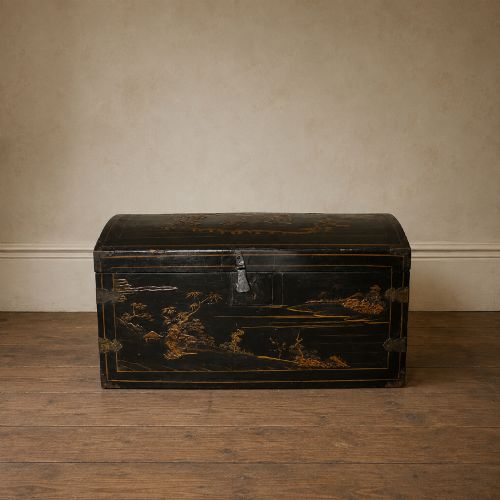
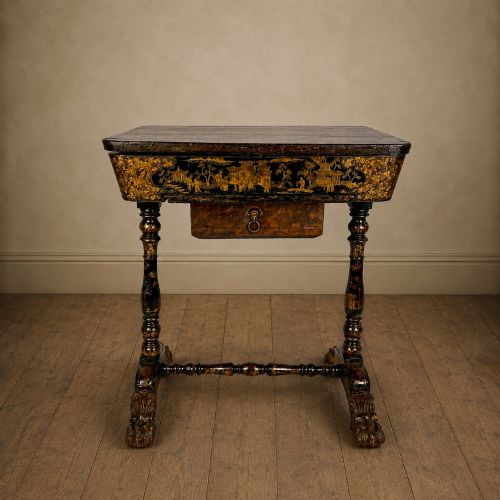
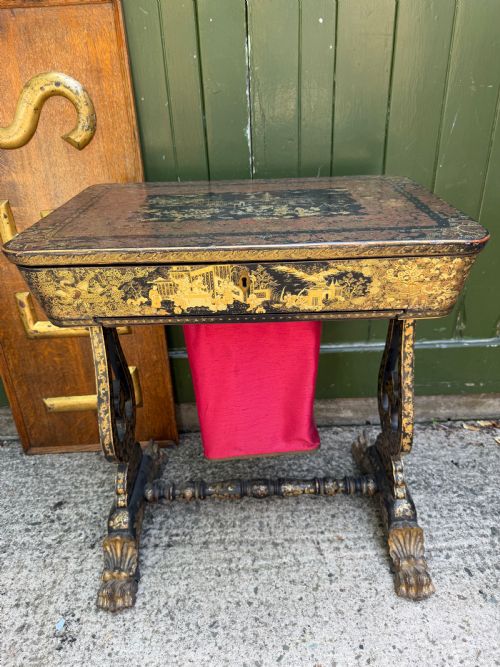
A 19th century chinoiserie box encompasses tea caddies, work tables, table cabinets and larger trunks designed in Regency, Victorian and Chinese Export styles. These pieces range from small personal receptacles to substantial chests intended for storage and display.
The objects frequently originate from Chinese Export workshops or English makers influenced by oriental aesthetics. Lacquered surfaces and painted ornamentation define the aesthetic across the varied forms seen on the page.
Materials and Technique
Makers utilised wood as the primary substrate, applying layers of dark lacquer to achieve smooth, durable surfaces. Gold leaf and gilt decoration were subsequently added to build up intricate pictorial scenes and borders.
Alternative examples employ penwork techniques on light timber or incorporate brass and bone fittings. These methods demand precise handwork to execute the detailed motifs characteristic of the style.
Listings feature items from the Regency and Victorian eras, including Chinese Export and Anglo-Indian origins.
Craft and Detail
The excellence of a 19th century chinoiserie box rests upon the precision of the surface decoration and the crispness of the gilt work. Finely rendered figures and landscapes distinguish superior examples from simpler painted items.
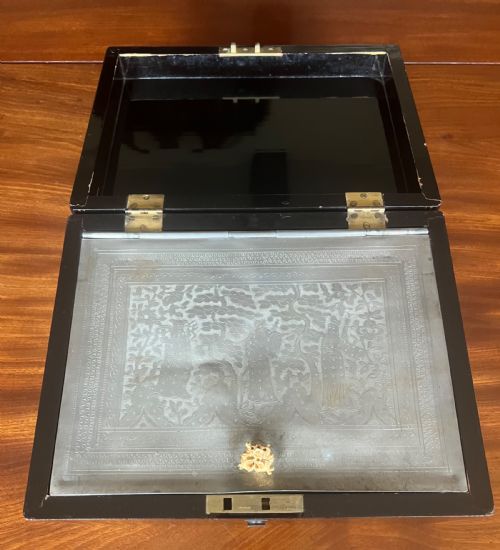
Construction standards also vary, seen in the stability of the timber carcase and the original condition of the internal compartments. Cohesive design across the exterior and interior indicates higher workshop standards.
The 19th Century Chinoiserie Box Glossary
- Chinoiserie
- European artistic style reflecting Chinese motifs and decorative techniques. It dominated various periods of the nineteenth century.
- Japanned
- European work mimicking Japanese or Chinese lacquer finish. This process involved layered varnish and often gold decoration.
- Tea Caddy
- Small container designed specifically to store loose tea leaves. Many include internal lidded compartments.
- Penwork
- Decorative technique using fine ink lines to create detailed imagery on wood. It often imitates more costly inlaid materials.
- Chinese Export
- Goods produced in China specifically for Western markets. These items blended Asian craftsmanship with European forms.
19th Century Chinoiserie Box: Frequently Asked Questions
What is a chinoiserie box?
A chinoiserie box is a decorative container decorated with European interpretations of Chinese art and motifs. They were produced extensively throughout the nineteenth century in various forms.
These pieces served functional purposes in the home, holding tea, sewing equipment or personal valuables while displaying intricate painted scenes.
How were tea caddies used?
Tea caddies stored expensive loose tea leaves safely under lock and key. Tea was a valuable commodity during the nineteenth century.
Most caddies feature internal compartments for different tea varieties and sometimes include a small mixing bowl.
Where were these boxes made?
Many examples originated in Chinese Export workshops catering to Western buyers. Other pieces were produced by English makers using japanning or penwork techniques.
Regional variations appear across the materials and motifs, reflecting the diverse global trade networks of the period.
How do I care for lacquer?
Lacquer surfaces require gentle dusting with a soft, dry cloth. Avoid exposure to direct sunlight and moisture to protect the finish.
Maintaining stable room temperatures prevents the wood underneath from expanding and damaging the delicate decoration.
What is a work table?
A work table combined a decorative box top with a sewing basket or storage well below. They provided a designated space for needlework and small crafts.
These versatile furnishings combined practical utility with ornamental chinoiserie decoration for the parlour.