


Antique Lacquer Casket
An antique lacquer casket is a decorated receptacle for keepsakes, and you meet them here in finishes of gold leaf, paint, and ink.
Antique Lacquer Casket
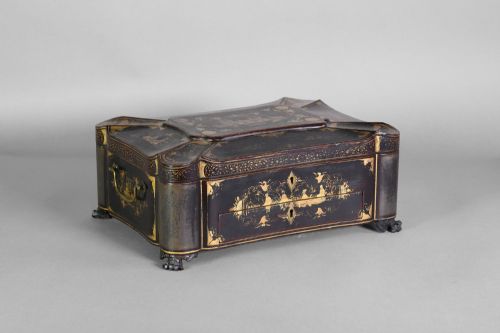
An antique lacquer casket is a vessel designed to hold jewellery, stationery, and needlework, taking forms from small keepsake cases to larger cabinets and workboxes. When you examine an antique lacquer casket on this page, you encounter pieces spanning the Georgian, Regency, and Victorian eras alongside Japanese Meiji and Russian examples.
The objects serve diverse domestic purposes, functioning as sewing boxes, penwork boxes, and stationary receptacles. Most surviving pieces date from the nineteenth century, reflecting the period's taste for ornate tabletop storage.
Materials and construction
Construction relies primarily on wood and papier-mâché as a base for the applied lacquer surfaces. Artisans built up these foundations before applying paints, varnishes, and japanning techniques to seal the material.
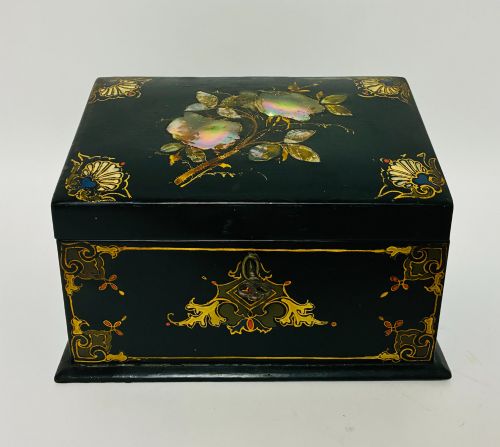
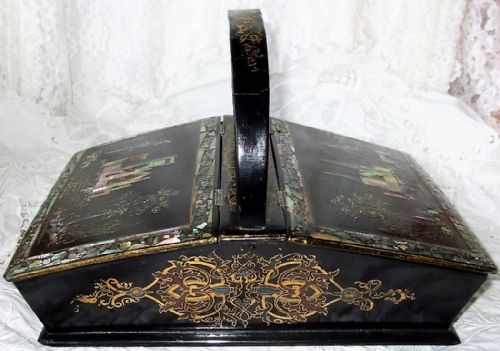
Decoration incorporates gold leaf, mother-of-pearl, and delicate penwork to create intricate surface patterns. Brass fittings and hinges secure the lids and compartments of these decorative boxes.
The listings combine nineteenth-century English papier-mâché pieces with Japanese Meiji lacquer work and Russian painted boxes.
Indicators of quality
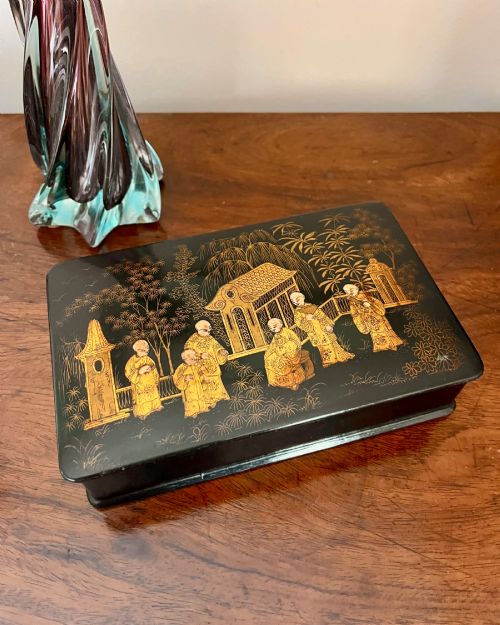
The fineness of the hand-painted decoration and the crispness of the gilt work separate standard pieces from superior examples. Skilled artisans executed detailed chinoiserie scenes and botanical motifs with precision and depth.
The integrity of the underlying papier-mâché or wood body and the preservation of the original lacquer surface determine the desirability of the piece. Well-preserved interiors with fitted compartments and original trays add to the overall standard of the item.
Jennens & Bettridge
The Antique Lacquer Casket Glossary
- Chinoiserie
- European decorative style reflecting Chinese artistic influences, frequently seen in gold motifs on dark lacquer grounds. It gained popularity during the Georgian and Victorian periods.
- Papier-mâché
- Composite material made of paper pulp or layers of paper reinforced with glue, used as a sturdy base for lacquer and painting. It allowed makers to mould smooth surfaces for intricate decoration.
- Japanning
- European imitation of East Asian lacquerwork, created by applying layers of varnish and heat-drying the finish. Artisans used this technique to produce glossy black and coloured surfaces.
- Penwork
- Detailed surface decoration created using India ink applied with a fine pen to wood or gesso grounds. This technique produced delicate line drawings resembling engravings.
- Mother-of-pearl
- Iridescent inner layer of mollusc shells, inlaid into lacquer surfaces to catch the light. It often highlights floral details and architectural elements on nineteenth-century boxes.
Antique Lacquer Casket: Frequently Asked Questions
What did people store in a lacquer casket?
These receptacles held valuable personal items including jewellery, correspondence, sewing tools, and small keepsakes. The fitted interiors often included compartments specifically designed for needles, threads, or letters.
Larger versions served as stationery boxes or games boxes, keeping leisure items organised on parlour tables.
How do I care for antique lacquer?
Keep the surface away from direct sunlight and excessive heat, which can cause the lacquer to dry out or crack. Dust gently with a dry, soft cloth and avoid chemical polishes.
Maintaining a stable room temperature prevents the wood or papier-mâché base from expanding and damaging the finish.
Where were these decorative boxes made?
Production took place across Britain, continental Europe, and East Asia, reflecting international trade and stylistic exchange. English workshops in Birmingham and London produced quantities of papier-mâché goods.
Imported pieces from Japan and Russia introduced distinct regional materials and painting traditions to the domestic market.