




Vintage Lacquer Jewellery Box
A vintage lacquer jewellery box brings together rich painted surfaces and compact storage, offering a tangible piece of global craftsmanship for your dressing table.
Vintage Lacquer Jewellery Box
When you search for a vintage lacquer jewellery box, you encounter pieces spanning the nineteenth century through the nineteen-twenties, originating from British, Japanese, Italian, and Russian workshops. These items range from compact trinket boxes and keepsake cases to larger table cabinets designed for dressing tables.
The most common examples on this page include Japanese black lacquer table cabinets from the Meiji and Taisho periods, alongside Victorian papier-mâché and oak keepsake boxes. You will also find Russian hand-painted lacquer boxes and George V ebonised designs, each reflecting the distinct decorative tastes of its origin.
How they were made
The construction of these pieces relies on traditional wooden carcases or papier-mâché foundations, built using materials such as oak, brass, and metal fittings. Artisans applied layers of lacquer to create smooth, durable surfaces capable of receiving intricate ornamentation.
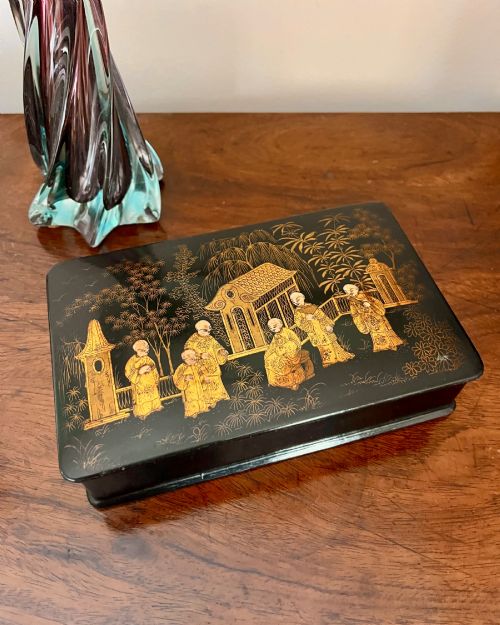
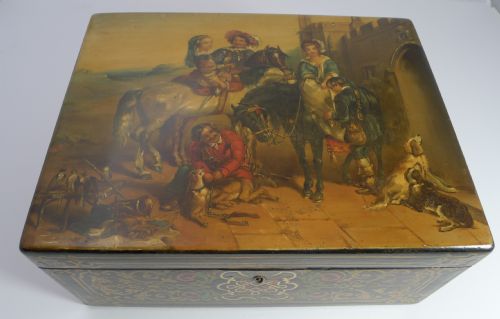
Decoration was achieved through hand painting with oil paint, delicate gold leaf application, and inlaid details, frequently influenced by Chinoiserie, Italian Rococo Revival, and Japanese artistic traditions.
Vintage Lacquer Jewellery Box Retail Price Guide 2026
Typical asking prices for vintage lacquer jewellery box among the pieces listed under this phrase on Sellingantiques today, from the lower quarter to the upper quarter. They describe what is for sale here now, not the wider market.
One signed Russian box preserves a tiny hand-painted portrait beneath its glossy finish.
What varies in quality
Quality in these items is determined by the precision of the hand-painted details and the depth of the lacquer finish. Pieces featuring signed artwork, refined gold leaf work, and elaborate inlay represent the upper end of the range.
Simpler ebonised or plain lacquered surfaces without detailed pictorial work sit at the accessible end. The integration of quality metal hardware and robust internal construction further distinguishes finer examples from everyday utility boxes.
Jennens and Bettridge
The Vintage Lacquer Jewellery Box Glossary
- Lacquer
- A durable resin finish applied to wooden or papier-mâché surfaces. It creates a hard, glossy protective layer that can be polished or painted.
- Papier-mâché
- A composite material made from paper pulp or layers of paper bound with glue. It is moulded into shape and lacquered to create sturdy, lightweight boxes.
- Kodansu
- A small Japanese tabletop cabinet fitted with multiple internal drawers. These miniature chests were traditionally used for storing small valuables.
- Ebonised
- Wood finished to resemble ebony through dark staining or painting. It provides a stark, uniform black surface popular in British furniture of the early twentieth century.
Vintage Lacquer Jewellery Box: Frequently Asked Questions
What fits inside a vintage lacquer jewellery box?
These boxes are designed for small personal items such as rings, brooches, delicate necklaces, and keepsakes. Many feature compartments or small drawers suitable for sorting precious accessories.
Larger table cabinets provide additional space for multiple pieces of jewellery, keeping them organised and protected from dust.
How do I care for antique lacquer?
Keep lacquer pieces out of direct sunlight to prevent the finish from fading or drying out over time. Dust gently with a soft, dry cloth without using chemical polishes or modern cleaning agents.
Maintain a stable room temperature and avoid high humidity, which can damage organic materials like wood and papier-mâché.
How do I identify Japanese Meiji period lacquer?
Meiji period pieces often display deep black lacquer surfaces decorated with metallic gold leaf and intricate pictorial scenes. They reflect the opening of Japan to Western trade during the late nineteenth century.
Look for traditional motifs such as flora, fauna, and architectural elements executed with exceptional brushwork and depth.
What is the difference between Victorian and George V boxes?
Victorian pieces often incorporate ornate materials like papier-mâché and oak, sometimes with Italian Rococo Revival styling or mother-of-pearl inlay. They tend to be decorative keepsake cases.
George V examples, such as ebonised boxes from the nineteen-twenties, lean towards cleaner, simpler lines while retaining traditional lacquering techniques.