


Gilded Black Lacquer Box
A gilded black lacquer box brings deep dark surfaces and bright metallic highlights together, offering a traditional receptacle for tea, jewellery, or letters.
Gilded Black Lacquer Box
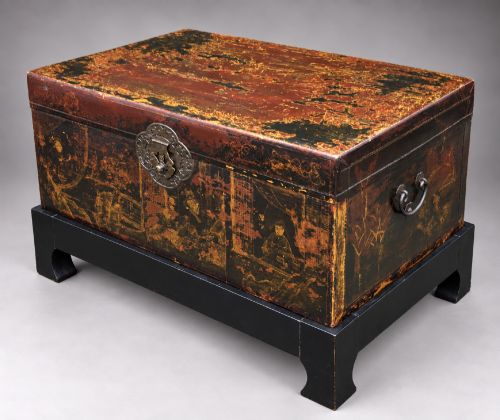
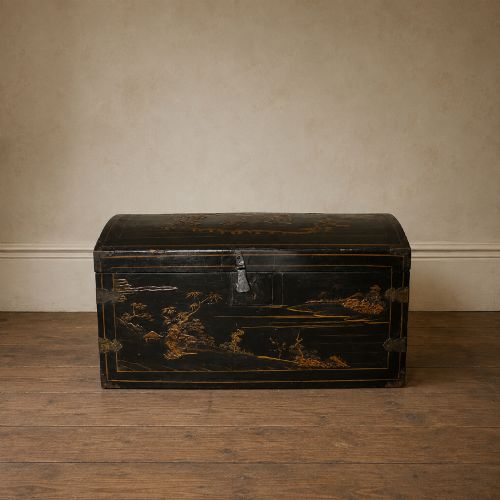
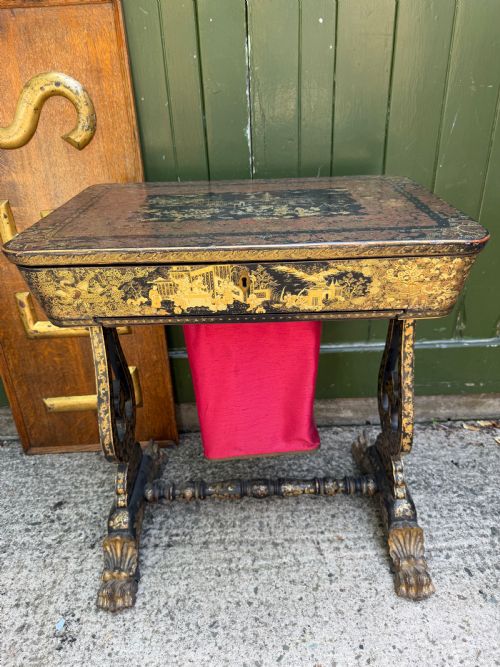
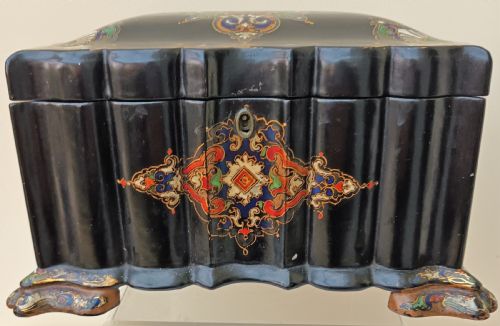
A gilded black lacquer box serves as a functional container for precious items, taking forms such as tea caddies, stationery cabinets, jewellery boxes, and blanket chests. These pieces span centuries from the Georgian and Regency periods through the Victorian era into the early twentieth century.
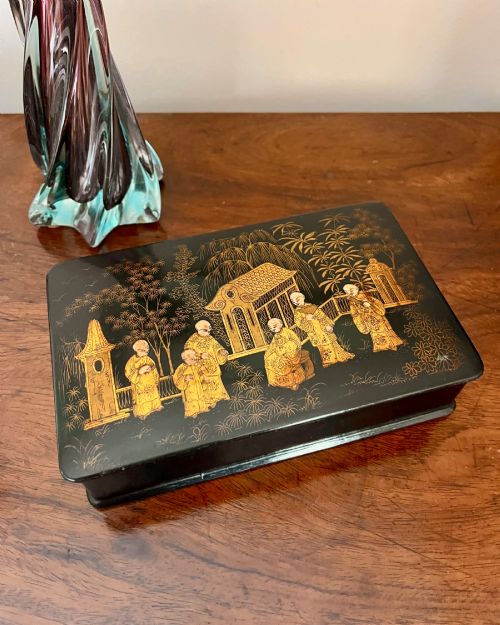
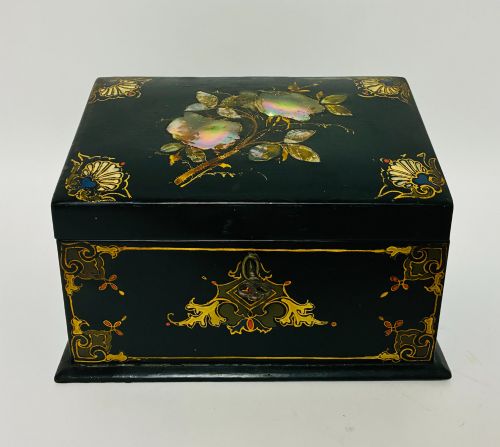
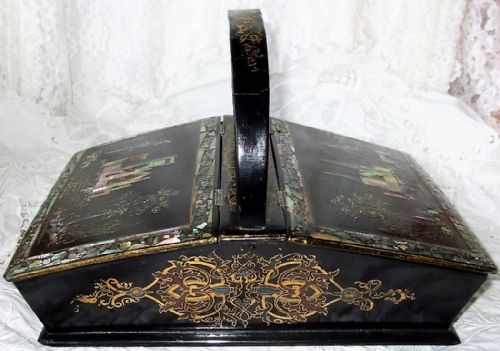
The objects derive from diverse origins including Chinese Export workshops, Japanese Meiji production, and English papier-mâché manufactories. Victorian papier-mâché stationery cabinets and tea caddies appear frequently alongside Chinese Export trunks and table cabinets.
Buyers encounter receptacles designed for specific domestic uses, ranging from small table snuff boxes to large blanket boxes on stands and sewing tables. Each piece combines a dark lacquered or japanned ground with applied gold leaf or paint.
How they were made
The primary construction relies on wood or moulded papier-mâché as a base, coated in layers of dark lacquer or japanned finishes. Artisans applied gold leaf, gilt, and paint directly onto the dark surfaces to build intricate chinoiserie and decorative motifs.
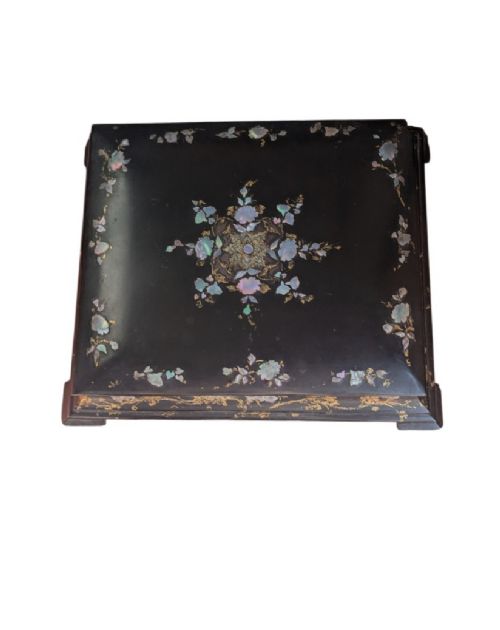
Many examples incorporate subsidiary materials such as brass hinges and locks, mother-of-pearl inlay, and fitted glass elements like Baccarat crystal. These additions provided structural reinforcement and contrasting visual textures against the polished black ground.
Listings feature items built from wood, papier-mâché, and brass, spanning the eighteenth, nineteenth, and early twentieth centuries.
What varies in quality
The precision and density of the hand-applied gilding separate standard production from superior examples, with finer pieces displaying crisp lines in their metallic decoration. The complexity of the underlying material structure, particularly in moulded papier-mâché versus basic wood carcases, also dictates the standard of execution.
The integrity of the surface finish and the preservation of original paint and gold leaf determine the overall calibre of a piece. Interior fittings, such as original trays, compartments, and working brass hardware, further distinguish higher quality survivals.
The Gilded Black Lacquer Box Glossary
- Japanning
- European imitation of East Asian lacquerwork produced by applying successive coats of varnish and resin, then heating the surface. This technique gained popularity in the seventeenth and eighteenth centuries for furniture and small boxes.
- Papier-mâché
- Composite material made from paper pulp or layers of paper reinforced with glue, oil, and resin, then pressed and dried. It provided a smooth, stable surface for lacquer and inlaid mother-of-pearl in nineteenth-century English boxes.
- Tea caddy
- Small box or chest designed to store tea leaves safely away from light and moisture, often featuring internal compartments and a lock. They became status objects in wealthy households during the Georgian and Victorian periods.
- Chinese Export
- Goods manufactured in China specifically for Western markets, frequently combining traditional Eastern materials and techniques with European forms. These items arrived via maritime trade routes throughout the eighteenth and nineteenth centuries.
Gilded Black Lacquer Box: Frequently Asked Questions
What were tea caddies used for?
Tea caddies stored precious tea leaves securely, often featuring lockable lids to protect expensive contents from household staff and moisture.
Inside, many caddies contained separate lidded canisters or compartments for different varieties of tea.
How do I care for black lacquer?
Black lacquer surfaces require gentle dusting with a soft, dry cloth and protection from direct sunlight and extreme humidity.
Avoid using liquid cleaners, polishes, or abrasive materials that can damage the delicate gold leaf and varnish layers.
Are papier-mâché boxes fragile?
Papier-mâché provides a surprisingly sturdy structure when properly manufactured from compressed layers, but the surface finish remains vulnerable to moisture and sharp impacts.
Handling boxes with care prevents cracking in the brittle lacquer and loss of inlaid mother-of-pearl or gilding.
What is the difference between Chinese Export and English pieces?
Chinese Export boxes typically showcase native crafting techniques and distinct decorative scenes produced overseas for the European market, utilising local woods and lacquer methods.
English pieces, particularly Victorian ones, frequently employ papier-mâché or domestic timber bases decorated with European interpretations of Asian styles.