




Regency Penwork Box
A regency penwork box brings together meticulous ink-drawn decoration and fine woodworking from the early nineteenth century.
Regency Penwork Box
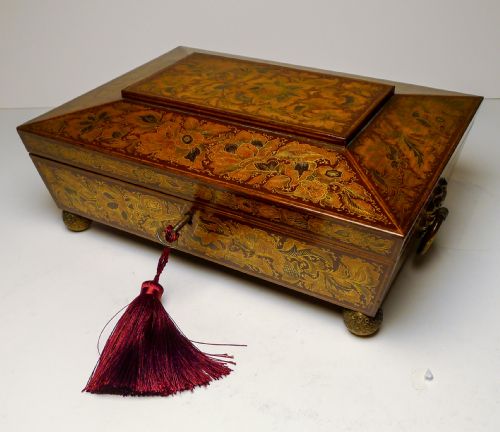
A regency penwork box is a functional container adorned with intricate, hand-drawn ink decoration, typically originating from the Regency and Georgian periods. These pieces take various forms, including tea caddies, games boxes, jewellery boxes, sewing boxes, and table cabinets.
The most common examples you will encounter on this page are tea caddies and games boxes, often decorated with Chinoiserie motifs or architectural scenes. These objects served domestic utility for holding tea, cards, or trinkets while displaying detailed surface ornament.
Originating around eighteen hundred, the style spans from the late eighteenth century through the early nineteenth century. Pieces often feature wooden construction finished with paint, lacquer, and varnish to protect the delicate penwork design.
What varies in quality
Quality in a regency penwork box depends heavily on the precision and fineness of the ink-drawn detail. Superior examples show confident, steady linework with intricate Chinoiserie scenes or figurative elements, whereas lesser pieces display simpler or more hesitant execution.
The overall preservation of the surface finish also distinguishes the range. Well-preserved varnish protects the underlying paint and ink, maintaining the clarity of the original decoration against the passage of time.
Object forms include tea caddies, games boxes, jewellery boxes, sewing boxes, table cabinets, and snuff boxes.
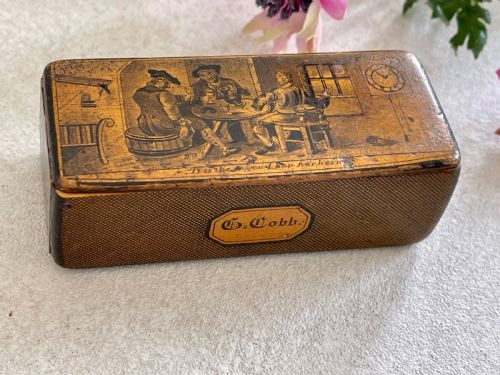
G Cobb
The Regency Penwork Box Glossary
- Penwork
- A decorative technique using fine ink lines drawn by hand onto a painted or lacquered wooden surface to simulate inlay or engraving. This method allows for intricate pictorial scenes and geometric borders.
- Chinoiserie
- A European interpretation of Chinese and East Asian artistic traditions, frequently appearing in the decorative motifs of these boxes. It encompasses imaginative landscapes, figures, and architectural elements.
- Tea Caddy
- A container designed specifically to store loose tea leaves, often featuring internal compartments and a locking lid. Tea was a costly commodity, making these boxes secure and ornate centrepieces.
- Pokerwork
- A related decorative method involving the burning of designs into wood using heated metal points. It is sometimes found alongside or in place of ink penwork on boxes from this era.
Regency Penwork Box: Frequently Asked Questions
What is a regency penwork box used for?
These boxes served various domestic purposes depending on their specific form, such as storing tea leaves, playing cards, sewing implements, or jewellery. They functioned as both practical storage and decorative objects for the home.
Today, they remain versatile decorative pieces that can sit on side tables or desks, continuing their original role of holding small personal items while adding period character to a room.
How do I date a regency penwork box?
Dating relies on stylistic indicators, construction methods, and materials associated with the late Georgian and Regency eras around eighteen hundred to eighteen twenty. Architectural forms and specific Chinoiserie motifs often align with this timeframe.
Examining the hinges, locks, and interior linings also helps determine the age, as hardware changes across different decades of the nineteenth century.
What is the difference between penwork and paint?
Penwork specifically involves fine, ink-drawn lines executed with a pen to create detailed patterns, illustrations, and borders. Paint provides the underlying background colour or fills in larger areas of the design.
Many boxes combine both techniques, using a painted or lacquered wooden base as the canvas for precise ink drawings sealed beneath a clear varnish.
How should I care for penwork boxes?
Keep the boxes away from direct sunlight and sources of heat to protect the delicate ink and varnish surface from fading or cracking. Dust them gently with a dry, soft cloth without using liquid cleaners or polishes.
Maintaining a stable room temperature helps preserve the wood and the old protective varnish layers over time.