


18th Century Tabletop Cabinet
An 18th century tabletop cabinet brings compact period storage into modern rooms, offering secretive drawers and miniature proportions.
18th Century Tabletop Cabinet
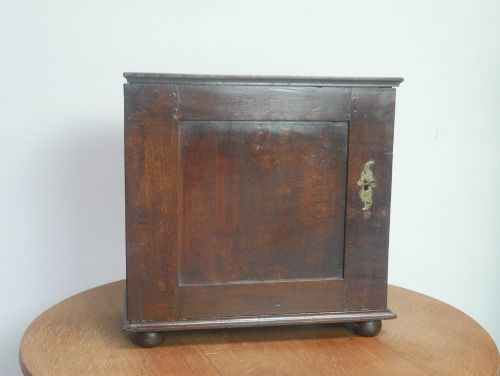
An 18th century tabletop cabinet encompasses small-scale storage forms designed for desktop or side table placement, ranging from miniature chests of drawers to specialised spice cupboards. Buyers seeking this category encounter diverse regional iterations built during the Georgian period and earlier decades, often functioning as portable repositories for valuables, spices, or correspondence.
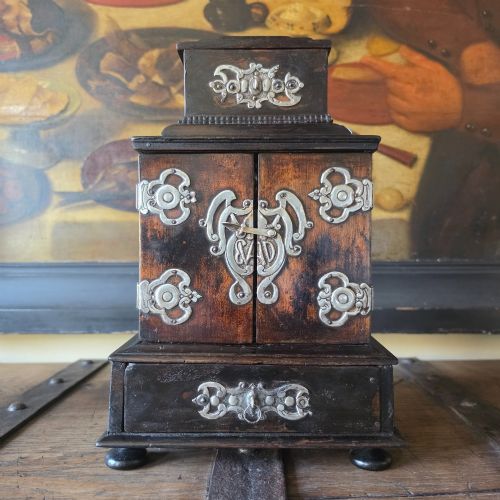
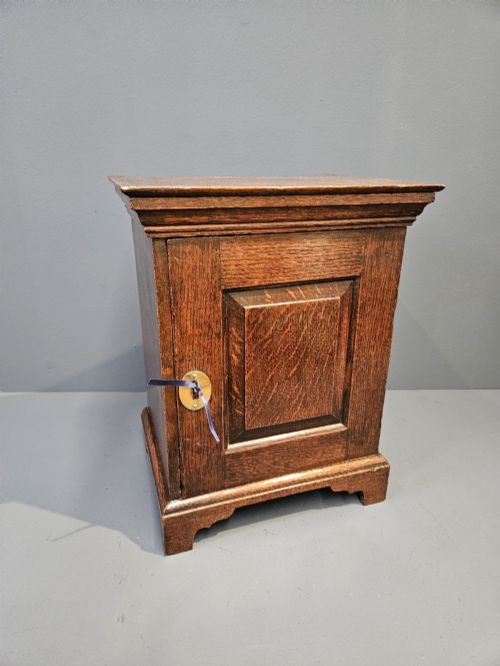
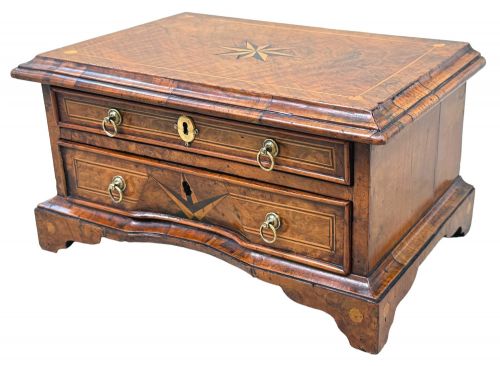
The dominant formats appearing here include oak spice cupboards, walnut miniature chests, and elm table top bureaus alongside distinctive pieces like escritoires and penwork cabinets. These domestic items mirror the grander furniture of their eras, scaled down for intimate household use.
Materials and construction
Cabinetmakers utilised solid timbers such as oak, walnut, and fruitwood, frequently enhancing surfaces with burr walnut figuring, wood inlay, or Dutch marquetry. Structural integrity relied on traditional joinery suited to miniature proportions, accommodating small drawers and fitted interiors.
Hardware played both a functional and decorative role, featuring brass hinges and key escutcheons alongside specialised surface treatments like penwork or silvered metal mounts.
Evaluating craftsmanship and survival
Distinction across these cabinets rests on the sophistication of the internal layout and the preservation of original timber surfaces. Pieces retaining undisturbed patination and intricate internal configurations, such as revolving tabernacles or specialised stationery compartments, demonstrate superior original design.
The integration of decorative techniques, from precise wood inlay to delicate penwork, separates standard utilitarian storage from elevated examples intended for display in principal rooms.
The 18th Century Tabletop Cabinet Glossary
- Spice cupboard
- A small wall or tabletop cabinet fitted with multiple internal drawers traditionally used for storing culinary spices and medicinal ingredients. These pieces typically feature panelled doors and compact proportions.
- Miniature chest of drawers
- A small-scale chest constructed with the same dovetail joinery and drawer sequencing as full-sized furniture. Makers often built these as apprentice pieces or specialised desktop storage.
- Escritoire
- A small writing cabinet featuring a fall-front flap that opens to reveal a fitted interior of pigeonholes and small drawers. They represent sophisticated portable writing furniture of the period.
- Marquetry
- A decorative technique of applying veneer pieces in wood to form detailed pictorial or geometric patterns on furniture surfaces. Dutch examples frequently employ this method for dramatic visual effect.
- Penwork
- A decorative surface finish created by drawing fine ink designs onto wood before sealing with a clear finish. This meticulous technique yields intricate patterns resembling engraving.
18th Century Tabletop Cabinet: Frequently Asked Questions
What were 18th century tabletop cabinets used for?
These compact pieces served versatile domestic functions, storing precious items, private letters, or expensive kitchen spices. Wealthy households relied on them to keep valuable commodities secure and organised in private chambers.
Their portable nature allowed owners to move them between rooms or place them securely upon larger desks and chests.
How do you style a tabletop cabinet today?
Place a tabletop cabinet on top of a sturdy period commode, a large desk, or a low sideboard where its proportions can be appreciated at eye level. They function effectively for storing modern stationery, jewellery, or small collections.
Keep them away from direct heat sources and strong sunlight to protect historic timber and delicate decorative surfaces.
How do I tell Georgian periods apart in these cabinets?
Early examples from the 1700s frequently employ solid oak or walnut with straightforward structural lines and robust brass hardware. Pieces moving toward the turn of the century often introduce lighter fruitwoods, penwork, or complex mahogany and marquetry.
Examining the internal drawer construction and secondary timbers helps clarify the specific decade of production.
Are miniature chests the same as apprentice pieces?
Miniature chests encompass a broad range of small furniture, while traditional apprentice pieces represent proof-of-skill items created by craftsmen seeking guild admission. Both share meticulous scaling and advanced joinery techniques.
Distinguishing between them relies on documenting specific regional workshop practices and the presence of specialised maker marks.