





Decorative Lacquered Storage Boxes
These decorative lacquered storage boxes bring together centuries of painted, polished and inlaid craft from English, Kashmiri, Italian and Asian workshops.
Decorative Lacquered Storage Boxes
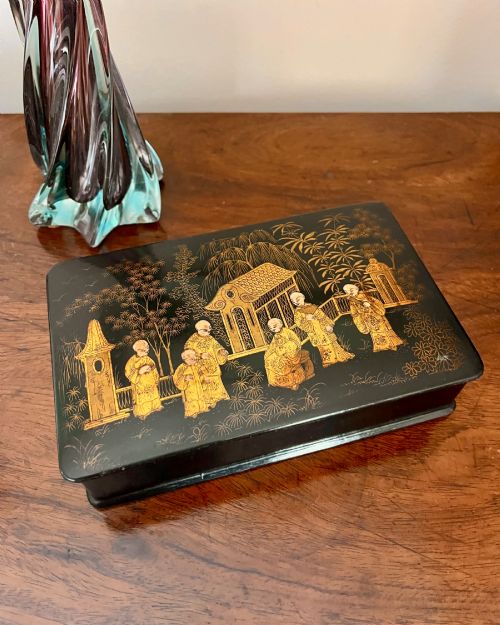
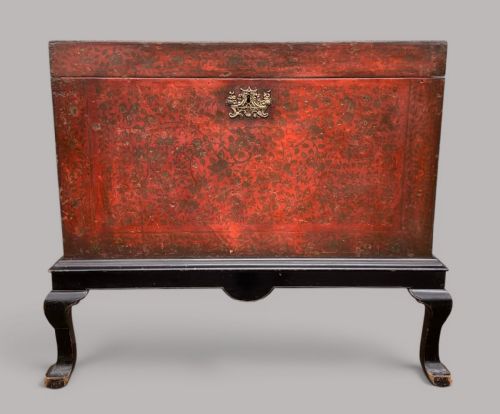
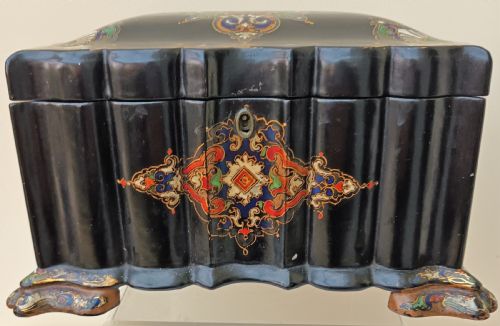
Decorative lacquered storage boxes encompass a diverse group of lidded containers, trunks, chests on stands, stationery holders, tea caddies and coal boxes. They serve both practical storage needs and visual display, often functioning as focal points on tables or desks.
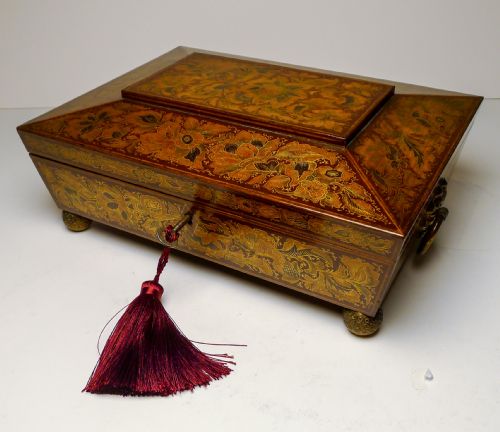
The selection on this page draws heavily from the nineteenth century, including Victorian papier-mâché pieces, Anglo-Indian trunks, Kashmiri lidded pots, and Regency items. Alongside these sit later twentieth-century Italian pieces and Asian red lacquered sets.
Forms range from small graduated round containers and turban boxes to large chests and metal coal boxes. Each object utilises lacquering, painting or penwork techniques to create distinct visual surfaces.
How they were made
Maker construction relies on timber, metal and papier-mâché substrates coated in successive layers of lacquer or paint. Artisans then decorate these surfaces using pigment, mother-of-pearl inlay and brass fittings.
Regional techniques define the distinct appearances, from Kashmiri and Anglo-Indian traditional painted motifs to English papier-mâché stationery boxes and Regency penwork games boxes. Italian makers later combined silver and enamel with black lacquer.
Decorative Lacquered Storage Boxes Retail Price Guide 2026
Typical asking prices for decorative lacquered storage boxes among the pieces listed under this phrase on Sellingantiques today, from the lower quarter to the upper quarter. They describe what is for sale here now, not the wider market.
Periods represented on this page include the 1800s, Regency, Victorian era, 1890, Edwardian period, and 1940s.
What varies in quality
Quality differentiates by the intricacy of the surface decoration, such as the precision of mother-of-pearl detail, hand-painted pigments and delicate penwork. The execution of the underlying substrate, whether sturdy wood, moulded papier-mâché or metal, also dictates the piece's integrity.
Completeness alters the standing of sets, as matched groupings of graduated boxes or complete tea caddies retain greater historical cohesion than isolated items. The sophistication of the regional craftsmanship, from Kashmiri craftsmanship to Regency English work, shapes the overall distinction of the object.
The Decorative Lacquered Storage Boxes Glossary
- Papier-mâché
- A composite material made from paper pulp or reinforced paper sheets mixed with adhesive, moulded and dried to form rigid boxes and trays. It provides a smooth base for lacquer and paint.
- Tea caddy
- A lidded container originally designed to store loose tea leaves securely. These boxes often feature internal compartments.
- Penwork
- A detailed decorative technique using fine ink or paint application to create intricate linear patterns and illustrations on wood surfaces. It appears on Regency games boxes.
- Toleware
- Painted or lacquered metalware produced in England and elsewhere during the nineteenth century. It frequently takes the form of coal boxes and domestic containers.
- Chinoiserie
- European artistic styles reflecting Chinese and broader Asian artistic traditions. This aesthetic appears on nineteenth-century trunks and storage vessels.
Decorative Lacquered Storage Boxes: Frequently Asked Questions
What were decorative lacquered storage boxes used for?
These boxes served specialised domestic purposes such as holding stationery, tea leaves, games equipment, or clothing and turbans.
Larger trunks and chests accommodated bulkier items, while small lidded pots and graduated sets held trinkets or powders on dressing tables.
How do I care for lacquered and painted boxes?
Keep the boxes away from direct sunlight and damp environments to protect the fragile lacquer, pigment and mother-of-pearl layers.
Dust gently with a soft, dry cloth and avoid liquid cleaners or polishes that might damage the historical surface finish.
Are these boxes English or international?
The selection includes items from various geographical origins, reflecting both English workshops and international craftsmanship.
Examples span Kashmiri and Indian traditional production, Anglo-Indian pieces, and mid-twentieth-century Italian work alongside traditional English pieces.
How can I tell the period of a box?
Dating relies on observing the materials, such as Victorian papier-mâché or nineteenth-century metal coal boxes, combined with stylistic cues.
Characteristics like Regency penwork or Edwardian Kashmiri lidded pots help place pieces within specific nineteenth and twentieth-century eras.