


Vintage Papier Mache Boxes
These vintage papier mache boxes bring hand-painted artistry and rich lacquer to a desk or table, prized for their decorative scenes and practical storage.
Vintage Papier Mache Boxes
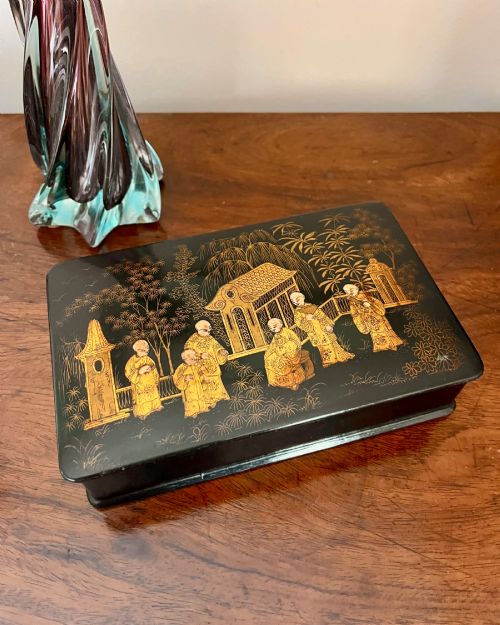
When buyers search for vintage papier mache boxes, they encounter an array of forms spanning the nineteenth century and the early twentieth century, including stationery boxes, tea caddies, and small trinket containers.
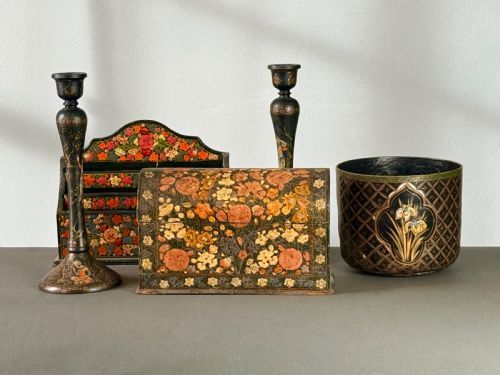
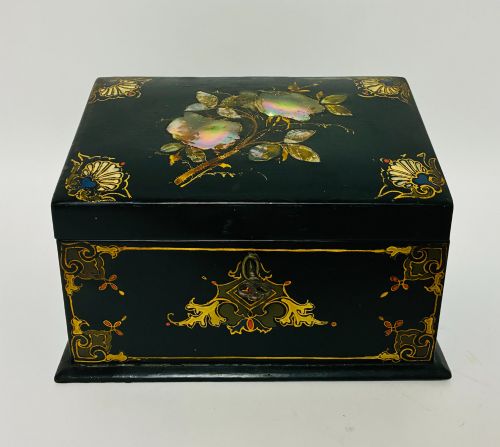
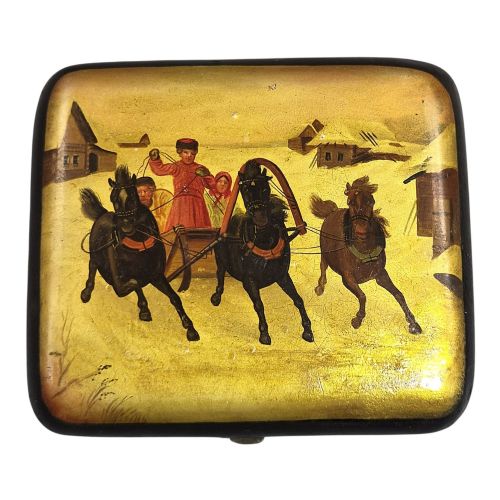
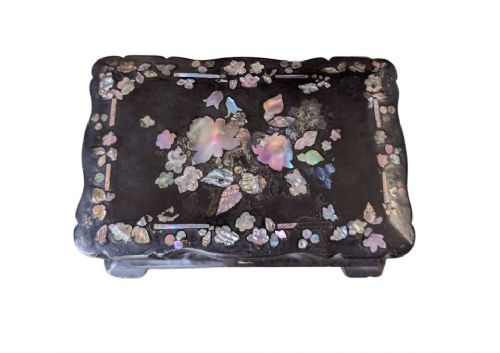
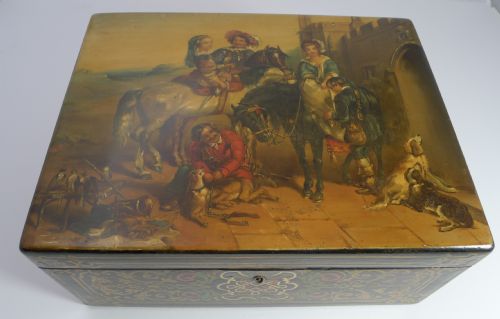
The pieces represented on this page range from Victorian English lacquer work featuring mother of pearl inlay to Russian folk art cigarette cases and Kashmiri painted vessels.
Most examples originate from nineteenth century workshops or Edwardian makers, showing a distinct blend of utility and ornate surface decoration.
Materials and construction
Makers built these vessels from layered paper pulp reinforced and treated to create a rigid core, which was then smoothed and coated with dark lacquer.
Artisans applied intricate details using oil paint, gold leaf, and polished mother of pearl inlays to form figurative portraits, floral motifs, and chinoiserie scenes.
Some nineteenth century boxes double as backgammon boards on the inside, proving that Victorians loved a quiet gamble hidden beneath polite stationery.
Quality and execution
Superior examples distinguish themselves through the precision of the hand-painted brushwork and the stability of the lacquered surface over time.
The integration of delicate materials like mother of pearl and gold leaf separates standard utilitarian containers from masterworks produced by notable workshops.
Vishnyakov Workshop·Jennens and Bettridge
The Vintage Papier Mache Boxes Glossary
- Papier-mache
- A composite material made from paper pulp or reinforced paper sheets mixed with binding agents, pressed into moulds, and dried to form a solid structure. This base provides a lightweight yet durable foundation for subsequent lacquering.
- Lacquer
- A durable resinous finish applied in multiple coats and polished to a smooth, lustrous sheen. It protects the painted decoration underneath.
- Chinoiserie
- A decorative style reflecting European interpretations of East Asian artistic traditions. It frequently appears on nineteenth-century lacquerware.
- Mother of pearl
- An iridescent inner layer of mollusc shell cut into thin pieces and embedded directly into the lacquer surface. This technique adds shimmering contrast to dark boxes.
- Tea caddy
- A lidded container originally designed to store loose tea leaves securely. Many surviving specimens feature internal compartments.
Vintage Papier Mache Boxes: Frequently Asked Questions
How do I date a papier mache box?
Dating relies on stylistic clues, construction methods, and materials such as mother of pearl inlay or specific types of lacquer finish.
Items from the Victorian era often show distinct English or Kashmiri influences, whereas nineteenth-century Russian pieces frequently bear workshop signatures.
What were these boxes used for originally?
These vessels served various domestic functions, holding stationery, loose tea, jewellery, snuff, or cigarettes.
Their robust construction made them suitable for daily handling on writing desks and dressing tables.
How should I clean a lacquered box?
Maintenance requires gentle dusting with a soft, dry cloth to prevent scratching the delicate lacquer and painted surfaces.
Moisture and harsh cleaning agents must be avoided entirely to preserve the original finish and gold leaf details.
Are these boxes fragile?
While the papier-mache core is surprisingly resilient, the outer lacquer and painted decoration can chip or crack if impacted.
Keeping them away from direct sunlight and extreme humidity helps protect the materials from degradation.