





Black Gilt Wine Table
A black gilt wine table brings dark surface and bright metal together in a compact form that suits a corner or a fireside.
Black Gilt Wine Table
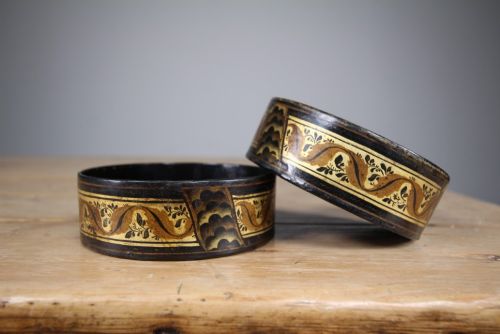
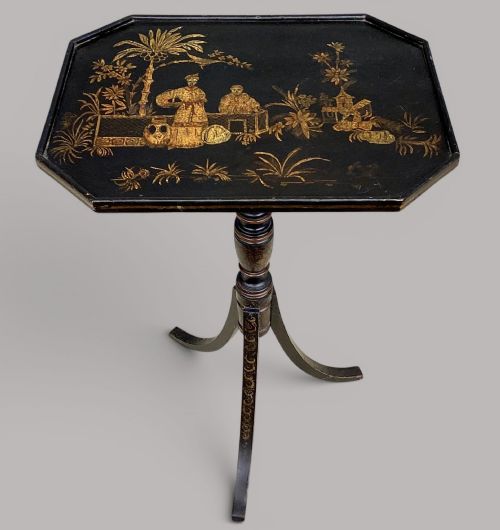
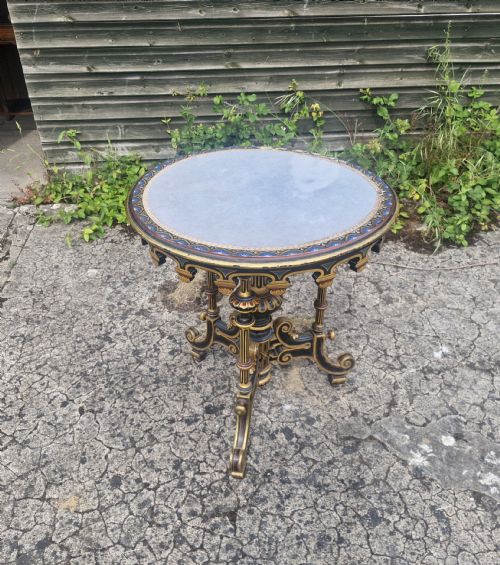
A black gilt wine table combines dark lacquer, ebonised wood or paint with gold leaf decoration to create a striking surface for a glass or a decanter. The pieces gathered under the black gilt wine table heading span the Georgian, Regency, and Victorian eras, alongside later nineteenth-century work. Buyers encounter forms ranging from tilt-top occasional tables to specific wine coasters and side tables.
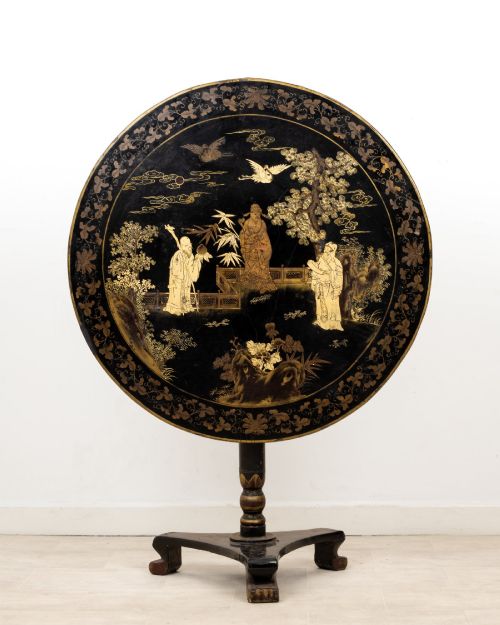
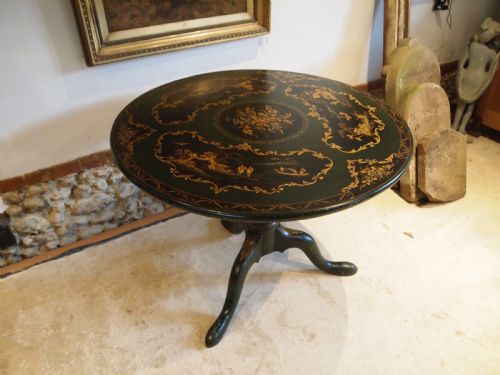
Many examples lean into Chinoiserie motifs or Aesthetic Movement design, featuring hand-painted details and dark polished grounds. Makers from the Regency period onward used these dark surfaces to catch the light of a room through contrasting parcel gilt or painted highlights.
How they were made
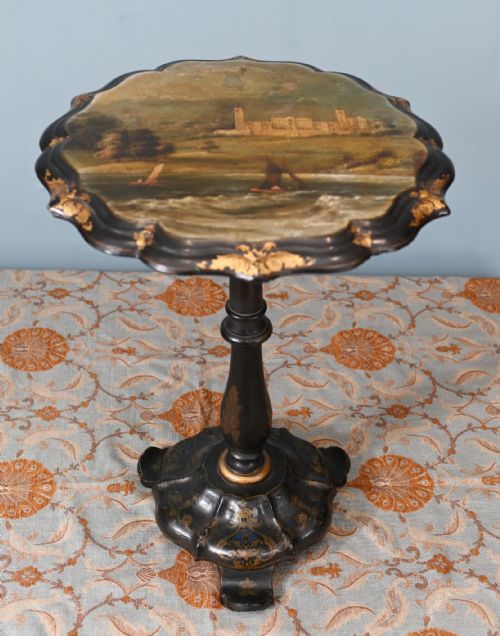
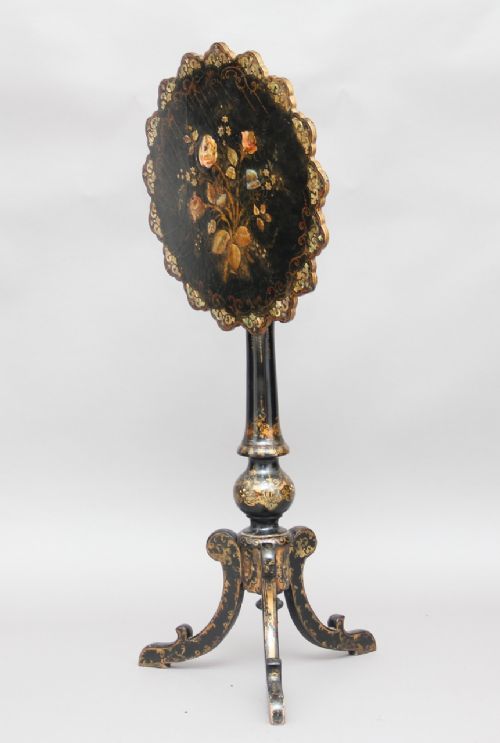
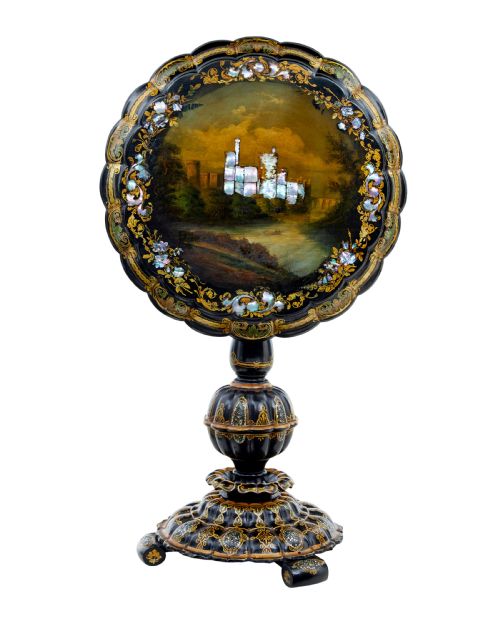
Craftsmen built these tables using timber, papier-mâché, or lacquer, applying dark paint, ebonised finishes, or layered lacquer to achieve a dense black ground. Gold leaf or parcel gilt was then applied by hand to accent the edges, turnings, and pictorial scenes.
Tilt-top mechanisms allowed tables to be stowed against a wall when not in use, relying on turned pedestals and tripartite or pedestal bases for stability.
Some Victorian surfaces incorporate genuine mother-of-pearl inlay to catch the candlelight.
What varies in quality
Quality rests in the crispness of the gilt work and the depth of the dark ground, whether lacquer, paint, or ebonised wood. Finer pieces show careful hand-painting and precise joinery in the tilt-top mechanisms and pedestal mounts.
The sophistication of the design, from simple Regency neoclassical lines to elaborate Chinoiserie or Aesthetic Movement decoration, separates standard production from exceptional examples.
Gillows·Thomas Hope
The Black Gilt Wine Table Glossary
- Gilt
- Application of gold leaf or gold powder to a surface. This technique highlights carved details and creates contrast against dark grounds.
- Ebonised
- Wood treated to imitate ebony by staining or painting it black. It provides a uniform dark finish common in nineteenth-century furniture.
- Chinoiserie
- European decorative style reflecting Chinese artistic influences. It often appears on lacquered furniture with figures, pagodas, and landscapes rendered in gold.
- Tilt-top
- Table construction featuring a hinged top that pivots to a vertical position. This allows the piece to be stored flat against a wall.
- Papier-mâché
- Composite material made from paper pulp mixed with glue and pressed into moulds. It formed a smooth base for painted and inlaid tables.
Black Gilt Wine Table: Frequently Asked Questions
What is a black gilt wine table?
A black gilt wine table is a small occasional table featuring a dark lacquered, painted, or ebonised surface accented with gold leaf or gilt decoration. These pieces were designed to hold drinks or small decorative items while adding a strong visual accent to a room.
They appear in various historic styles, most notably Regency and Victorian interpretations of Chinoiserie and neoclassical design.
How were these tables used originally?
These tables served primarily as movable stands for wine glasses, decanters, or small lamps in period reception rooms. Their compact size allowed servants to reposition them easily depending on the seating arrangement.
Tilt-top variants enabled the tables to be folded upright and placed against the wall when floor space was needed.
How do I tell Regency from Victorian examples?
Regency tables tend to feature restrained neoclassical lines, parcel gilt highlights, and precise pedestal bases inspired by ancient forms. Victorian pieces often embrace denser decoration, including elaborate Chinoiserie scenes or Aesthetic Movement motifs.
Examining the materials, such as papier-mâché or ebonised wood, alongside the specific decorative style helps clarify the period of manufacture.
How do I care for a lacquered surface?
Lacquered and painted surfaces require gentle dusting with a soft, dry cloth to prevent scratching the delicate finish. Avoid placing them in direct sunlight or near heat sources, which can cause the black ground and gold leaf to crack.
Polish and moisture should be kept to a minimum to protect the historic materials beneath.