
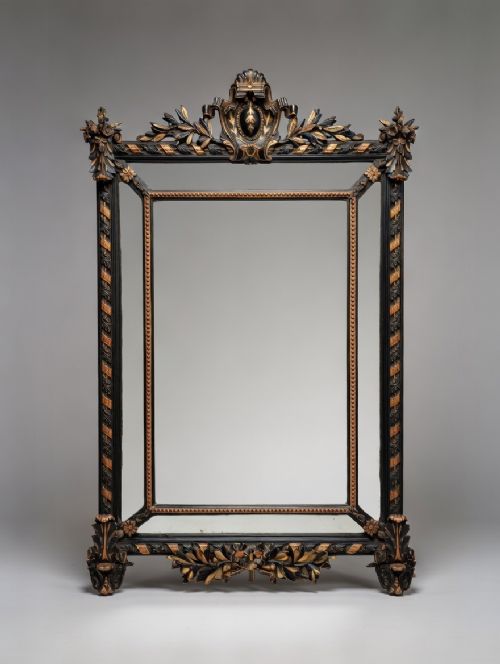


Black Gilt Overmantel
A black gilt overmantel brings dark ebonised surfaces and bright gold highlights to a room, grounding a fireplace with architectural weight and reflected light.
Black Gilt Overmantel
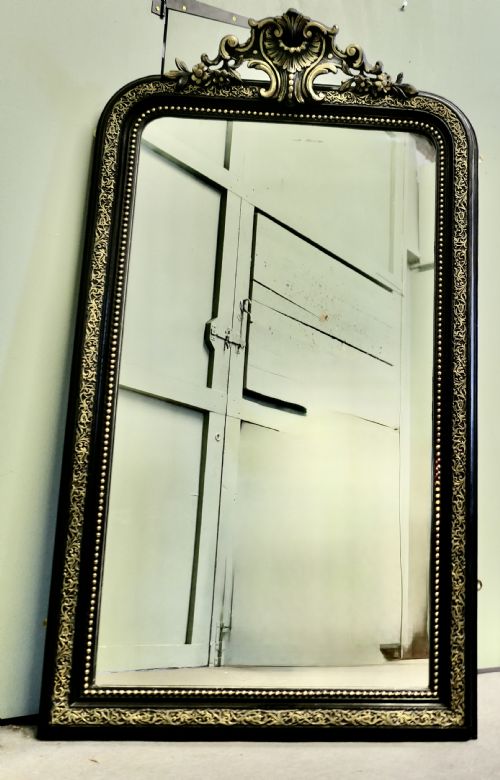
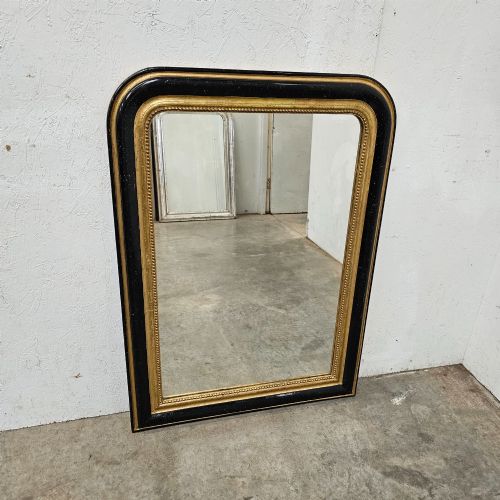
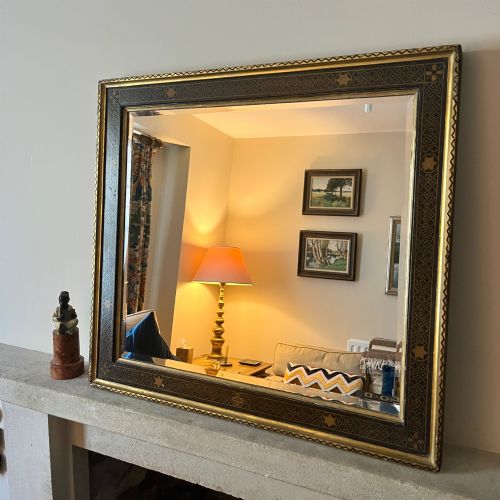
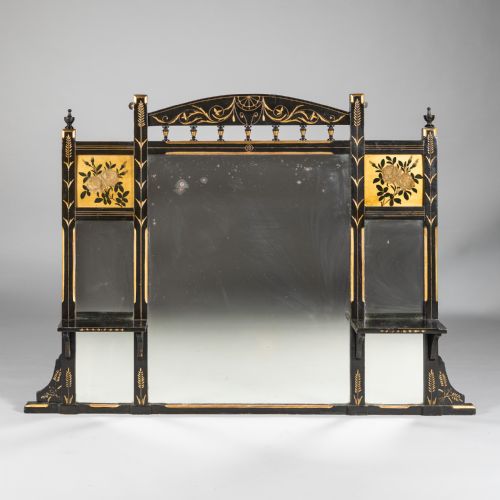
A black gilt overmantel is a large mirror designed to hang above a mantelpiece, uniting dark wooden frames with applied gold leaf or gilding. The pieces seen here span the nineteenth century, with strong representation from the Victorian era and the Aesthetic Movement.
Most examples combine ebonised wood or black paint with parcel-gilt details, creating high contrast between the dark body and the shining highlights. Alongside these large overmantels, related forms such as pier mirrors, wall mirrors, and occasional cabinets appear in similar black and gold schemes.
Origins stretch from English workshops to French Napoleon III and Louis Philippe outputs, occasionally reaching back to Regency and eighteenth-century Italian work. The typical survival is a substantial rectangular or arch-top mirror frame built to command a chimney breast.
Materials and Construction
Frames start with solid timber or carved wood foundations, often treated with ebonised finishes to imitate expensive ebony or layered with black paint and lacquer. Gesso is applied beneath the surface to build up crisp relief ornament before the application of gold leaf or gilt highlights.
Glass plates are set within these heavy wooden and gesso structures, occasionally showing the bevels, foxing, or silvering characteristic of older mirror plates. Parcel-gilt techniques leave portions of the dark base exposed while highlighting carved mouldings, crests, and decorative motifs with gold.
Materials recorded across these items include ebonised wood, gold leaf, gesso, mirror glass, and painted finishes.
Distinctions in Quality
Quality rests upon the depth of the carving and the crispness of the gesso mouldings beneath the black and gold surface. Superior examples display hand-carved details, balanced proportions, and integrated crests or dragons rather than flat or purely moulded ornament.
The integration of the ebonised finish with the parcel-gilt or silver gilt highlights dictates visual success. Finer pieces maintain harmonious ageing across the mirror glass and the frame, where the gold catches the light without overpowering the dark ground.
The Black Gilt Overmantel Glossary
- Ebonised Wood
- Timber treated with stain, dye, or paint to resemble dense, dark ebony. This dark finish provides the primary background tone for nineteenth-century aesthetic and Victorian frames.
- Parcel-Gilt
- A decoration method where only specific portions of an object receive gold leaf, leaving the underlying wood or paint visible elsewhere. It creates sharp contrast against the ebonised body.
- Gesso
- A plaster-like mixture applied to wood frames to provide a smooth base for carving or gilding. It allows for intricate raised ornamentation around the mirror plate.
- Overmantel Mirror
- A large mirror specifically proportioned to hang on the wall directly above a fireplace mantel. These pieces anchor domestic reception rooms.
- Cushion Mirror
- A mirror frame with a convex or sloping outer profile that directs the eye inward toward the glass. This form is common in French Napoleon III pieces.
Black Gilt Overmantel: Frequently Asked Questions
What is an overmantel mirror?
An overmantel mirror is a large wall mirror traditionally hung directly above a fireplace mantelpiece. Its proportions are designed to fill the vertical space between the fireplace and the cornice or ceiling.
In period rooms, these mirrors reflected light from the hearth and candles into the centre of the room. They serve as major architectural focal points in living spaces.
What does ebonised mean?
Ebonisation is a finishing process that darkens timber to imitate expensive ebony wood. Cabinetmakers used stains, black paint, or chemical treatments on woods like mahogany or pine.
This dark finish became particularly popular during the Victorian period and the Aesthetic Movement. It provided a striking contrast against gilt highlights.
How do I style a black gilt mirror?
These mirrors anchor a room when placed above a mantelpiece, sideboard, or console table. The dark frame provides a strong visual boundary against painted or panelled walls.
Keep surrounding decor balanced to let the contrast of black and gold stand out. They work well in both traditional period settings and contemporary interiors.
How do I tell Victorian from Regency pieces?
Regency pieces often feature classical restraint, architectural mouldings, and specific motifs such as greyhounds or neoclassical details. Victorian and Aesthetic Movement examples tend to be heavier, with ornate gesso work, ebonised surfaces, and bolder carved crests.
Examining the construction methods, backboards, and glass silvering helps clarify the period. Cabinetmakers shifted styles significantly between the early nineteenth century and the later aesthetic era.