




Grand Gilt Mirror
A grand gilt mirror brings scale and reflected light to a room, drawing the eye instantly to ornate carved detail and brilliant gilded surfaces.
Grand Gilt Mirror
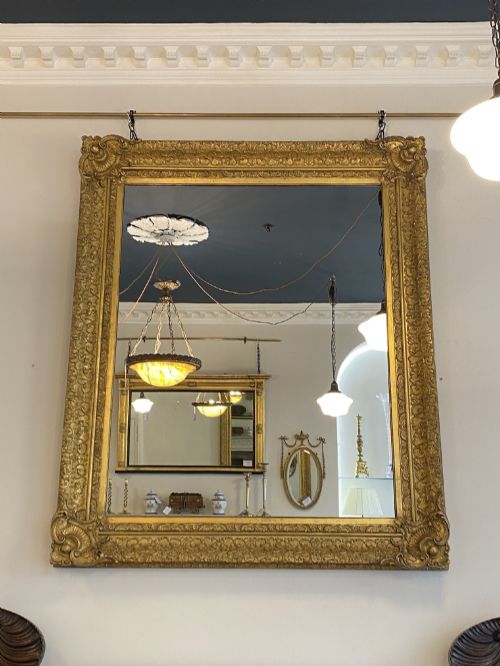
When you search for a grand gilt mirror, you are looking at substantial wall-hanging and floor-standing pieces designed to command attention in a large interior. These works serve as architectural focal points, traditionally hung above mantelpieces or between windows to amplify daylight.
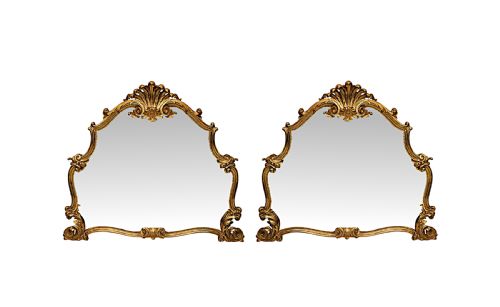
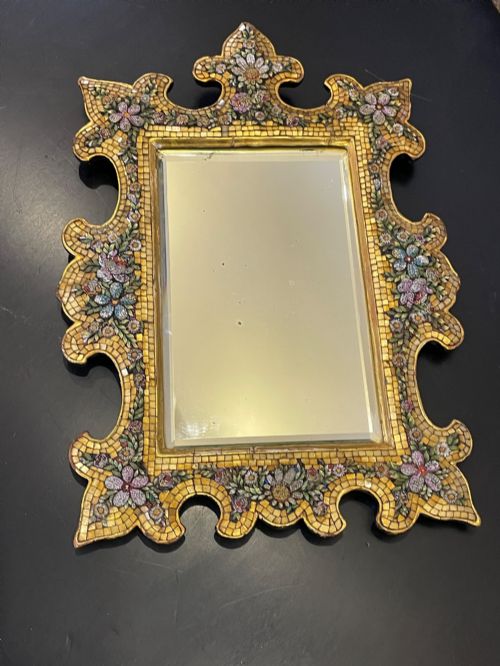
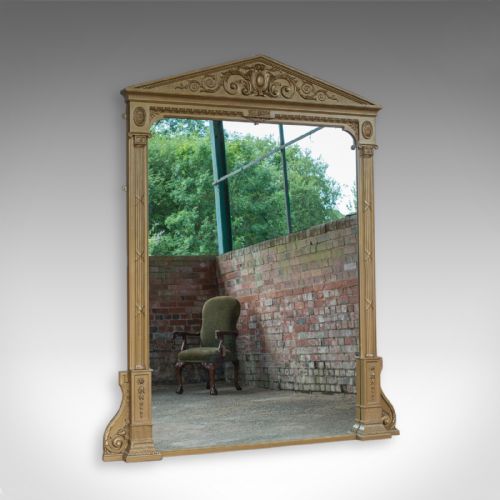
The pieces on this page span several distinct periods, most frequently appearing from the nineteenth century and the Victorian era, alongside earlier Georgian and eighteenth-century examples. You will encounter overmantel mirrors, pier mirrors, and tall wall mirrors, often showing stylistic influences from French Chateau, Rococo Revival, Neoclassical, and Italian Grand Tour designs.
Forms vary from impressive rectangular overmantels to soaring arched floor pieces and circular frames. Whether rendered in a classical English taste or with elaborate Italianate and Florentine carving, each object shares a commanding physical presence.
How they were made
Makers constructed the core structures using timbers such as oak, walnut, and general wood, upon which they applied layers of gesso to build up intricate relief decoration. Carvers then shaped floral motifs, scrollwork, and classical figures directly into the gesso and wood substrate.
The characteristic golden sheen comes from the application of gold leaf or giltwood finishes, sometimes contrasted with areas of black paint or oil paint details. Silvered mirror glass completes the construction, fitted into frames that range from simple geometric mouldings to deep, multi-tiered cavetto profiles.
What varies in quality
Quality in these pieces rests upon the crispness and depth of the carved ornamentation within the gesso and wood. Superior examples display hand-chiselled detailing with sharp relief, whereas lesser pieces rely on softer, moulded compositions.
The handling of the gilding further distinguishes the work, with genuine gold leaf providing a warmer, more nuanced reflection than flat metallic paints. Additionally, the presence of original mirror glass with natural foxing and heavy timber backing boards indicates higher craftsmanship.
The Grand Gilt Mirror Glossary
- Giltwood
- Wood that has been coated with gold leaf or gold powder. This surface treatment provides the characteristic golden glow seen on antique frames.
- Gesso
- A plaster-like mixture applied to wood frames to create a smooth base for carving and gilding. It allows for deeply sculpted decorative motifs.
- Overmantel mirror
- A large mirror specifically designed to hang above a fireplace mantel. These pieces often feature wide horizontal proportions to match the hearth below.
- Pier mirror
- A tall mirror designed to hang on the narrow wall space between two windows. They frequently reach impressive heights to maximise reflected light.
- Trumeau mirror
- An antique mirror incorporating a painted panel or oil painting above the glass plate. These decorative panels often feature classical scenes or mythological motifs.
Grand Gilt Mirror: Frequently Asked Questions
Where should I hang a grand gilt mirror?
These large pieces find their traditional home above a fireplace mantel or mounted securely to a principal wall in a high-ceilinged reception room.
Because of their substantial weight and scale, they require solid wall fixings and benefit from placement opposite a window to maximise natural light reflection.
How do I identify a Victorian gilt mirror?
Victorian examples often combine heavy carved wood and gesso construction with robust proportions and classical or Italianate revival styling.
Examination of the timber backing and the composition of the frame reveals the manufacturing methods characteristic of the nineteenth century.
What is an overmantel mirror?
An overmantel mirror is a wide format looking glass created to sit directly above a fireplace opening.
They anchor the chimney breast visually and balance the horizontal expanse of the mantel shelf beneath them.
How should I clean a antique gilt mirror?
Dust the carved frame gently with a soft, dry brush to protect the delicate gesso and gold leaf layers from moisture damage.
Clean the mirror glass sparingly using a cloth slightly dampened with water, taking care to keep all liquids away from the antique frame edges.