
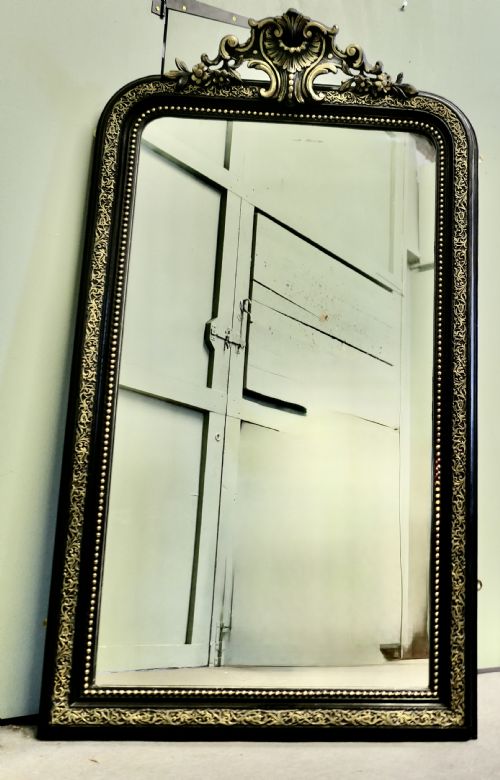
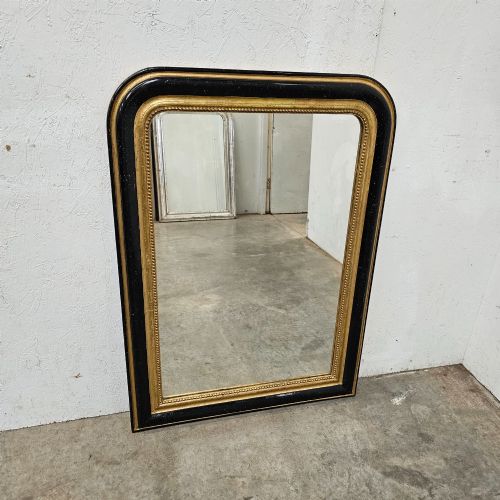
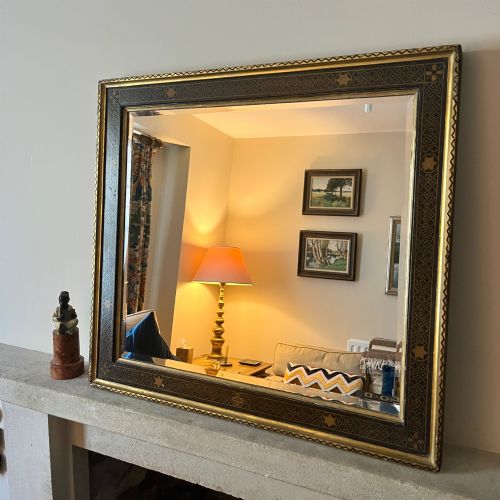

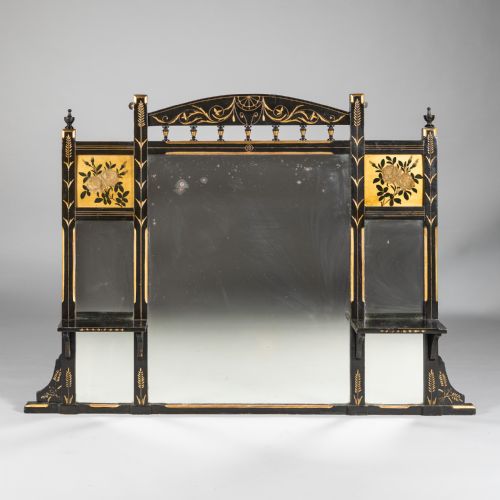



Black Gilt Mirror
A black gilt mirror brings depth and sharp contrast to a room through dark ebonised surfaces and bright metallic leaf.
Black Gilt Mirror
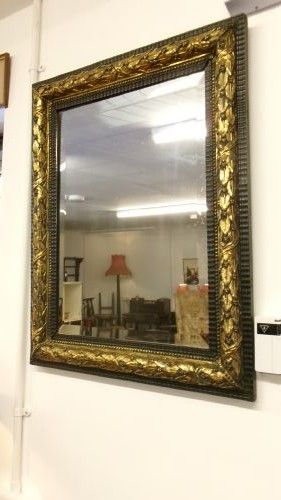
Victorian and French Napoleon III workshops dominate the selection, often employing ebonised timber alongside parcel-gilt highlights. Examples from the Aesthetic Movement and Regency periods also appear frequently, alongside Chinoiserie lacquered frames from later decades.
How they were made
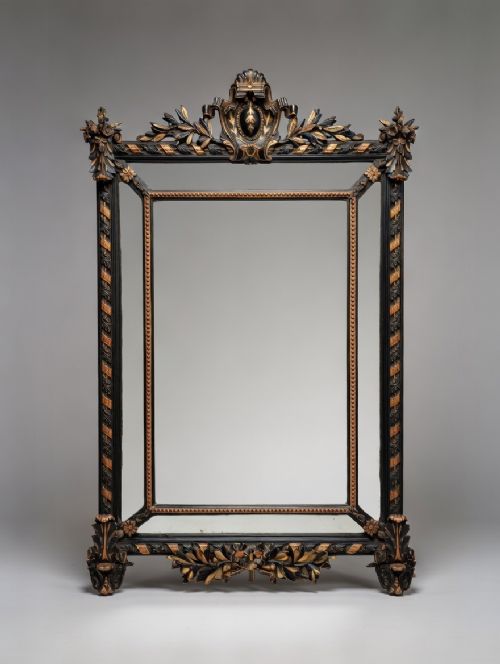
Cabinetmakers constructed the foundational frames using timber such as mahogany or pine, applying coats of dark lacquer or ebonisation to achieve a dense black finish. Artisans then applied gesso over carved wooden mouldings to build up relief details before laying down gold leaf by hand.
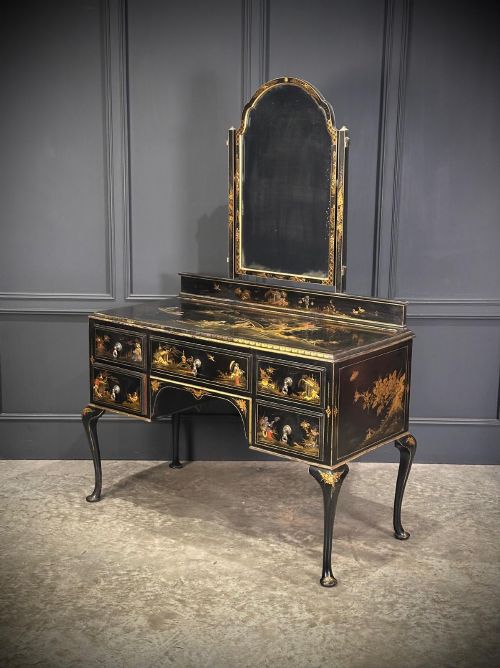
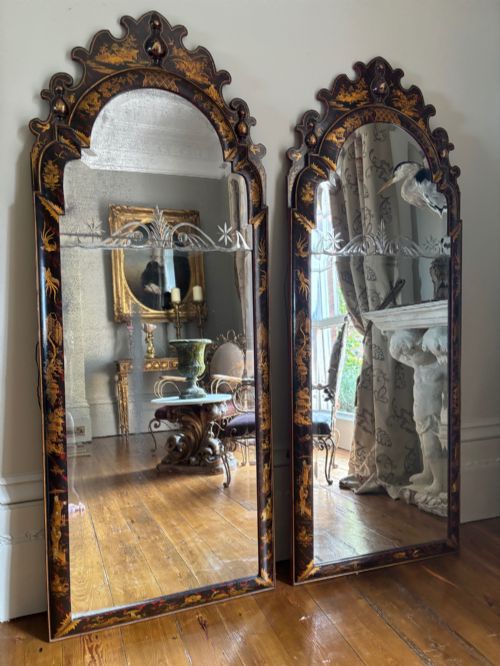
French and English pieces frequently utilised moulded gesso on wood to create ornate crests and ribbed borders. Japanned finishes and hand-painted Chinoiserie motifs appear on select frames, showcasing layered lacquer techniques typical of the nineteenth and early twentieth centuries.
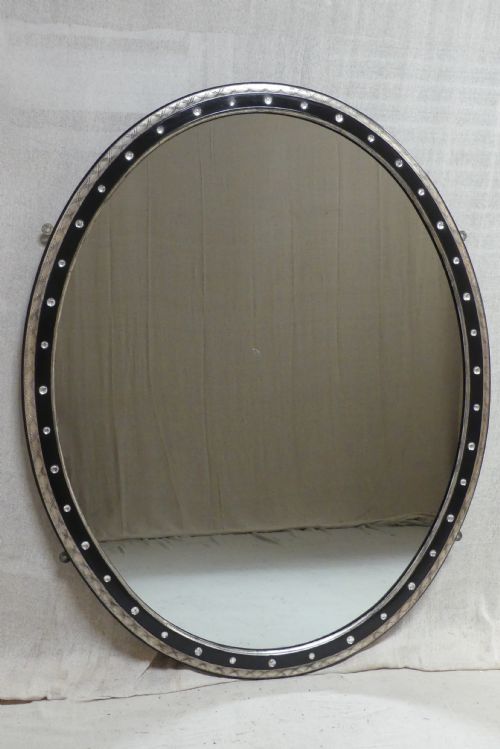
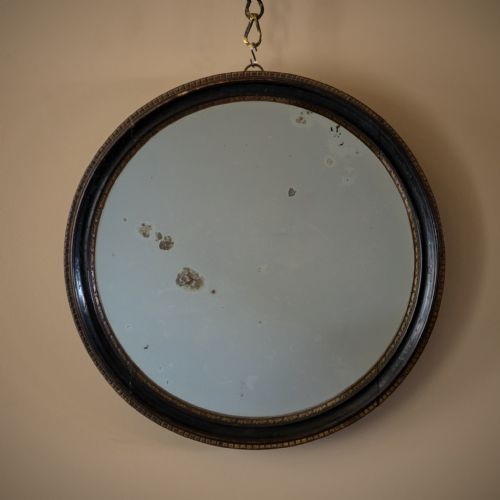
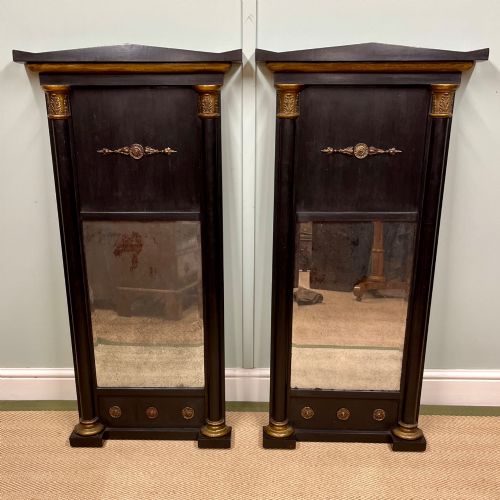
Listings span from the late eighteenth century through the Edwardian period, uniting Victorian ebonised overmantles with Regency convex plates and Chinoiserie lacquered frames.
What varies in quality
The standard of carving and the crispness of the gesso ornamentation dictate the upper tiers of the range. Master craftsmen produced deep, sharp mouldings and clean junctions where parcel-gilt details meet the black ground, whereas lower grades rely on softer, shallower pressed compositions.
The integrity of the original mirror plate and the retention of the primary gilding and ebonisation separate exceptional survivals from heavily restored examples. Depth of frame and the complexity of the crest, such as carved dragons or intricate foliate scrolls, elevate certain pieces above standard domestic wall mirrors.
The Black Gilt Mirror Glossary
- Ebonised
- Wood finished to imitate ebony through dark staining, painting, or chemical treatment. This technique became widely popular during the Victorian era for furniture and mirror frames.
- Parcel-gilt
- Partially gilded surfaces where gold leaf highlights specific carved details against a contrasting painted ground. It creates a striking visual interplay between the dark frame and reflective metal.
- Gesso
- A plaster mixture applied to wood frames to create a smooth surface for gilding or to build up low-relief carvings. Skilled artisans moulded this paste before it hardened.
- Overmantle
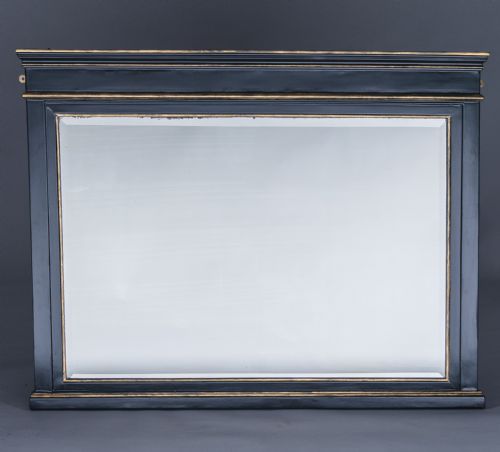
- A large mirror designed to hang specifically above a fireplace mantelpiece. These pieces often feature wide proportions to match the width of the hearth below.
- Japanned
- European-made lacquerwork inspired by Asian decorative arts, popular on eighteenth and nineteenth-century frames. The technique involves applying multiple resin layers to achieve a glossy, dark finish.
Black Gilt Mirror: Frequently Asked Questions
Where should I hang an overmantle mirror?
These large mirrors traditionally sit directly above a fireplace mantelpiece to reflect natural light across the room. Their substantial proportions also suit placement above a low sideboard or console table in a hallway.
Ensure the wall fixings match the considerable weight of carved wood and gesso frames. Secure them directly into wall studs or utilise heavy-duty fixings rated for antique mirrors.
How do I clean an antique black and gilt frame?
Dust the carved wooden surfaces gently with a soft, dry brush to prevent accumulation in the recesses of the gesso. Avoid commercial chemical sprays or water, which can damage aged lacquer and lift fragile gold leaf.
Clean the mirror glass itself with a minimal amount of glass cleaner applied to a cloth rather than sprayed directly onto the plate. This prevents moisture from seeping behind the silvering or staining the surrounding ebonised timber.
What is the difference between an ebonised and a lacquered mirror?
Ebonisation involves staining or painting timber to achieve a flat or satin black finish that reveals the underlying wood grain where wear occurs. Lacquering uses resin layers to build up a deep, glossy coating, often associated with Chinoiserie and Japanned decorative styles.
Both finishes create a dark ground for gilt highlights, but lacquer yields a smoother, more reflective surface. Ebonised frames tend to show a more traditional wooden texture.
How can I tell a Victorian mirror from a Regency one?
Regency frames often lean towards classical restraint, featuring architectural mouldings, convex circular plates, and gilt-bronze mounts. Victorian and Aesthetic Movement pieces frequently display heavier proportions, ebonised mahogany, and elaborate gesso crests with incised decoration.
Examine the construction of the wooden backing boards and the type of screws or fixings used. Hand-beveled glass and older fixing methods help differentiate mid-nineteenth-century examples from later reproductions.