
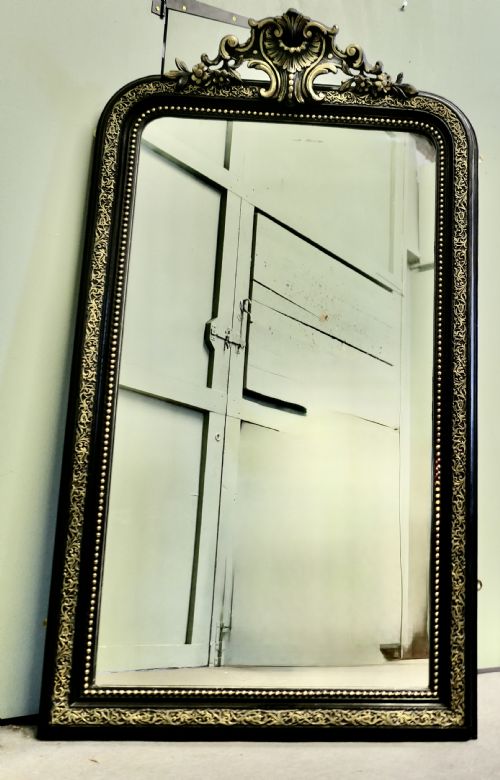
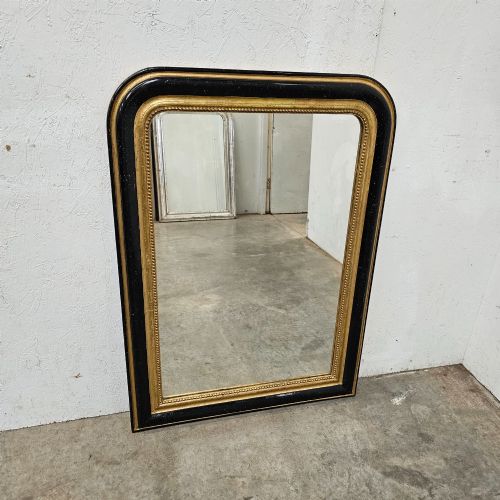
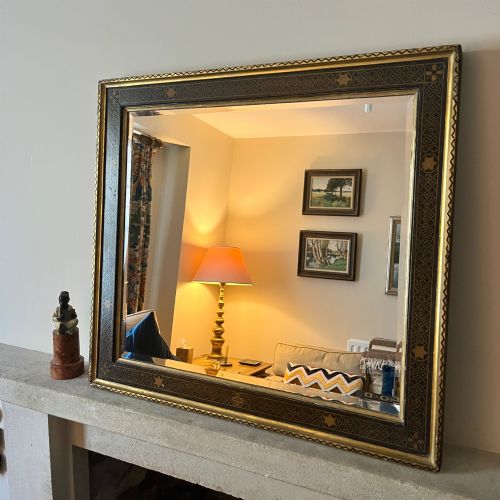


Black Gilded Wall Mirror
These black gilded wall mirrors bring dark contrast and bright leaf into a room, catching light where the walls stay dim.
Black Gilded Wall Mirror
A black gilded wall mirror is a striking piece of interior decor that combines ebonised wood or dark paint with bright metallic leaf, creating a dramatic focal point in any room. When searching for a black gilded wall mirror, you encounter various forms ranging from tall pier mirrors to grand overmantels and smaller oval wall hangings.
The pieces on this page span several distinct periods, with nineteenth-century examples dominating the selection alongside Regency, Edwardian, and twentieth-century interpretations. You will regularly find French Napoleon III designs, Louis Philippe frames, and Victorian overmantels alongside distinct Chinoiserie and Aesthetic Movement creations.
Materials and construction
Frames rely heavily on solid wood, gesso, and glass, utilising ebonised finishes, black paint, or dark lacquer as a base for applied gold leaf or parcel-gilt details. Artisans built up intricate decorative elements using carved wood and moulded gesso before applying the metallic leaf by hand to highlight specific motifs.
Mirror glass sits securely within these heavy frames, sometimes showing the subtle imperfections, foxing, or bevels characteristic of older manufacture. The combination of dark ebonised surfaces with shimmering gilt creates the strong visual tension defining these mirrors.
Listings feature ebonised wood, gesso, and gold leaf across Victorian, Regency, and twentieth-century periods.
Distinctions in quality
Quality rests upon the depth of the carving and the crispness of the gesso mouldings beneath the gilt, where finer pieces display sharp relief and carefully burnished gold leaf. The richness of the ebonised finish or black lacquer also dictates the overall presence of the object, separating standard commercial items from masterworks.
The integrity of the original plate glass and the retention of the early gilding play a major role in the standing of a mirror. Superior examples maintain their original backboards, mounting hardware, and structural rigidity despite centuries of hanging.
The Black Gilded Wall Mirror Glossary
- Ebonised
- Wood treated to imitate ebony, usually through staining, painting, or chemical processing to achieve a deep, uniform black finish. This dark surface forms the primary contrasting ground for gilt details.
- Gesso
- A plaster-like mixture applied to wood frames to create a smooth surface for gilding or to build up raised decorative reliefs. Artisans carve and shape this material before applying gold leaf.
- Parcel-gilt
- A decorative treatment where only specific parts of an object are gilded, leaving the underlying ebonised wood or paint visible elsewhere. This technique accentuates carved motifs and framing edges.
- Overmantel mirror
- A large mirror designed to hang specifically above a fireplace mantel, often horizontally oriented to fill the wall space. These pieces frequently incorporate arched tops and elaborate crestings.
- Pier mirror
- A tall, narrow mirror traditionally hung on the pier, the solid wall space between two windows. Their vertical proportions maximise light reflection in period rooms.
Black Gilded Wall Mirror: Frequently Asked Questions
How do I hang a heavy overmantel mirror?
These substantial frames require secure fixing directly into wall studs or masonry using heavy-duty brackets suited to the weight of wood and glass. Professional installation ensures the mirror stays stable against the wall.
Distributing the load across multiple fixing points prevents strain on the original antique frame and mounting hardware.
What defines a Regency black gilded mirror?
Regency pieces often display classical restraint combined with bold contrasting finishes, drawing on ancient Greek and Roman motifs. You may notice distinct elements like gilded animal figures or architectural moulding.
These early nineteenth-century examples tend to exhibit precise carving and specific proportions typical of the Regency period.
How do I clean an antique ebonised frame?
Dust the frame gently with a dry, soft microfibre cloth to remove surface particles without disturbing the aged surface. Avoid using liquid cleaners, polishes, or modern solvents that might damage the fragile gesso or gold leaf.
Preserving the original ebonised wood and gilt requires minimal intervention and careful handling.
What is Chinoiserie style in these mirrors?
Chinoiserie frames incorporate European interpretations of Chinese artistic motifs, featuring painted scenes, pagodas, and exotic figures against a black lacquered background. These designs gained popularity during various periods including the Edwardian era and the early twentieth century.
The aesthetic brings a decorative, narrative quality to the dark framed mirror.