


Black Ebonised Side Cabinets
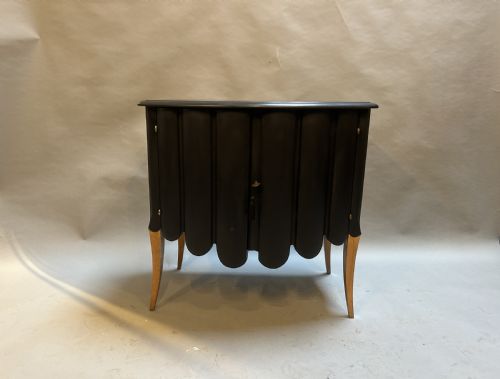
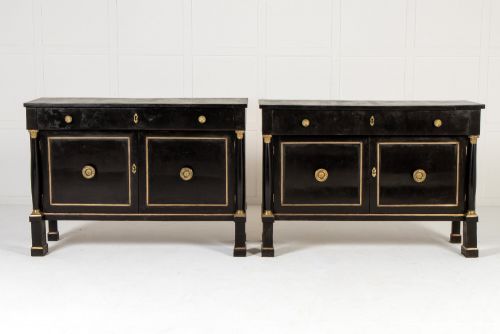
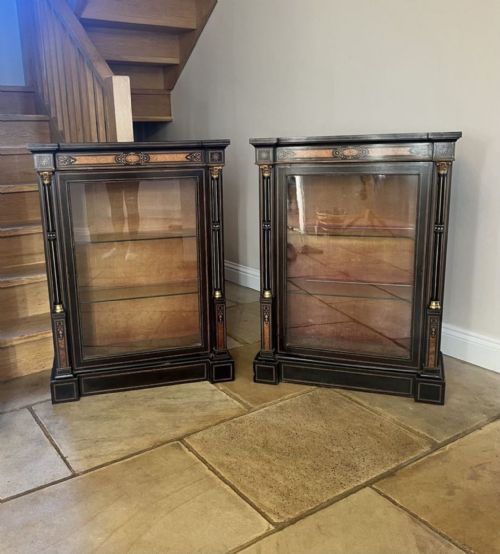
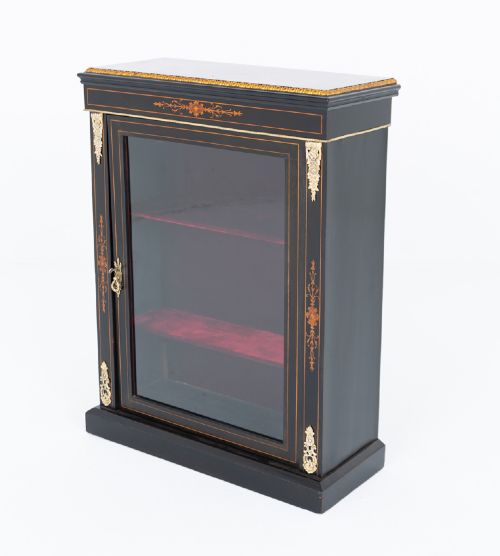
Black ebonised side cabinets bring dark elegance to a room, offering display space and enclosed storage through polished timber and metal mounts.
Materials and Construction
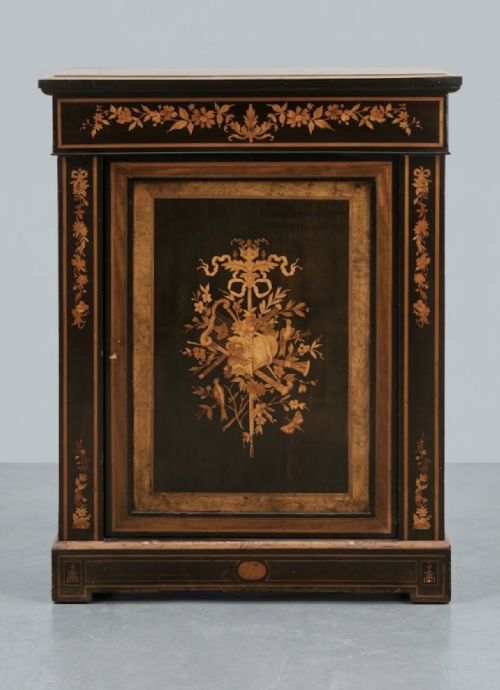
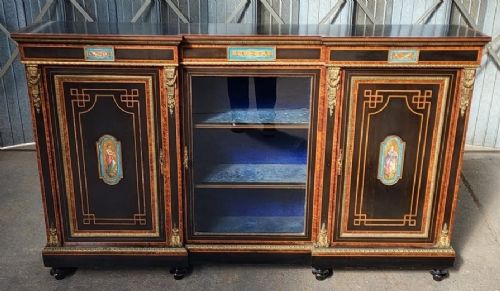
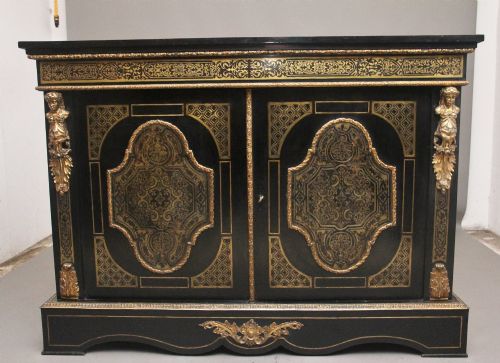
Makers constructed these carcasses from timber such as mahogany, walnut or hardwood, applying ebonised finishes to mimic costly ebony. Surfaces frequently feature intricate brass and tortoiseshell boulle work, marquetry inlay, amboyna panels and hand-painted porcelain plaques.
Mounts in ormolu, gilt-metal, gilt bronze and brass accent the dark woodwork, while inset marble tops provide durable surfaces on French and Italian pieces. Glazed panels allow visibility in display variants, supported by internal timber shelving.
Craftsmanship and Detail
Quality rests in the precision of the marquetry and the crispness of the gilt bronze or ormolu mounts rather than the simple presence of black finishes. Hand-chiselled metalwork and genuine tortoiseshell inlay elevate a piece above standard production models.
The integration of materials like Sevres style porcelain plaques and Pietra Dura stone panels indicates superior workshops. Structural integrity in the ebonised timber and well-fitted doors distinguish finer examples.
Listings feature ebonised cabinets spanning the eighteenth, nineteenth and twentieth centuries, incorporating materials like porcelain, marble and tortoiseshell.
The Black Ebonised Side Cabinets Glossary
- Ebonised
- Timber treated with stain or paint to imitate ebony. This dark finish gained popularity in nineteenth century furniture design.
- Ormolu
- Gilded bronze ornamentation applied to furniture mounts. It provides metallic contrast against dark wood surfaces.
- Boulle
- Marquetry technique utilising tortoiseshell and brass. The method produces intricate patterns associated with French furniture.
- Credenza
- A low cabinet or sideboard used for storage and display. Victorian examples often feature three doors.
- Pier Cabinet
- A narrow display cabinet built to fit wall spaces between windows. These pieces typically include glass doors for viewing collections.
- Pietra Dura
- Inlay work using cut and fitted polished coloured stones. It appears on elite nineteenth century cabinets.
Black Ebonised Side Cabinets: Frequently Asked Questions
How do I clean ebonised wood?
Dust surfaces regularly with a soft, dry cloth to prevent accumulation in carved details and marquetry crevices. Avoid harsh chemical cleaners that can strip the dark finish.
Occasional application of appropriate furniture wax maintains the sheen of the timber. Keep pieces away from direct sunlight to protect the ebonised surface.
What is a boulle cabinet?
Boulle furniture incorporates elaborate inlay work created from tortoiseshell and brass sheets. Artisans cut interlocking patterns that reflect light against dark ebonised wood.
Named after a French cabinet maker, this technique defines many nineteenth century Napoleon III pieces. The contrasting materials create rich visual depth.
Are marble tops original?
Many French and Italian cabinets feature fitted marble tops designed as part of the original construction. These slabs provide durable surfaces for display items.
White and coloured marble varieties appear across nineteenth century pieces. The stone sits directly into the timber frame of the cabinet.