
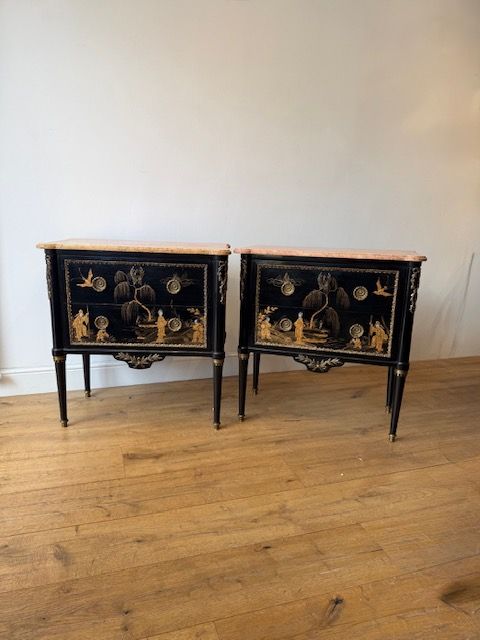
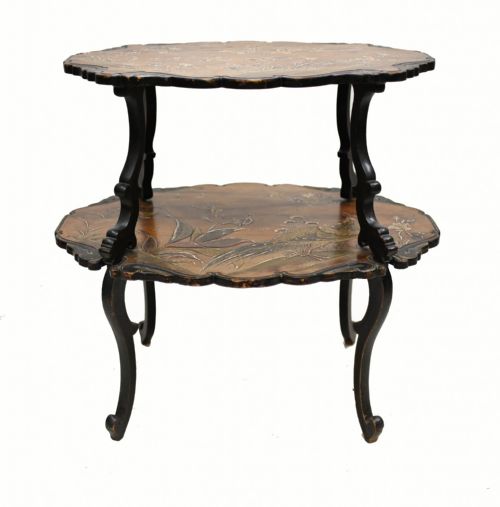


Black Chinoiserie Side Table
A black chinoiserie side table brings patterned lacquer and gilt narrative panels into a room, offering a functional surface shaped by historic decorative taste.
Black Chinoiserie Side Table
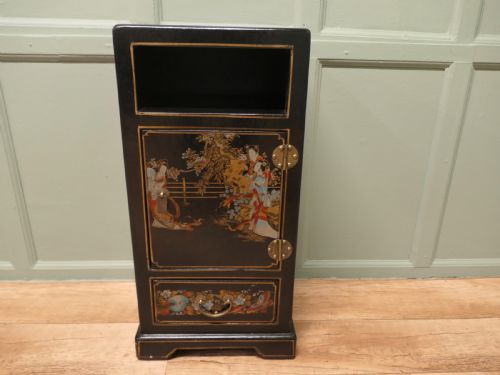
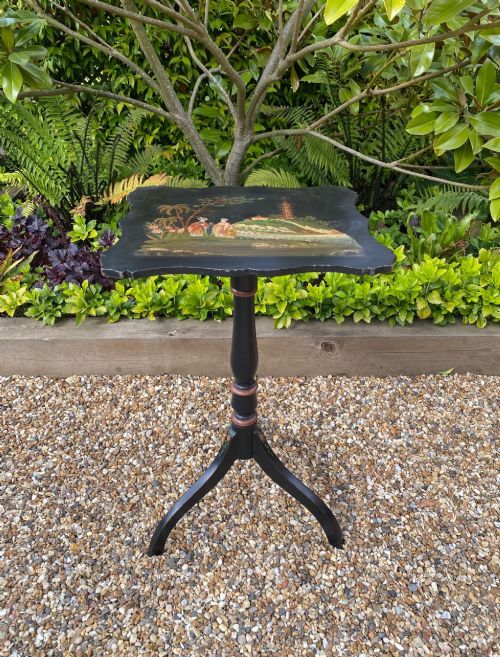
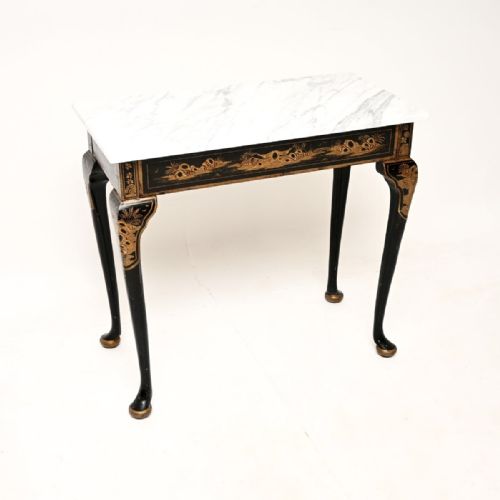
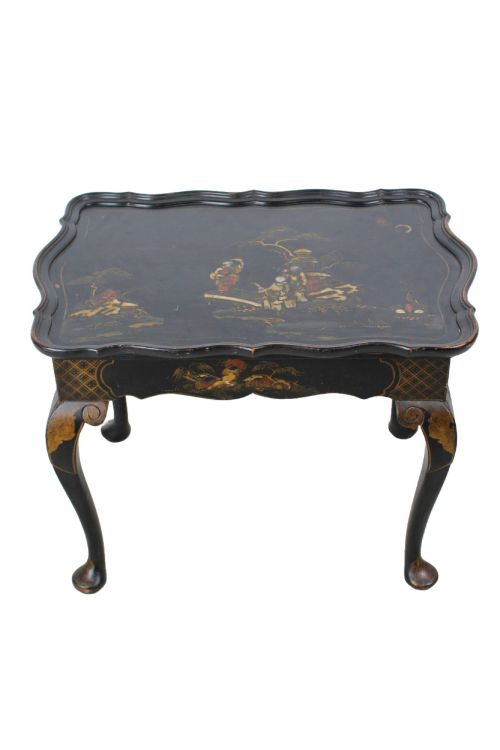
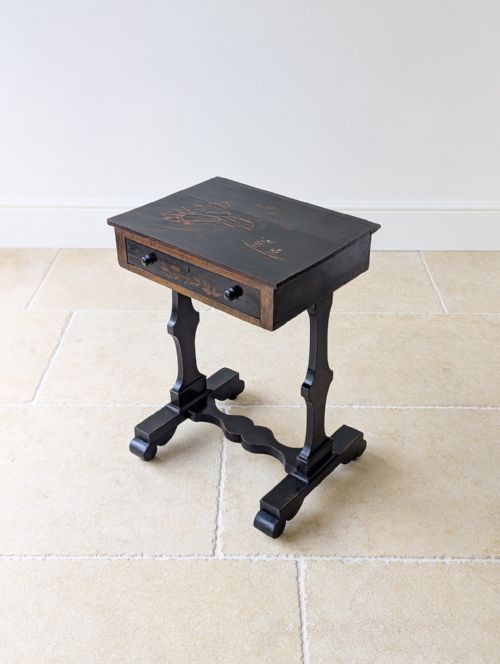
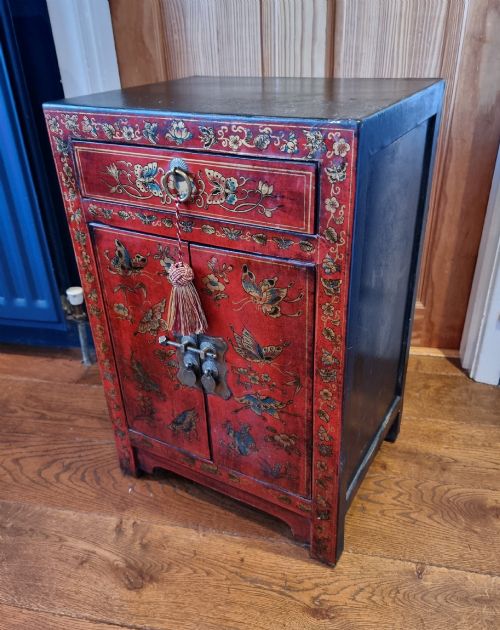
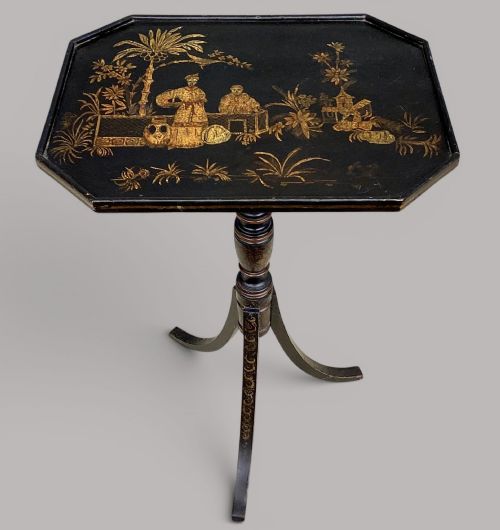
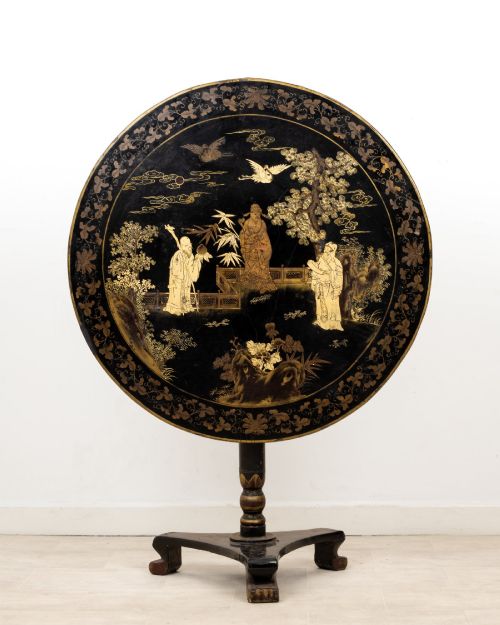
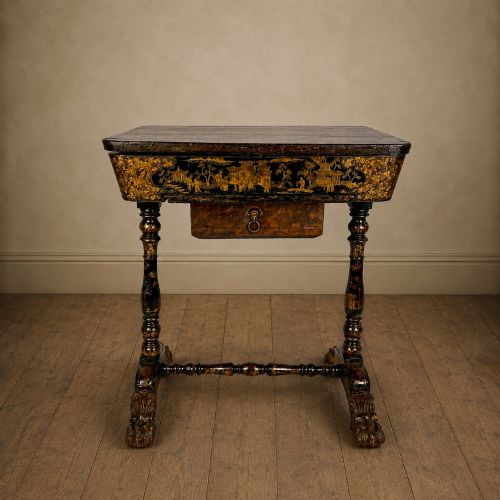
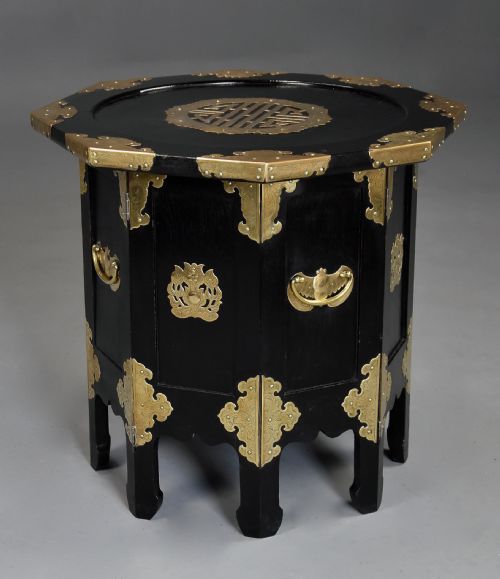
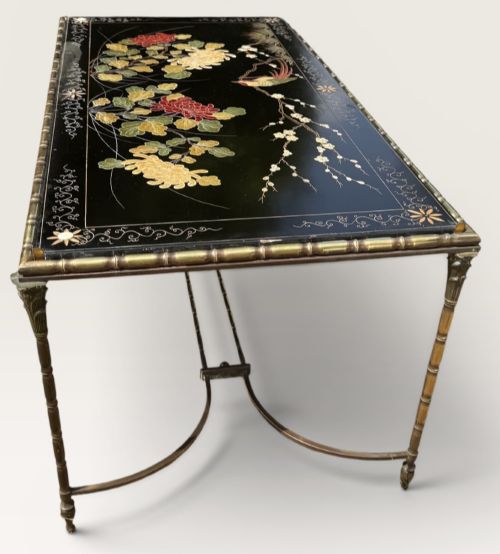
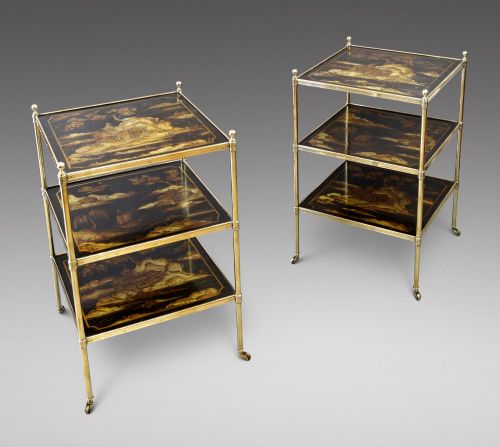
A black chinoiserie side table serves as a compact surface while displaying intricate oriental motifs, figures, and landscapes rendered in gold and coloured pigments. These tables emerge in forms such as tripod occasional stands, coffee tables, tray tables on folding stands, and nests of four.
The pieces span periods from the Regency era and the nineteenth century through the Edwardian years and the nineteen-twenties, incorporating Victorian interpretations and Aesthetic Movement bamboo designs. Buyers frequently encounter nineteenth-century examples and early twentieth-century reproductions that adapt earlier decorative schemes to smaller domestic scales.
How they were made
Construction relies on timber carcasses, ebonised wood, papier-mâché, or bamboo, providing stable foundations for multiple layers of dark lacquer. Artisans built up the polished surfaces through repeated application and drying of varnish before applying decorative details.
Gold leaf and gilt paint delineate figures, pagodas, and floral scenes, sometimes enhanced with brass mounts, cloisonné inserts, or painted red highlights. Tray tables utilise removable papier-mâché or lacquered wood trays set upon folding or fixed stands.
Several trays double as detachable serving platters, proving that Victorian guests expected their tables to multi-task before the coffee table was invented.
What varies in quality
Quality rests upon the crispness of the hand-painted decoration and the depth of the lacquer finish, where finer pieces display layered depth rather than flat surface printing. The skill in the brushwork determines whether the figures and architectural motifs possess proportion and lively detail.
Structural integrity of the joints, the preservation of the original gilt and lacquer surface without extensive repainting, and the harmony of the stand with the top distinguish superior examples from ordinary production.
Maison Bagues
The Black Chinoiserie Side Table Glossary
- Chinoiserie
- European decorative style reflecting Chinese artistic motifs, popular across various historical periods. It employs imaginary landscapes, pavilions, and figures.
- Japanning
- European imitation of East Asian lacquerwork, utilising heat-dried varnish layers and gold dust or paint. This technique produced dark glossy surfaces decorated with raised or flat oriental scenes.
- Ebonised wood
- Timber treated with chemical stains or black paint to resemble high-status ebony. It provides a dark, uniform ground for gilt decoration.
- Papier-mâché
- Composite material made from paper pulp or layers of paper bound with glue, pressed and dried into rigid forms. It served as a lightweight base for trays and small tables.
- Etagere
- Open tiered shelving unit or small table designed for displaying ornaments. These pieces offer multiple levels for placement.
Black Chinoiserie Side Table: Frequently Asked Questions
How are these tables cleaned?
Dust surfaces gently using a soft, dry cloth to prevent scratching the delicate lacquer finish.
Avoid liquid cleaners, chemical solvents, or abrasive polishes that damage the aged varnish and gilt details.
Can these tables hold lamps?
Smaller occasional and lamp tables provide suitable foundations for illumination and decorative objects.
Ensure heavy items remain balanced on the surface to protect the historic joints and papier-mâché structures.
How do I spot nineteenth-century work?
Examine the timber construction, hand-mixed lacquer texture, and wear patterns around the edges for age indicators.
Nineteenth-century pieces frequently display craquelure in the varnish and hand-applied gold leaf rather than modern printing.
Where do tray tables originate?
Tray tables combine removable serving trays with dedicated wooden stands designed for portable use.
Victorian and Edwardian makers adapted papier-mâché and lacquered wooden trays onto folding or fixed bases for parlour service.