
Black Chinoiserie Furniture
Black chinoiserie furniture brings together deep lacquer surfaces and gilded oriental scenes to transform a room with pattern and narrative.
Black Chinoiserie Furniture
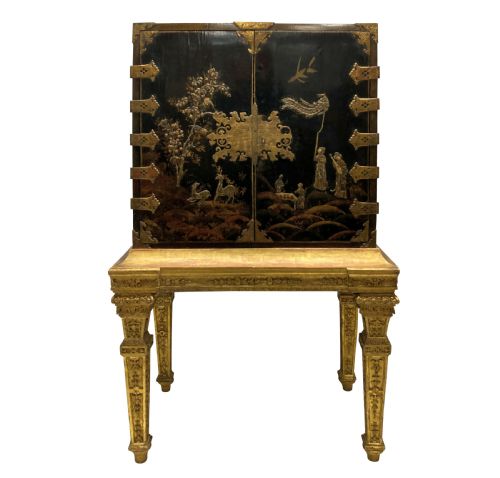
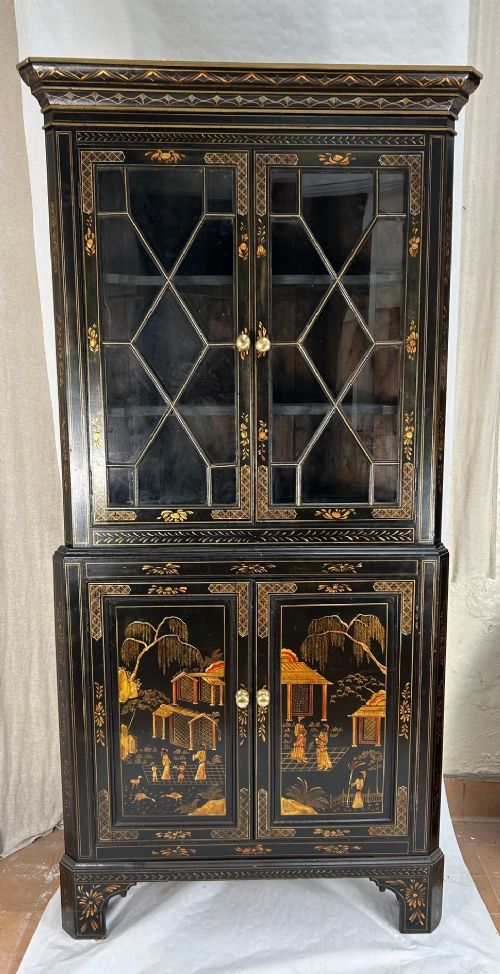
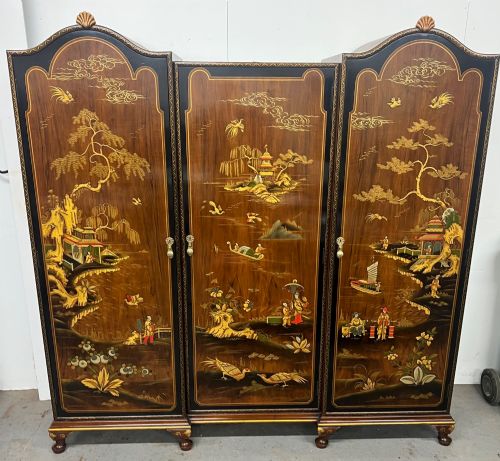
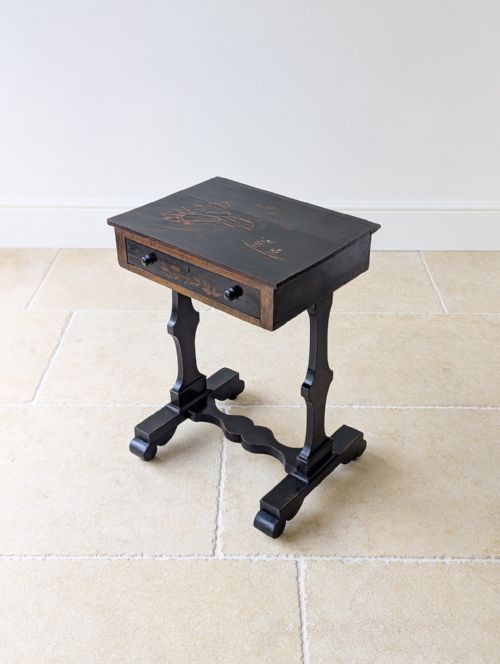
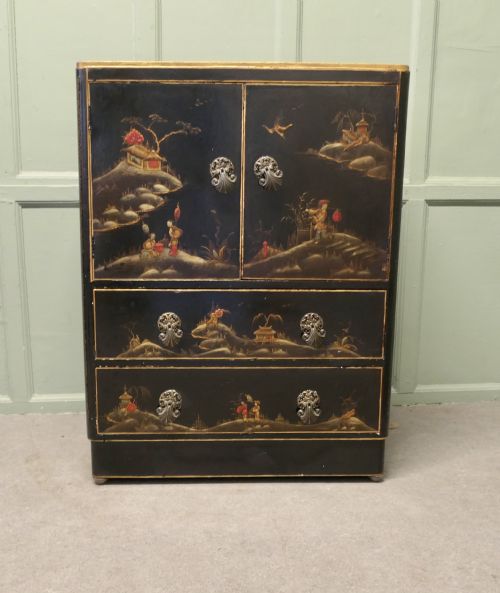
Black chinoiserie furniture comprises storage and display pieces finished in dark lacquer and decorated with traditional oriental motifs. When you search for black chinoiserie furniture, you encounter cabinets on stands, side tables, corner cupboards, and occasional tables spanning the eighteenth century to the early twentieth century.
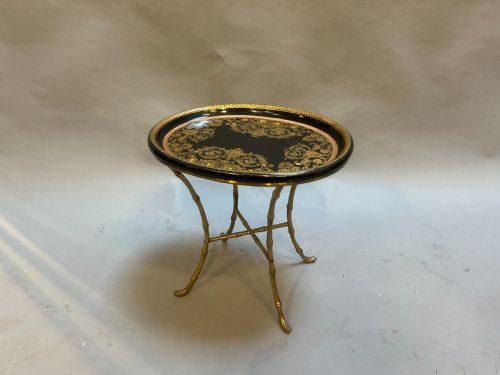
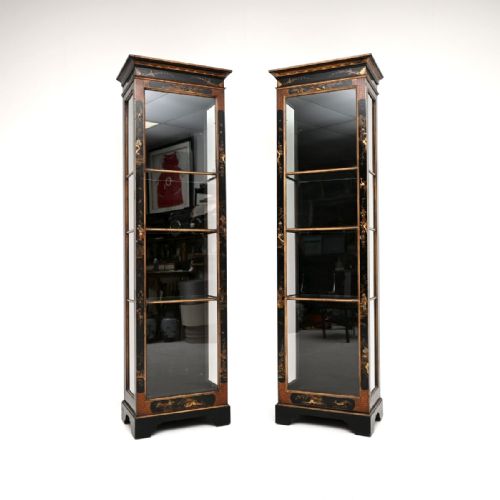
The selection ranges from eighteenth-century lacquer cabinets and Chinese export pieces to Victorian papier-mâché tray tables and Edwardian display cabinets. Pieces from the Regency period and the early twentieth century appear frequently, alongside occasional Georgian and Queen Anne examples.
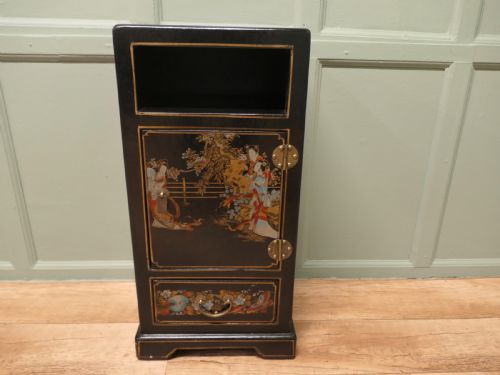
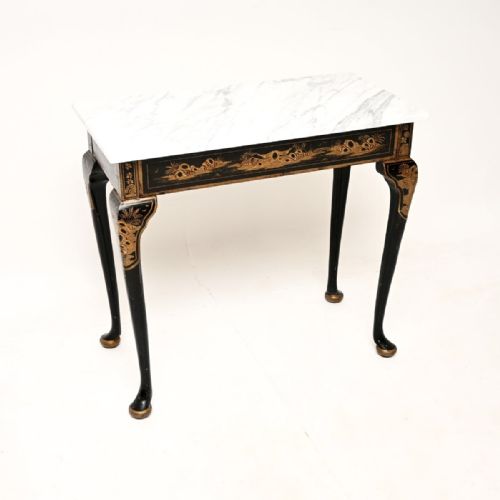
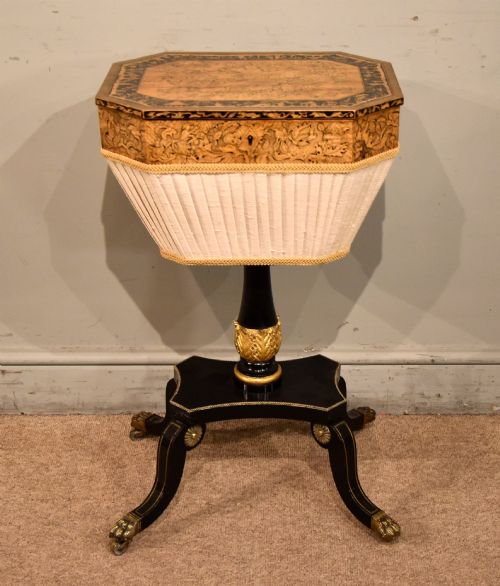
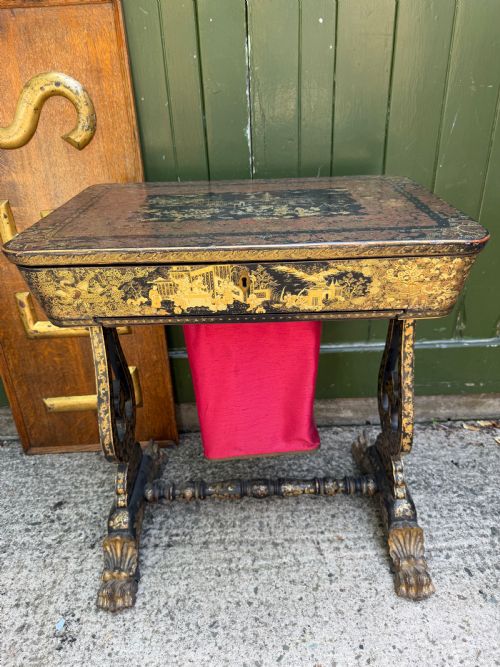
Forms include side cabinets, display cabinets, work tables, and plant stands, often resting on carved or ebonised supports. These objects serve practical storage and display functions while introducing intricate painted or gilded narratives to an interior.
How they were made
Makers built these pieces using wood, ebonised wood, and papier-mâché as the primary structural bases. Artisans applied layers of lacquer to create smooth, dark surfaces suitable for intricate painting.
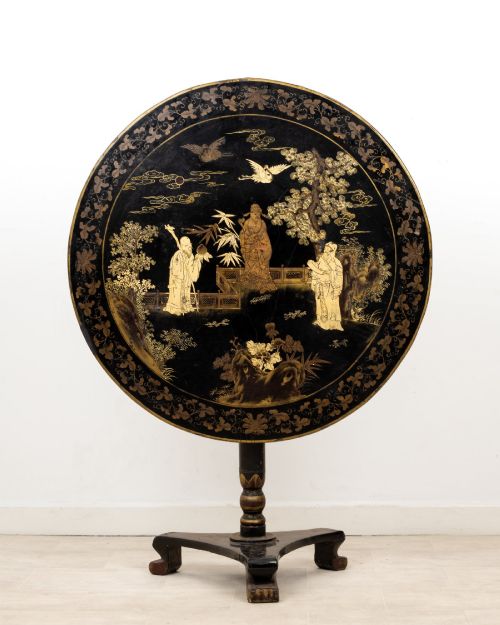
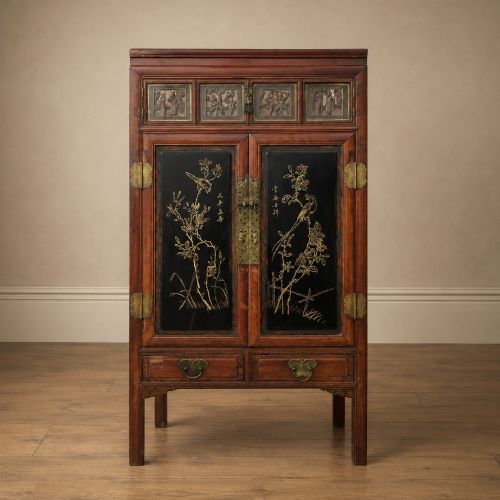
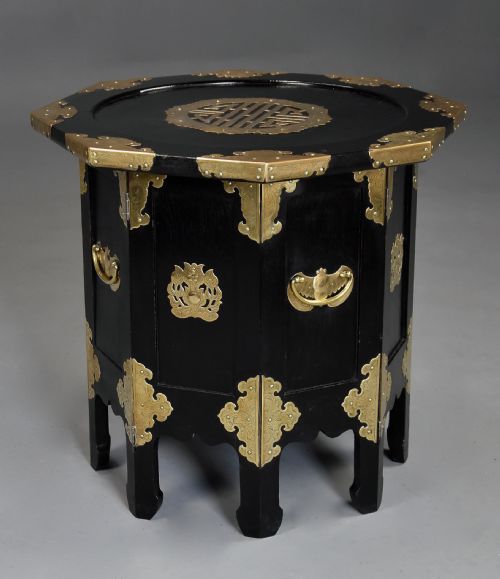
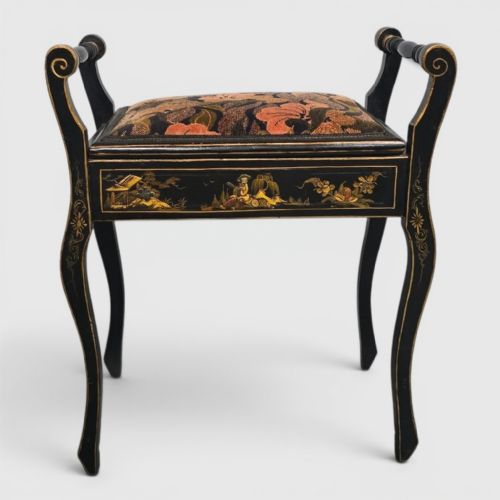
Decoration relied on gold leaf, gilt, and painted pigments to depict figures, pavilions, birds, and flora. Brass hardware, such as hinges, handles, and occasional inlaid details, provided functional and visual contrast to the dark lacquer.
Several pieces feature startled birds frozen mid-flutter above improbable garden pavilions.
What varies in quality
The depth and execution of the surface decoration distinguish different grades of work. Finely detailed hand-painted or gilt scenes demonstrate greater skill than simpler repetitive patterns.
The structural integrity of the timber base and the preservation of the original lacquer finish dictate the overall standard. Pieces retaining their initial stands, mounts, and hardware demonstrate superior original integrity.
Maples & Co.
The Black Chinoiserie Furniture Glossary
- Chinoiserie
- European decorative art influenced by Chinese artistic styles, typically featuring imaginary landscapes, figures, and pavilions. This aesthetic flourished across several centuries in furniture and interior design.
- Lacquer
- A durable resin finish applied in multiple coats and polished to a smooth sheen. It forms the protective and decorative ground for oriental designs.
- Japanning
- A European imitation of East Asian lacquerwork involving varnishes and layered decoration. It gained popularity during the seventeenth and eighteenth centuries.
- Penwork
- A decorative technique utilising India ink applied with a pen to create fine monochrome line drawings on wood surfaces. It appears on Regency work tables and side cabinets.
- Papier-mâché
- A composite material made from paper pulp mixed with adhesive, moulded and dried to form rigid objects such as trays. These served as tabletops when mounted on wooden stands.
Black Chinoiserie Furniture: Frequently Asked Questions
What periods do these pieces date from?
The pieces span from the seventeenth century through the eighteenth and nineteenth centuries into the Edwardian era and 1920s. Examples include eighteenth-century cabinets on stands and early twentieth-century display furniture.
Design influences stretch from Queen Anne and Georgian periods to Regency and Aesthetic Movement styles. Each era adapted the lacquer techniques and oriental motifs to contemporary furniture forms.
How were cabinets on stands used?
Cabinets on stands provided secure storage for valuables, textiles, or collections while elevating the display to eye level. The upper section typically featured doors opening to multiple small interior drawers.
The supporting stand raised the main body off the floor, often incorporating carved legs and stretchers that matched the decorative scheme of the cabinet above.
Where should I place a lacquer side table?
A lacquer side table or occasional table fits well in a living room, hallway, or drawing room where its reflective surface catches the light. These tables function effectively beside seating or against a wall.
Keep them away from direct sunlight and excessive moisture to protect the delicate lacquer and gilt decoration over time.
How do I care for black lacquer furniture?
Maintain lacquer surfaces by dusting gently with a soft, dry cloth rather than using chemical polishes or water. Avoid placing hot or damp items directly onto the finish.
Stable room temperatures and moderate humidity prevent the wood underneath from expanding and contracting, which helps preserve the integrity of the lacquer layer.