

Chinese Lacquer Cabinet
A Chinese lacquer cabinet brings vibrant red or deep black pigment, gold leaf, and traditional joinery directly into modern interiors.
Chinese Lacquer Cabinet
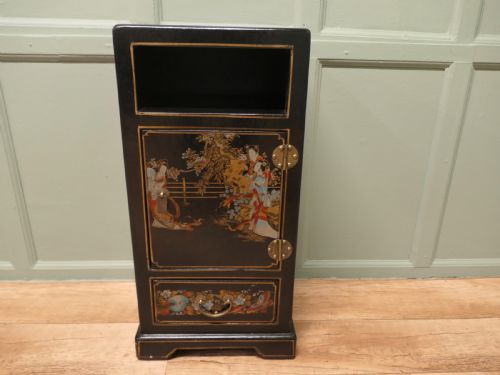
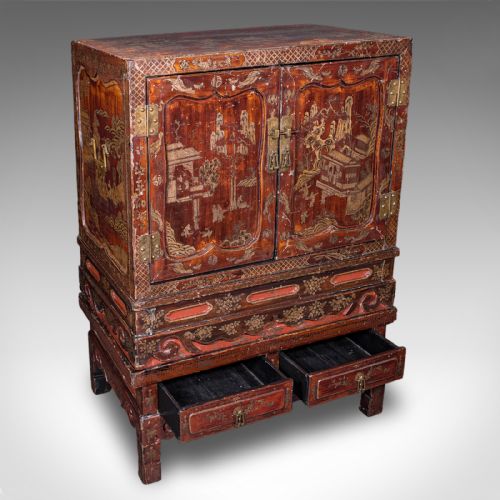
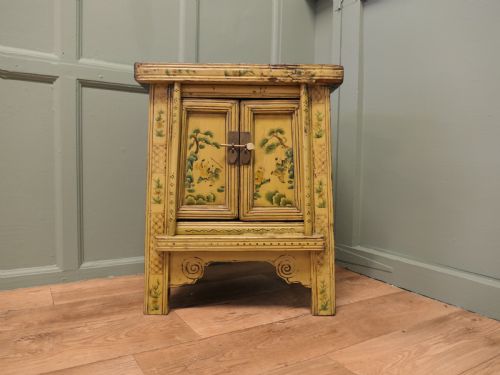
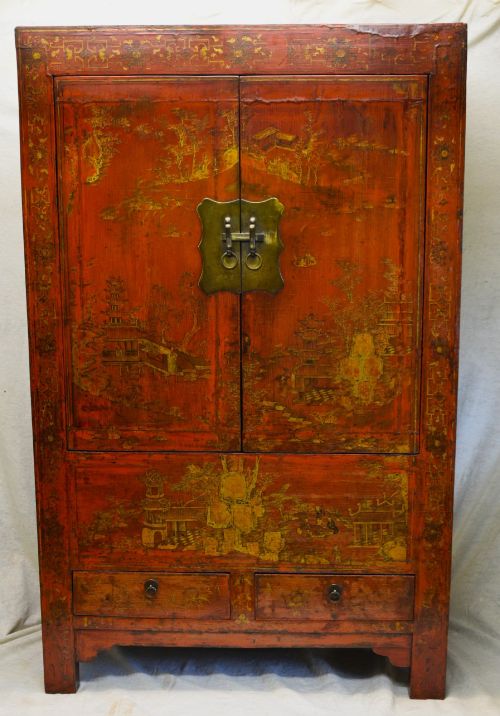
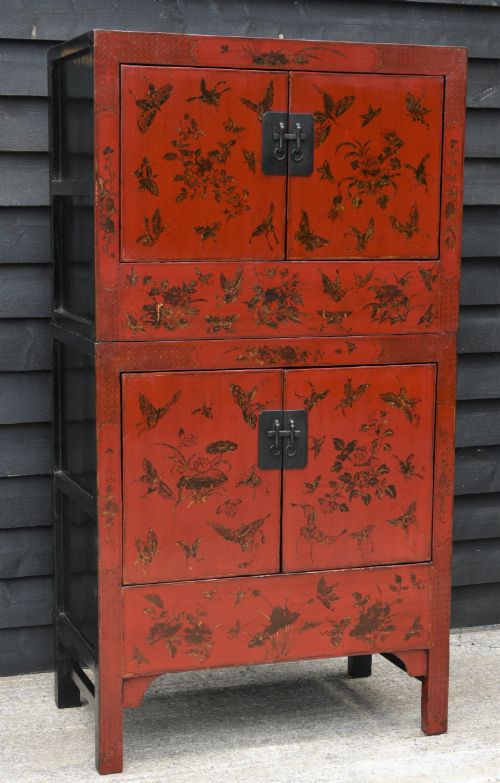
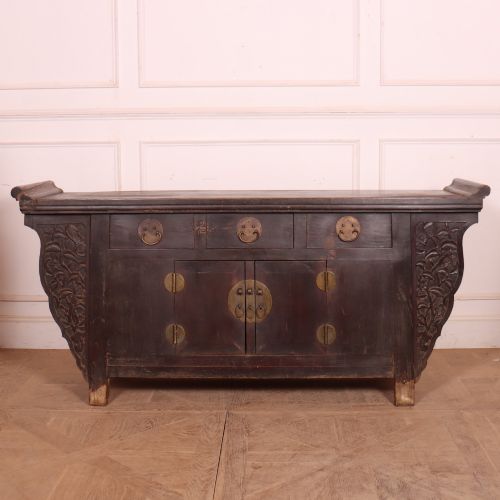
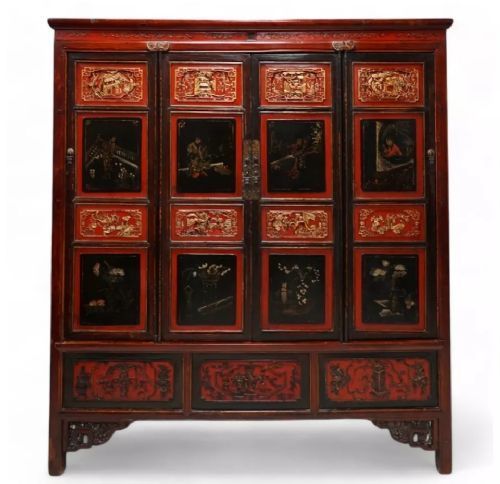
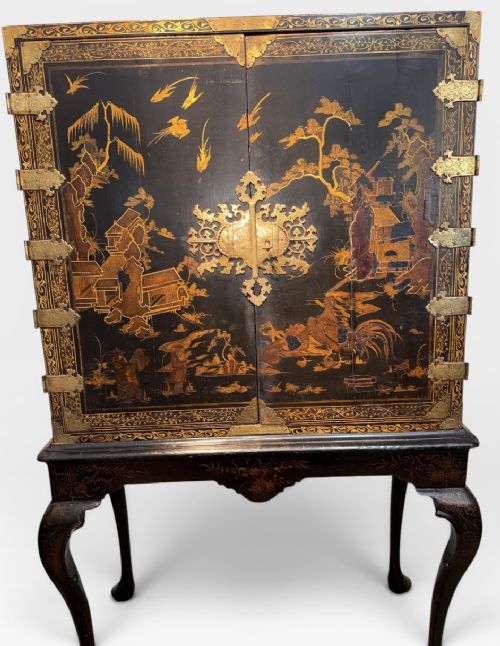
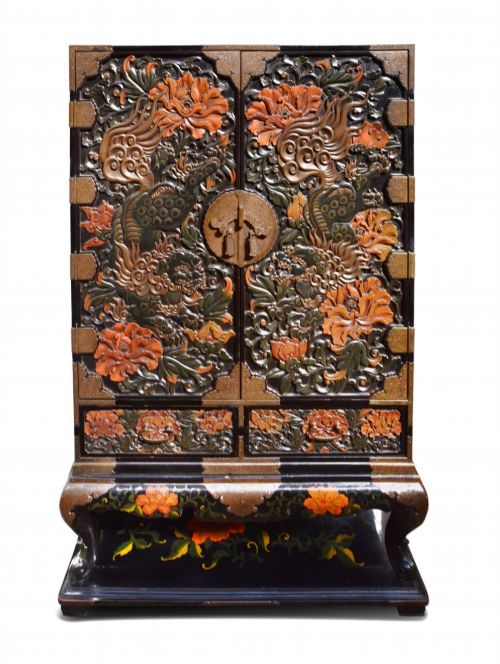
A Chinese lacquer cabinet encompasses storage pieces ranging from monumental wedding cupboards and apothecary chests with numerous small drawers to compact table cabinets and sideboards. These items arrive from periods spanning the eighteenth, nineteenth, and early twentieth centuries, alongside British and European Chinoiserie interpretations made during the Victorian and Edwardian eras.
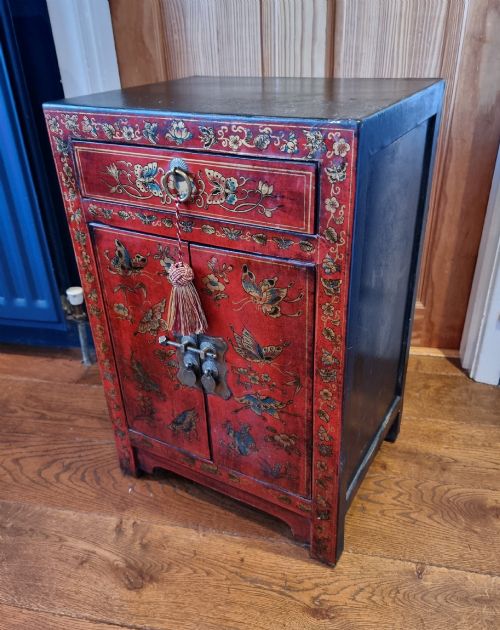
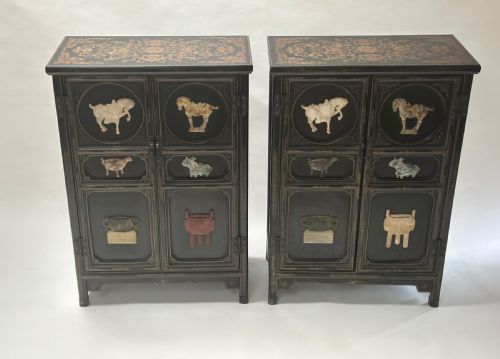
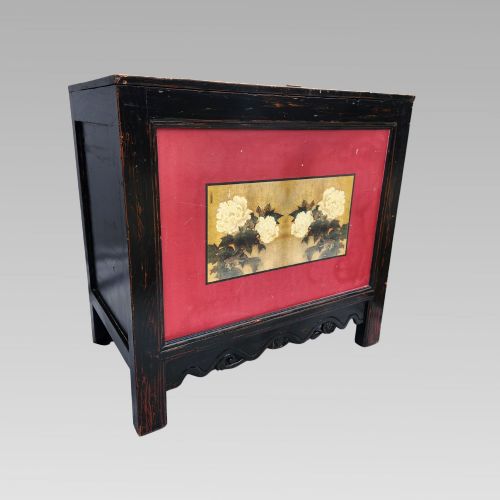
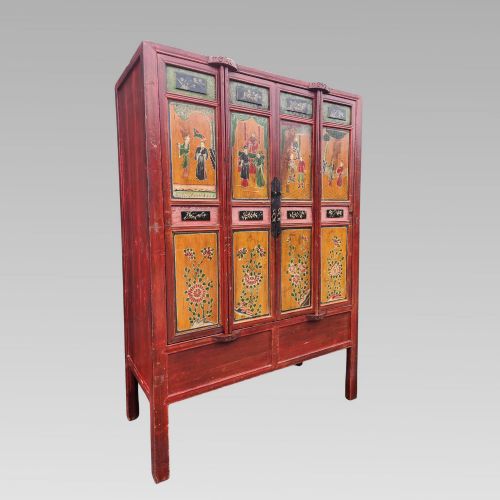
Marriage cabinets and large storage cupboards dominate the offerings on this page, often featuring striking red or black finishes paired with brass hardware. Buyers also encounter side cabinets, cocktail units, and smaller table chests originating from regions such as Shanxi and Fujian, or produced for the export market.
Materials and Construction
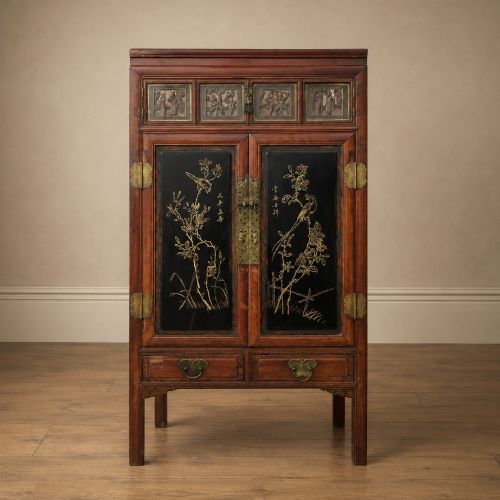
Wood carcasses constructed primarily from elm or painted timber receive multiple applications of lacquer to build a hard, smooth protective surface. Artisans then apply gold leaf, pigments, and detailed carving to create pictorial scenes of figures, birds, and flowers.
Hardware elements such as hinges, lock plates, and corner brackets utilise brass or iron, fastened securely to support heavy wooden doors and drawers. Inlay materials like soapstone occasionally appear within the lacquer surface to add texture and depth to the decoration.
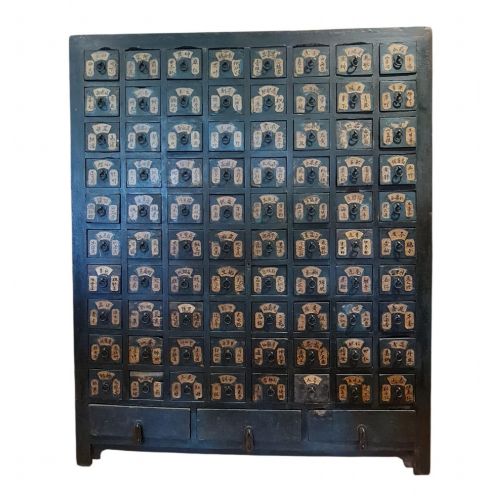
Shanxi apothecary chests on this page manage up to eighty tiny drawers, perfect for organising small treasures.
Craftsmanship and Preservation
The standard of a Chinese lacquer cabinet depends heavily on the depth of the finish, the crispness of the hand-carved details, and the intactness of the original gold leaf decoration. Pieces displaying finely rendered pictorial panels or complex multi-drawer apothecary interiors represent the upper tier of execution.
The survival of the original lacquer surface without extensive modern repainting dictates the historical integrity of the piece. Well-preserved brass mounts and stable wooden construction further distinguish finer examples from heavily restored alternatives.
The Chinese Lacquer Cabinet Glossary
- Chinoiserie
- European decorative style reflecting Chinese artistic motifs, popular during the Victorian and Edwardian periods. It appears frequently on cabinets and writing bureaux produced in Britain.
- Marriage cabinet
- Large storage cupboard traditionally given as a wedding gift in China, characterised by two doors enclosing shelving and internal compartments. Red lacquer finishes are particularly common on these forms.
- Apothecary cabinet
- Multi-drawer chest originally designed for storing medicinal herbs and roots, featuring numerous small compartments. Examples often originate from provinces like Shanxi.
- Qing Dynasty
- The last imperial dynasty of China, spanning from sixteen forty-four to nineteen twelve. Many authentic period pieces on the market date from the later decades of this era.
- Lacquer
- Protective and decorative coating applied to wood surfaces using natural resin. It provides a durable, glossy finish that accepts pigments and gold leaf gilding.
Chinese Lacquer Cabinet: Frequently Asked Questions
What is a Chinese lacquer cabinet used for?
These cabinets serve as practical storage furniture for clothing, tableware, or household items while functioning as decorative focal points in living rooms and hallways.
Larger wedding cupboards provide substantial interior shelving, whereas smaller side cabinets and table chests sit neatly on sideboards or desks for concealed storage.
How do I identify a nineteenth-century piece?
Nineteenth-century examples display traditional Chinese joinery, heavy timber carcasses usually made of elm, and hand-applied lacquer that shows natural ageing and wear.
Examine the interior construction, the patination of the brass hardware, and the pigment layers to distinguish nineteenth-century production from later twentieth-century decorative copies.
How should I care for lacquer furniture?
Maintain lacquer surfaces by dusting gently with a soft, dry cloth and avoiding direct sunlight, which can fade pigments and gold leaf over time.
Keep the furniture away from excessive heat sources and rapid humidity changes to prevent the underlying wood from expanding and cracking the lacquer.