
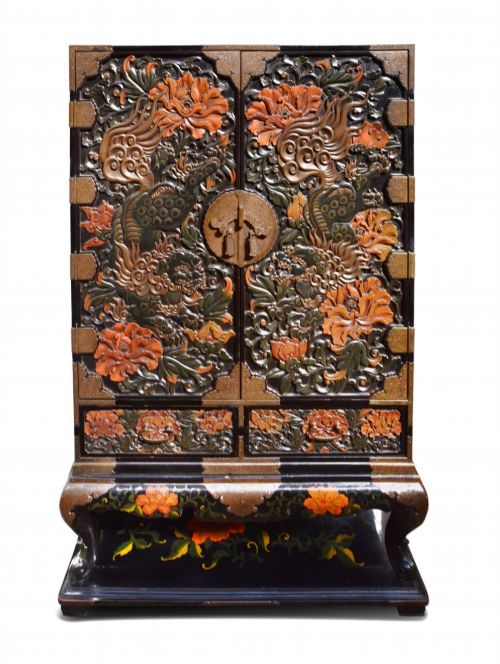


Victorian Chinoiserie Cabinet
These victorian chinoiserie cabinet examples bring vibrant orientalist lacquer and exotic frames into nineteenth century interiors.
Victorian Chinoiserie Cabinet
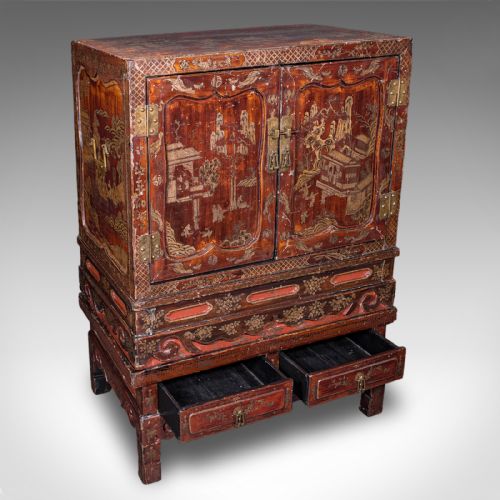
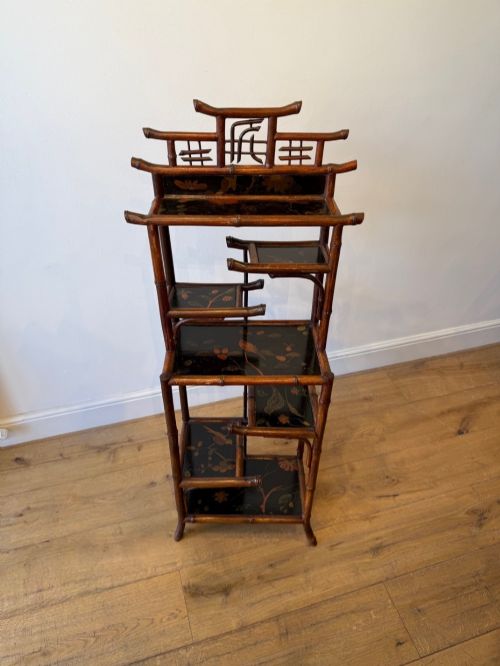
A victorian chinoiserie cabinet brings together nineteenth century furniture forms and decorative motifs inspired by East Asian art. When exploring this phrase, buyers encounter various formats ranging from bamboo display shelves and corner units to elaborate lacquer cabinets on stands.
The pieces appearing most frequently in these collections reflect the Victorian enthusiasm for exoticism through styles such as Aesthetic Movement designs, Japonisme, and Chinese Chippendale revival pieces. Makers and workshops utilised these decorative schemes on hardwoods, bamboo frames, and ebonised carcases to transform standard domestic storage into visual focal points.
Beyond traditional upright cupboards, the selection embraces associated forms including sewing cabinets, library bookcases, and small pier display units. Each object demonstrates how nineteenth century cabinet makers adapted foreign motifs to suit British interior tastes.
How they were made
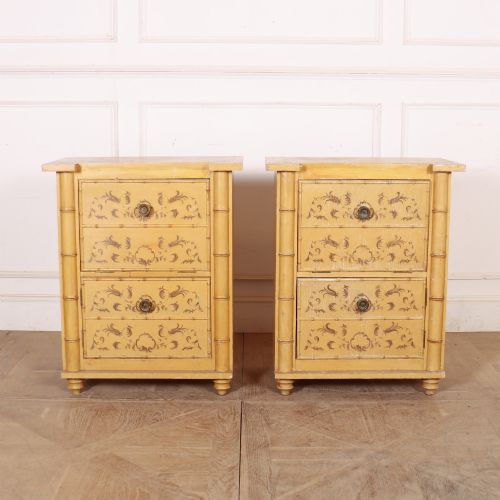
The construction of a victorian chinoiserie cabinet relies on timber carcases finished with specialist surface treatments such as lacquer, japanning, and gold leaf application. Artisans built these frames using traditional hardwoods alongside natural bamboo and faux bamboo turned wood to achieve both sturdy support and exotic visual texture.
Surface ornamentation involved building up layers of lacquer and applying metallic leaf or enamel details to depict traditional oriental scenes. Glazed panels, brass fittings, and glass doors were frequently incorporated into display cabinets and bookcases to protect the contents while showcasing decorative collections.
Some nineteenth century makers cleverly turned ordinary timber into convincing faux bamboo just to satisfy the fierce craze for botanical exoticism.
What varies in quality
Quality in a victorian chinoiserie cabinet is determined by the depth and preservation of the surface decoration, particularly the hand-applied lacquer, gold leaf, and painted details. Finer examples exhibit meticulous craftsmanship in the execution of oriental motifs and the integrity of the underlying woodwork.
Structural differentiation is evident in the choice of materials, with solid hardwoods and genuine tiger bamboo commanding greater attention than simpler pine carcases finished with applied decoration. The subtlety of joinery and the original state of brass hardware or glazed doors further distinguish superior items from standard production pieces.
Edwards & Roberts·Gabriel Viardot·John Ridgway·Coalport·Masons
The Victorian Chinoiserie Cabinet Glossary
- Chinoiserie
- European interpretation and imitation of Chinese and East Asian artistic traditions, popular in furniture and decorative arts. This style frequently employs motifs of landscapes, figures, and pagodas rendered in lacquer or paint.
- Japonisme
- The influence of Japanese art on Western culture during the late nineteenth century, visible in structural forms and decorative motifs. It appears across various furniture pieces and tables from the period.
- Japanning
- A European imitation of East Asian lacquer work created by applying successive coats of varnish and heat-curing the surface. This technique produces a dark, glossy finish often embellished with gilt decoration.
- Pier Cabinet
- A narrow display cabinet designed specifically to fit against the wall space between windows. These pieces often incorporate glass doors and shelves to exhibit porcelain and decorative plates.
Victorian Chinoiserie Cabinet: Frequently Asked Questions
Where were these cabinets placed in Victorian homes?
These pieces generally stood in formal drawing rooms, libraries, or parlours where guests could admire the decorative lacquer and exotic framing. They served as functional storage while displaying prized collections of ceramics and small curiosities.
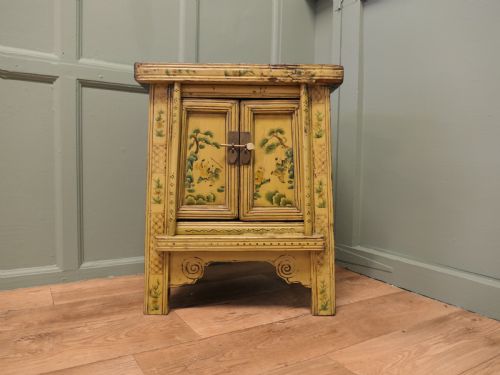
Smaller variants like bedside cabinets or sewing tables functioned in private chambers and boudoirs. Their compact proportions allowed them to integrate easily into domestic spaces requiring both storage and visual interest.
How do I distinguish bamboo pieces from wood?
Bamboo pieces utilise natural cane stems or turned timber styled as faux bamboo to create lightweight, exotic frames. These structures often support lacquer panels or serve as open display shelving.
Wooden cabinets rely on denser timbers such as mahogany or ebonised hardwoods for their primary carcase construction. The surface is then heavily finished with lacquer, paint, or japanning rather than exposing natural plant stems.
What is the difference between Chinoiserie and Japonisme?
Chinoiserie draws primarily on Chinese artistic motifs, featuring symmetrical compositions, pavilion architecture, and figures rendered in gold and lacquer. It reflects a European fantasy of East Asian aesthetics dating back centuries. Ninteenth century Japonisme takes its inspiration directly from Japanese art, embracing asymmetrical designs, natural motifs, and simplified structural forms. This movement gained significant momentum following the opening of Japanese trade ports.
Can I store books in a Victorian display cabinet?
Many library bookcases and glazed cabinets from this period were specifically designed to house bound volumes safely behind glass doors. The enclosed shelving protects delicate paper and bindings from dust and environmental wear.
Open bamboo shelving units are better suited for ceramics, decorative plates, and lighter display items rather than heavy volumes. Assessing the shelf strength and depth ensures the structure can support the intended objects.