


Vintage Chinoiserie Storage
Vintage chinoiserie storage brings together painted lacquer cabinets, chests, and tea canisters that turn practical containment into decorative art.
Vintage Chinoiserie Storage
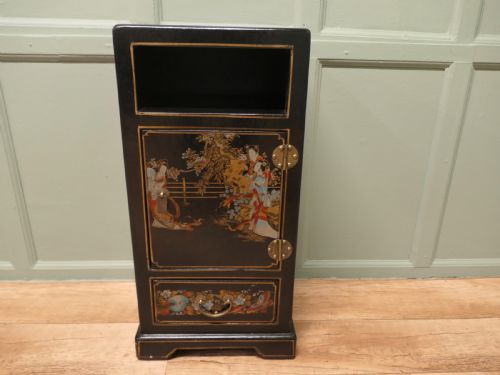
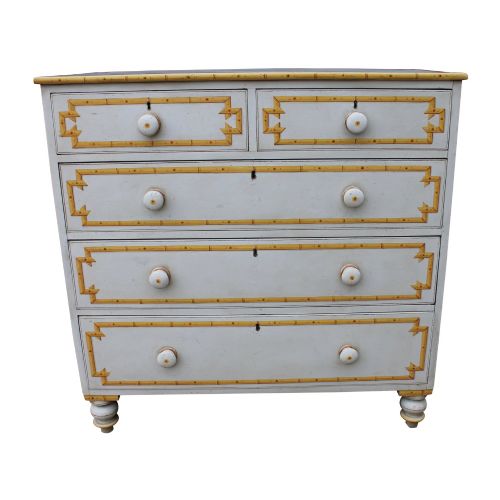
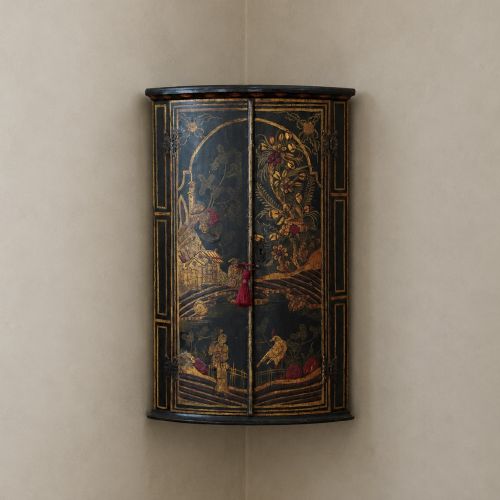
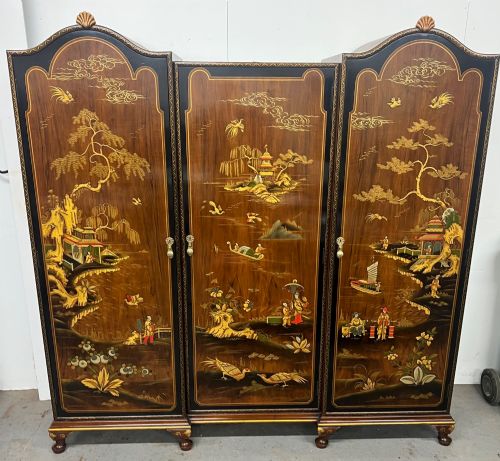
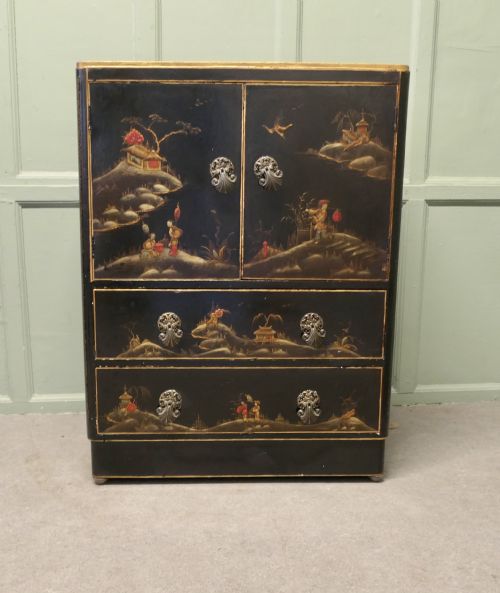
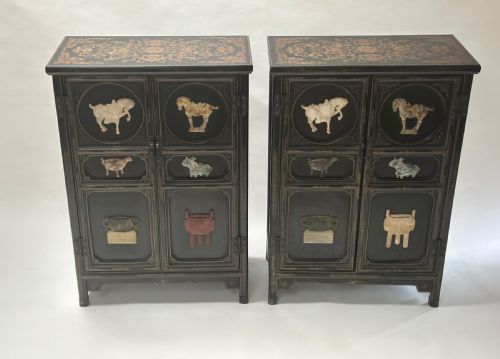
Vintage chinoiserie storage pieces span diverse forms including side cabinets, chests of drawers, corner cupboards, wardrobes, and tea canisters designed to hold household goods. Buyers seeking vintage chinoiserie storage encounter items ranging from Georgian and Victorian examples to 1920s lacquer cupboards and Edwardian cabinets on stand.
The selection includes specific decorative containers such as toleware boxes, camphor wood chests, and painted tea canisters alongside larger cocktail cabinets and side cabinets. These functional objects display distinct styles like Chinoiserie Revival, William IV Chinoiserie, and the Victorian Aesthetic Movement.
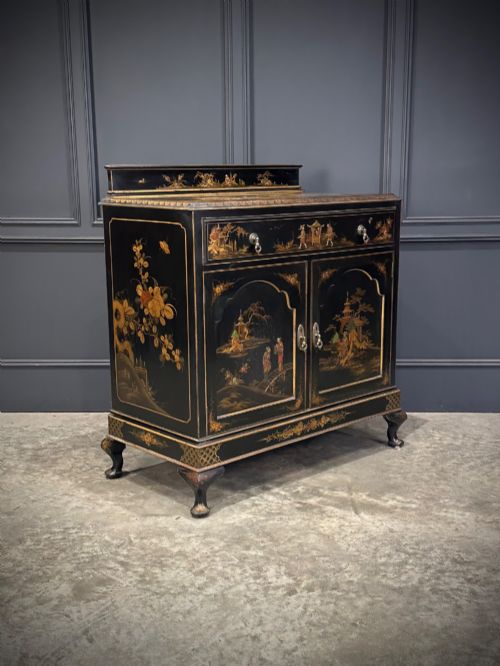
Pieces from the nineteenth and early twentieth centuries dominate the selections, offering black and red lacquer finishes alongside faux bamboo structures. Each container type provides designated storage while displaying painted motifs of birds, flowers, and architectural pagoda scenes.
Materials and construction methods
Lacquered wood and plain wood form the structural foundation of these cabinets and chests, frequently enhanced with gilt and brass fittings. Artisans applied layers of lacquer to create glossy black or red surfaces that accepted detailed handpainted decoration.
Metal storage vessels utilise tinplate and toleware to shape tea canisters and boxes, which received painted surfaces. Specialised pieces employ camphor wood, whilst others integrate faux bamboo framing to build cabinets, umbrella stands, and chests.
Listings feature storage items constructed from lacquered wood, brass, tinplate, camphor wood, and toleware across multiple historical periods.
Assessing quality in lacquer and wood
The sophistication of the handpainted decoration separates standard production from finer examples, particularly where artists rendered detailed birds, flowers, and pagoda scenes onto the lacquer. Well-executed pieces show careful layering of lacquer and gilt work that withstands age without extensive cracking.
Structural integrity depends on the choice of underlying timber, with solid camphor wood and sturdy cabinet construction indicating better workshop standards. The precision of brass hardware and the stability of stands or feet further distinguish superior storage items.
Maples and Co·Herend
The Vintage Chinoiserie Storage Glossary
- Chinoiserie
- European decorative art inspired by Chinese aesthetic traditions, typically featuring painted landscapes, figures, and motifs. This style heavily influences the surface decoration of vintage storage cabinets and chests.
- Japannan
- A European imitation of Japanese and Chinese lacquerwork achieved through specialised varnishing and baking techniques. It creates the dark, glossy finish seen on many vintage storage cupboards.
- Toleware
- Painted or enamelled metalware, frequently tinplate, used to produce decorative storage items such as tea canisters and boxes. These items often display colourful motifs consistent with chinoiserie design.
- Camphor wood
- An aromatic timber utilised for constructing chests and storage coffers to protect contents from insects. It provides a durable and fragrant interior for blanket boxes and trunks.
- Faux bamboo
- Wood turned and carved to imitate natural bamboo stalks, appearing on Victorian and nineteenth-century frames, stands, and furniture. This technique complements the Asian-inspired aesthetic of the storage pieces.
Vintage Chinoiserie Storage: Frequently Asked Questions
What is vintage chinoiserie storage?
Vintage chinoiserie storage encompasses cabinets, chests, wardrobes, and canisters decorated with European interpretations of East Asian artistic motifs. These items combine practical storage compartments with decorative painted surfaces.
Such pieces range from small tea caddies and toleware boxes to large cocktail cabinets and side cupboards dating from the Georgian period through the 1930s.
How do I care for lacquered wood?
Lacquered surfaces require gentle dusting with a soft, dry cloth to prevent scratching the glossy finish. Avoid placing these items in direct sunlight or near heat sources to prevent the lacquer from drying out.
Keep humidity levels stable in the room to protect both the wood substrate and the delicate painted layers on the exterior.
Where were tea canisters used?
Tea canisters and caddies were kept in principal rooms or dining areas to securely hold valuable tea leaves in locked containers. Wealthy households utilised sets of canisters housed within decorative boxes or displayed on side tables.
These metal and painted containers protected dry goods from moisture and light while contributing to the room's decorative scheme.