
Black Carved Chairs
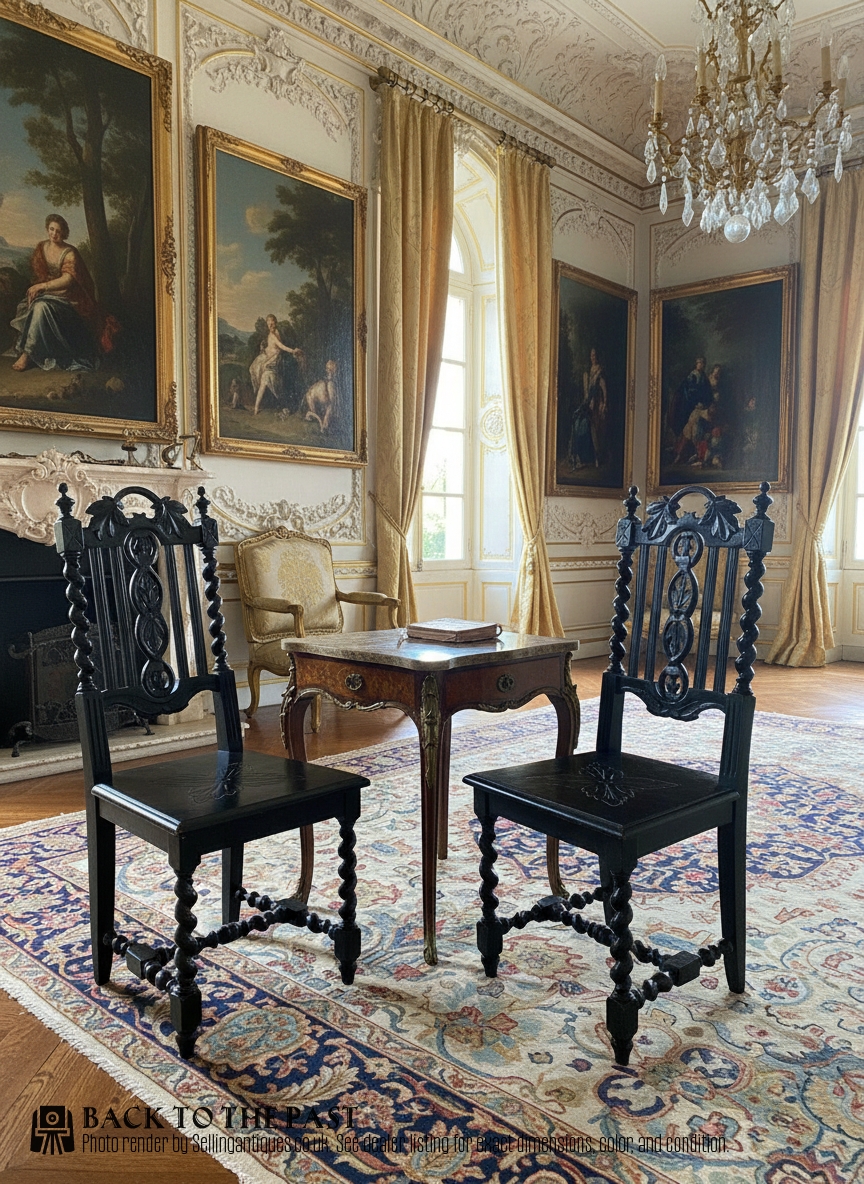
Black carved chairs bring dark timber, intricate relief work, and strong silhouettes into a room.
Black Carved Chairs
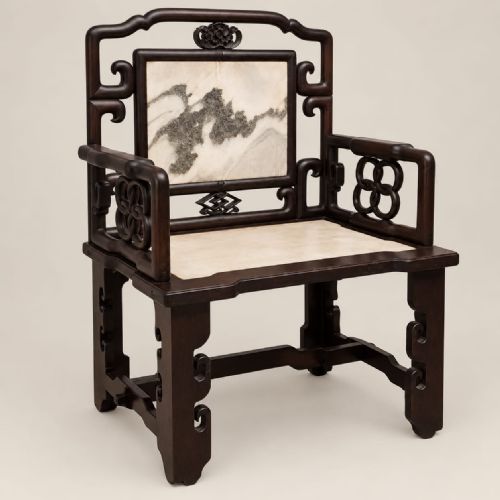
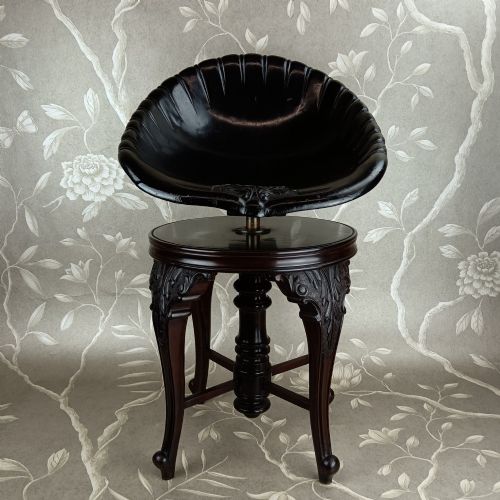
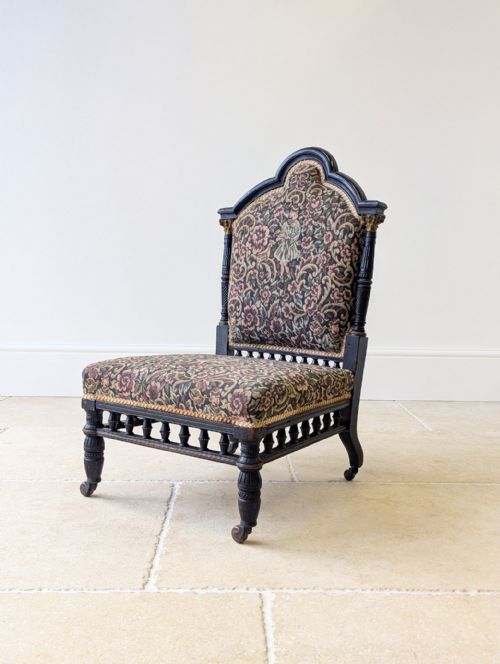
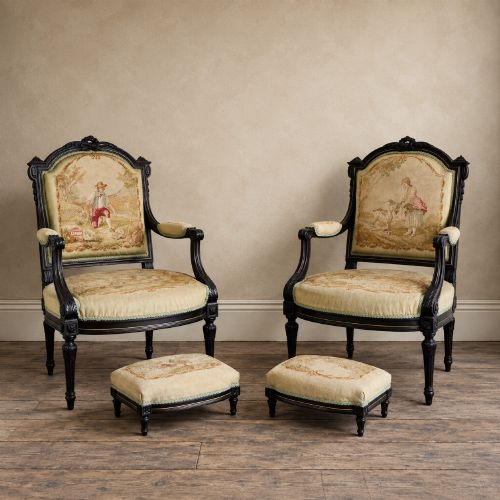
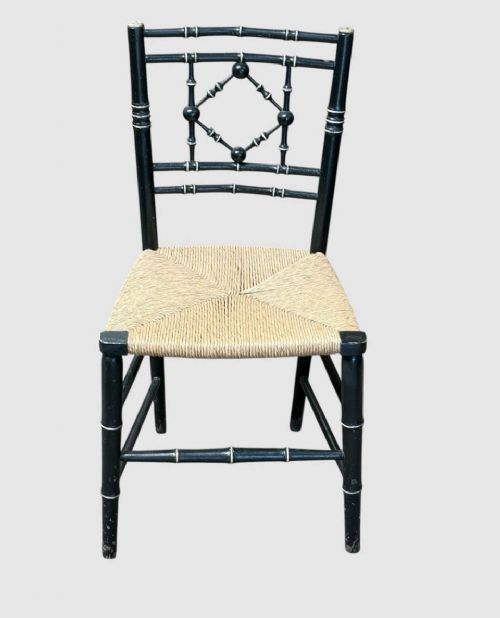
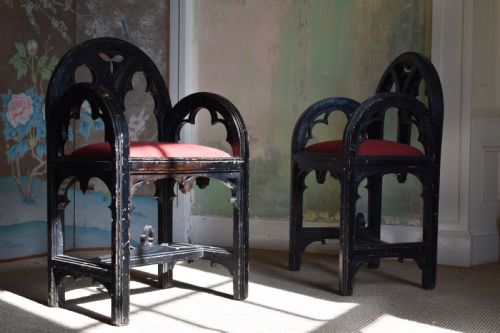
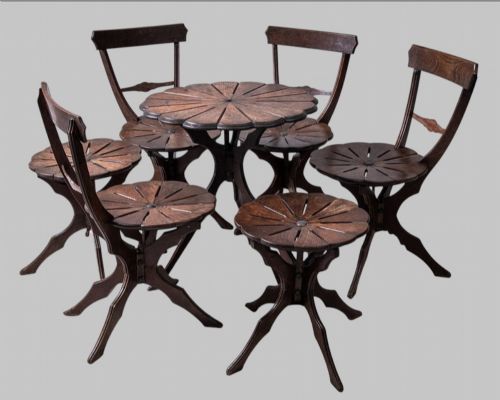
Black carved chairs encompass seating rendered in dark woods or ebonised finishes, spanning forms from low salon chairs to library armchairs. The pieces found here predominantly emerge from the nineteenth century, drawing on Victorian, Regency, and Aesthetic Movement idioms.
Makers and workshops across Britain, Europe, and colonial trade routes utilised dense hardwoods or applied dark lacquers to achieve the characteristic sombre tone. These seats served formal libraries, parlours, and specialised interiors where deep carved detail defined the aesthetic.
How they were made
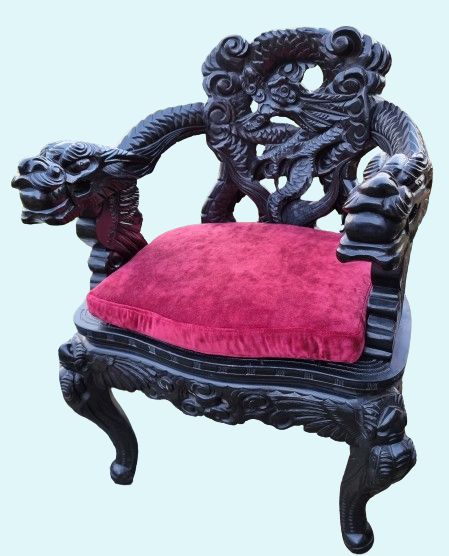
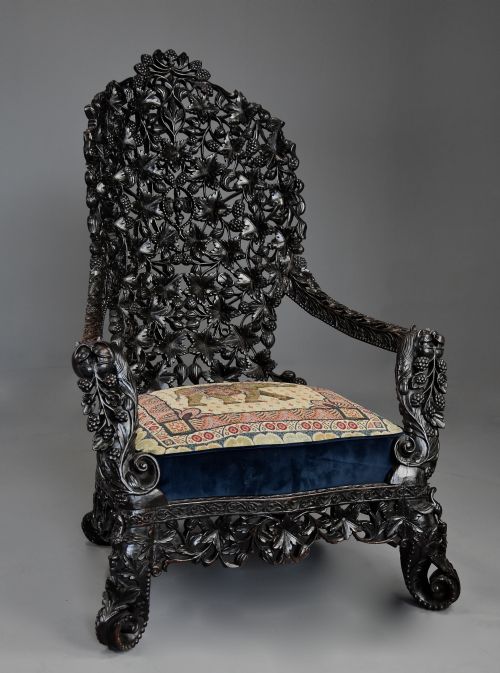
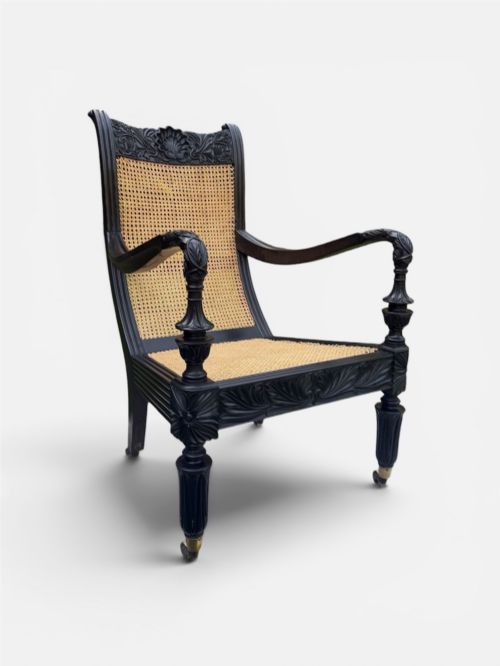
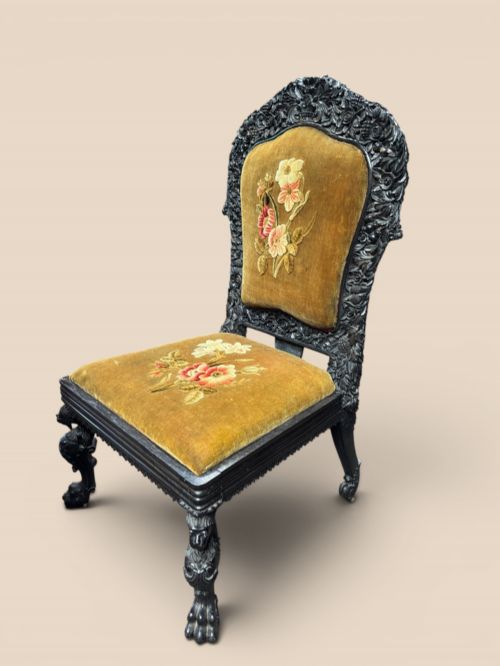
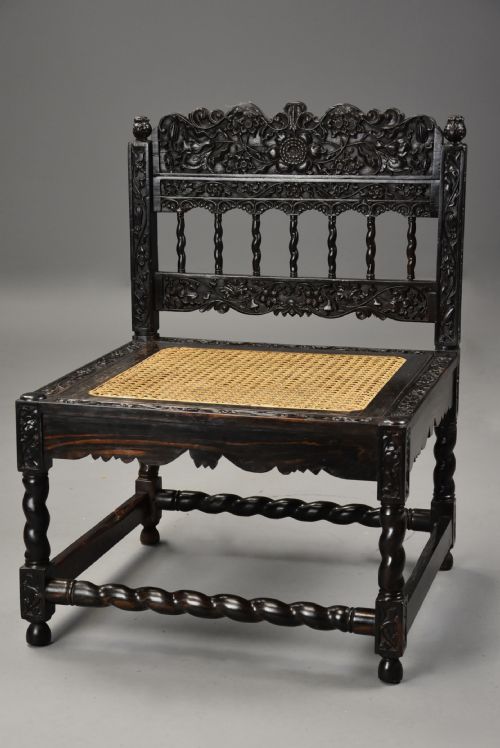
Craftsmen utilised solid hardwoods such as ebony, walnut, and oak, alongside beech treated with ebonising to imitate more costly dark timbers. Artisans carved intricate botanical, figurative, or geometric motifs directly into the dense material by hand.
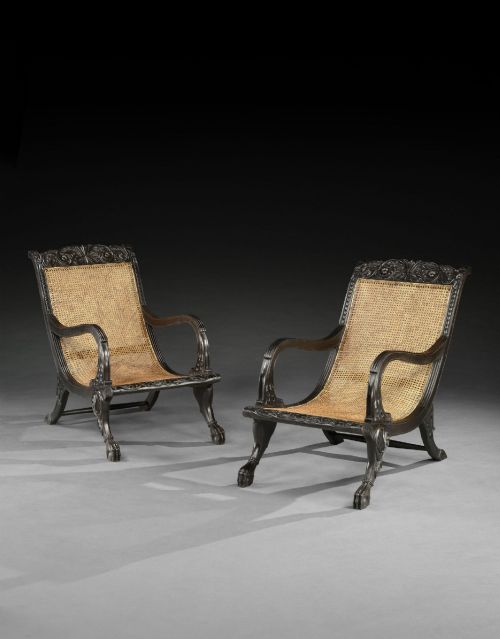
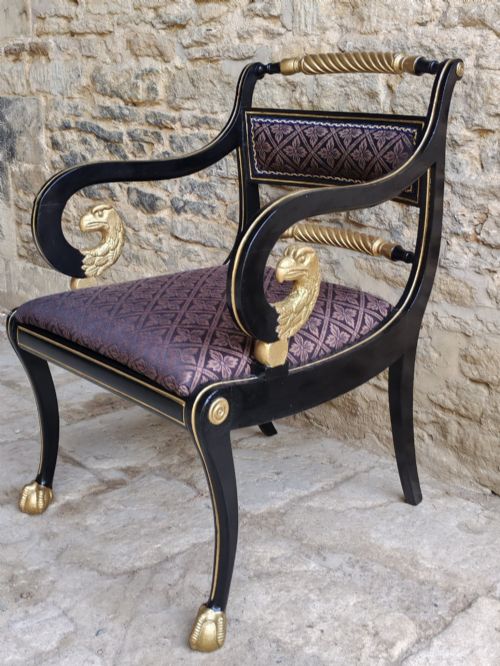
Structural elements frequently incorporated cane inserts, leather upholstery, or brass details, fastened with traditional joinery rather than modern adhesives. Surface decoration ranged from natural wood oiling to painted black lacquer and gilding.
Listings feature pieces spanning the seventeenth century through to the Edwardian era, including Victorian, Regency, and 1880s designs.
What varies in quality
Depth and crispness of the carving distinguish finer examples from standard commercial production, with high-grade pieces showing undercut relief rather than shallow stamping. The choice of primary wood dictates structural integrity, as solid ebony or dense oak outlasts painted softer timbers.
Original components such as cane panels, leather seats, and maker stamps elevate a piece's integrity. Uniformity across matched sets and the precision of joinery separate bespoke workshop commissions from mass-produced Victorian output.
Jennens & Bettridge·Hindley & Sons·Bruce J. Talbert
The Black Carved Chairs Glossary
- Ebonised
- Wood treated with stain, paint, or chemical processes to simulate the appearance of genuine ebony. This finish gained popularity during the Victorian and Aesthetic Movement periods.
- Cane
- Strips of rattan or bamboo woven into an open mesh pattern for seats and backs. It provides flexible support while maintaining a light visual profile.
- Backstool
- An early form of seating without arms, essentially a stool fitted with a vertical backrest. These pieces date back to the seventeenth century.
- Prie Dieu
- A low devotional chair featuring a narrow upper shelf designed for kneeling during prayer. They appear frequently in nineteenth-century domestic settings.
- Sabre Leg
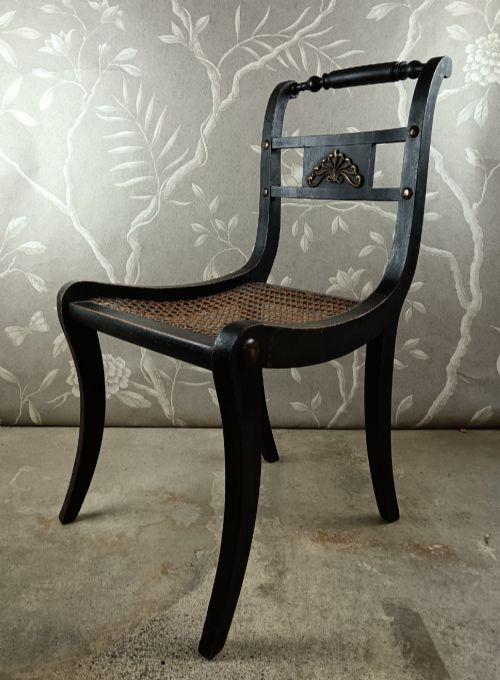
- A concave-curving rear or front leg that tapers toward the foot, mimicking the shape of a cavalry sword. This form defines many Regency designs.
Black Carved Chairs: Frequently Asked Questions
How do I date a black carved chair?
Dating relies on identifying the underlying wood species, joint construction methods, and stylistic cues such as Victorian ebonising or Regency sabre legs. Examining tool marks and hardware beneath the seat offers further chronological clues.
Comparing the decorative motifs against known historical periods helps narrow the decade of manufacture. Consulting maker stamps or registration marks provides the most direct evidence.
Where were these dark chairs placed historically?
These seats occupied formal spaces like libraries, drawing rooms, and parlours where dark furnishings projected gravity and refinement. Library armchairs sat near bookshelves, while salon chairs accented entertaining areas.
Specialised forms like prayer chairs and music stools served designated domestic activities. Anglo-Indian and continental pieces often acted as statement items in wealthy British homes.
How do I care for ebonised wood?
Ebonised surfaces require gentle dusting with a dry, soft cloth to prevent abrasion of the dark finish. Avoid chemical polishes that can degrade applied black lacquers or stains over time.
Maintain stable indoor humidity levels to prevent the underlying timber from expanding or contracting. This protects both the structural joints and the intricate carved relief work.
What is the difference between solid ebony and ebonised wood?
Solid ebony is a naturally heavy, dense, and intensely dark hardwood sourced from tropical regions. Pieces fashioned from solid ebony possess significant weight and require no surface staining.
Ebonised wood involves a domestic timber, such as beech or mahogany, coated or treated to achieve a black coloration. Close inspection of unexposed areas usually reveals the lighter base wood beneath.