

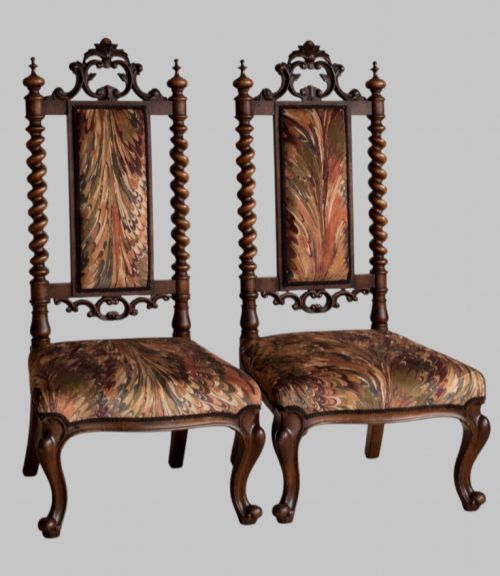


Barley Twist Side Chairs
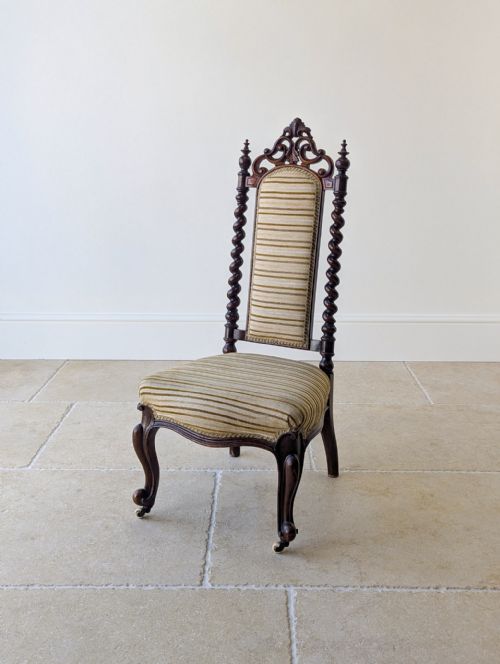
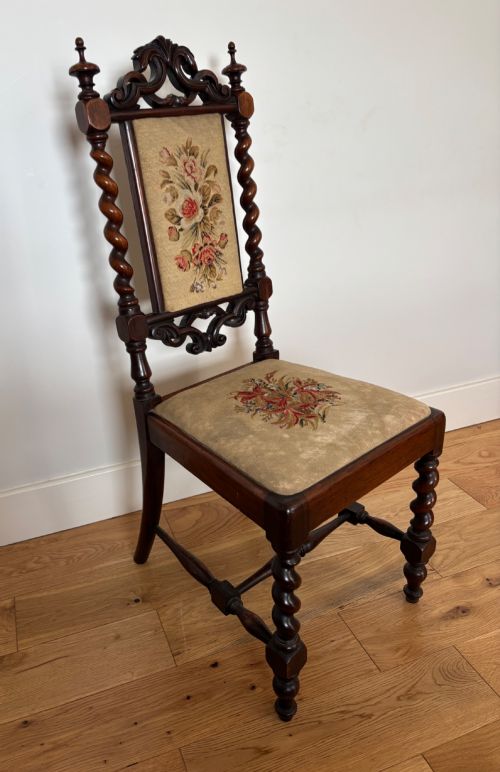
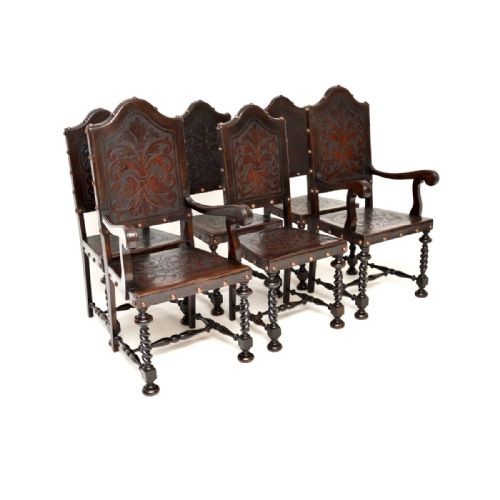
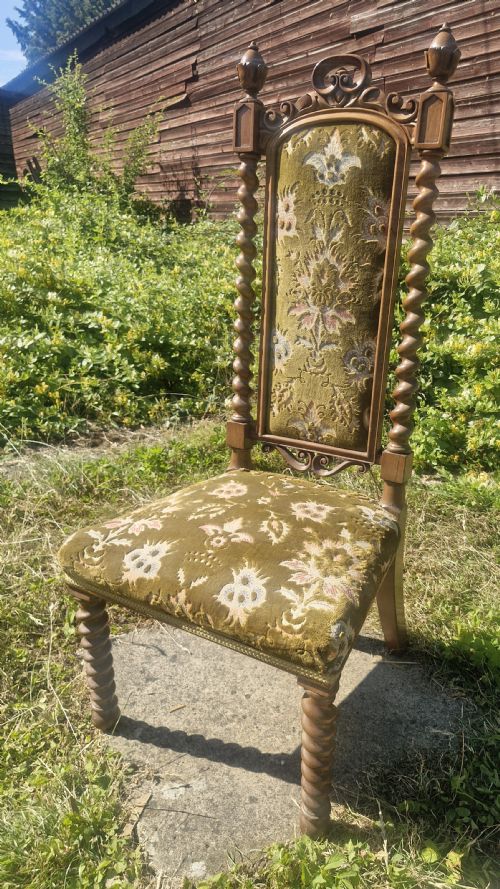
Barley twist side chairs bring solid oak frames and turned uprights together to anchor a traditional dining room or bedroom.
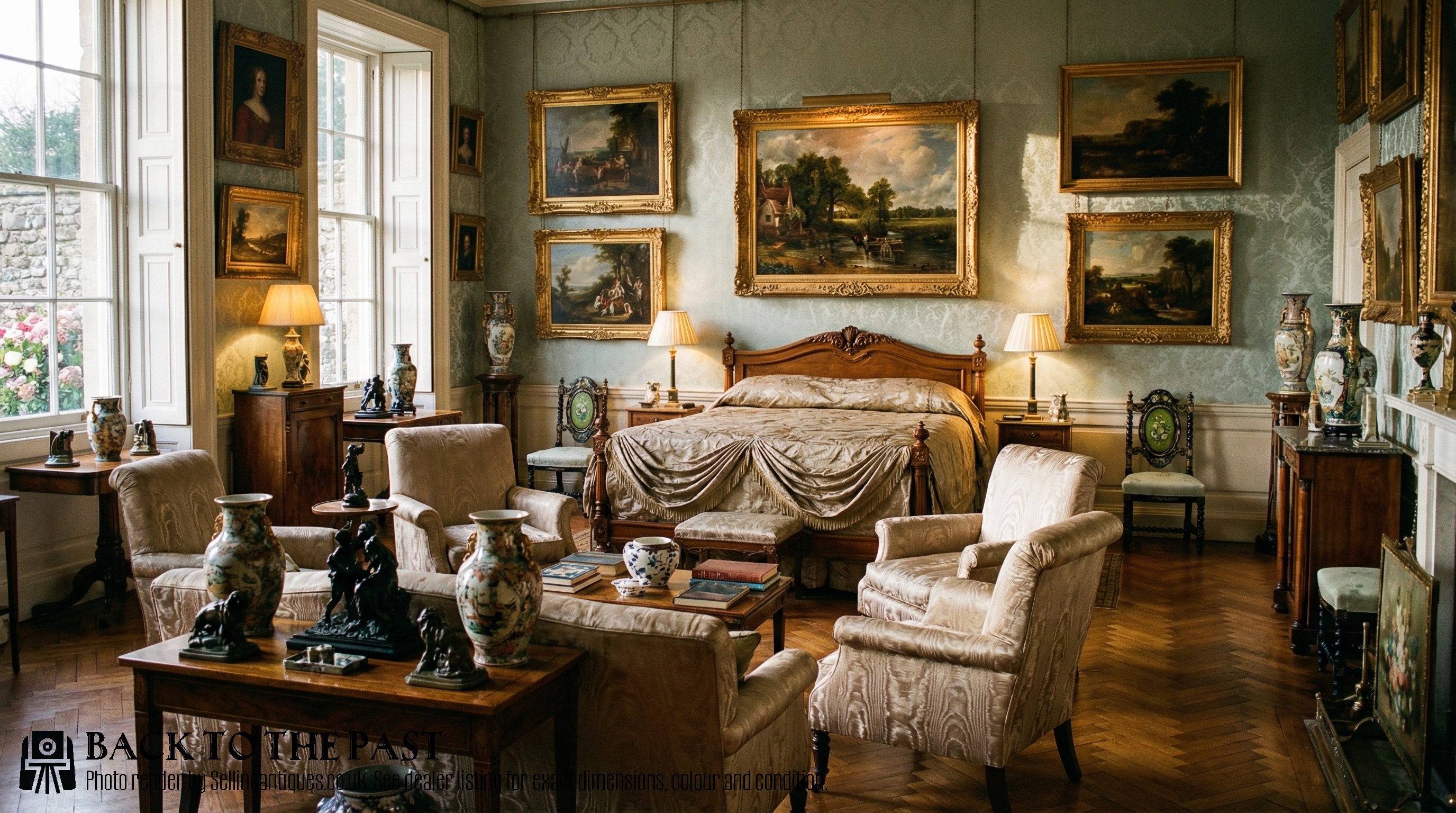
What barley twist side chairs are
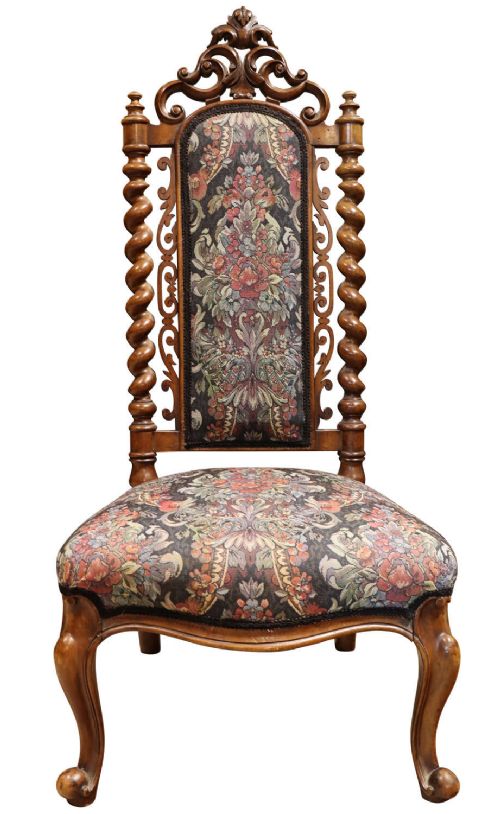
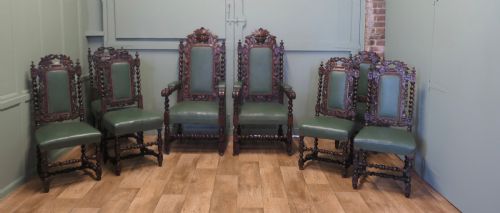
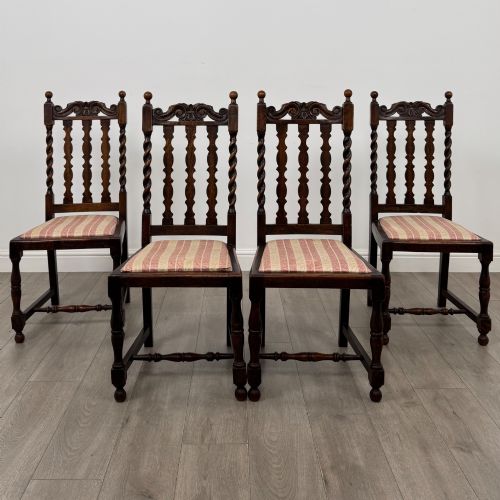
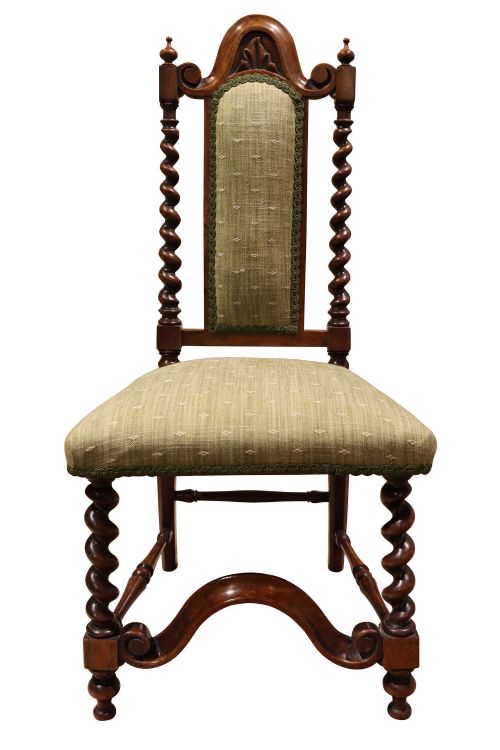
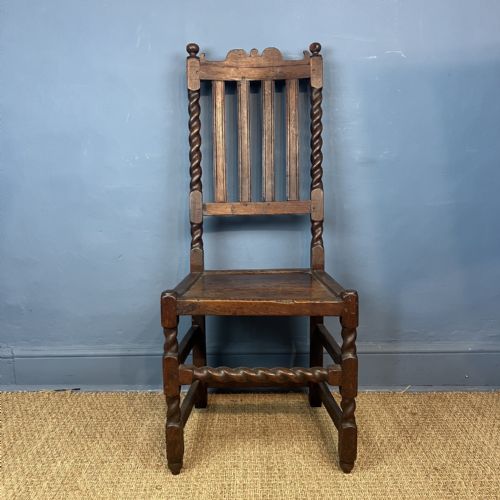
Barley twist side chairs bring sturdy seating to dining rooms and bedrooms, grounded in forms from the nineteenth and early twentieth centuries. These pieces appear most frequently in oak, spanning Edwardian sets and Victorian interpretations of earlier styles.
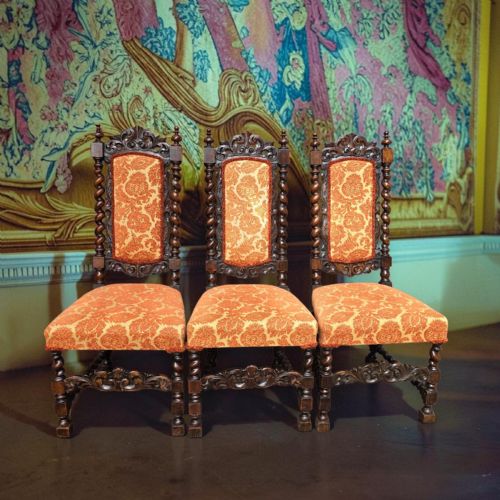
Makers produced these chairs for practical dining and occasional use, drawing on Jacobean Revival and Victorian Gothic Revival design. Surviving examples range from sets of three or four dining chairs to pairs of bedroom and side chairs.
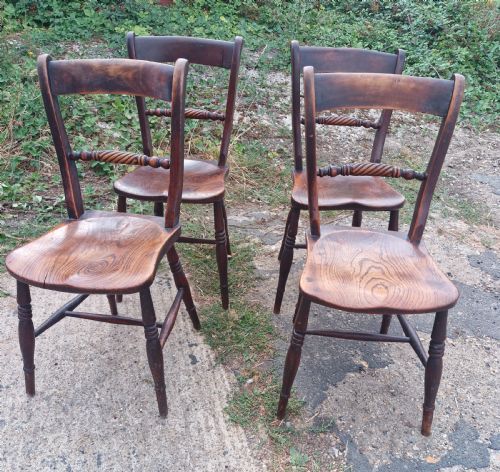
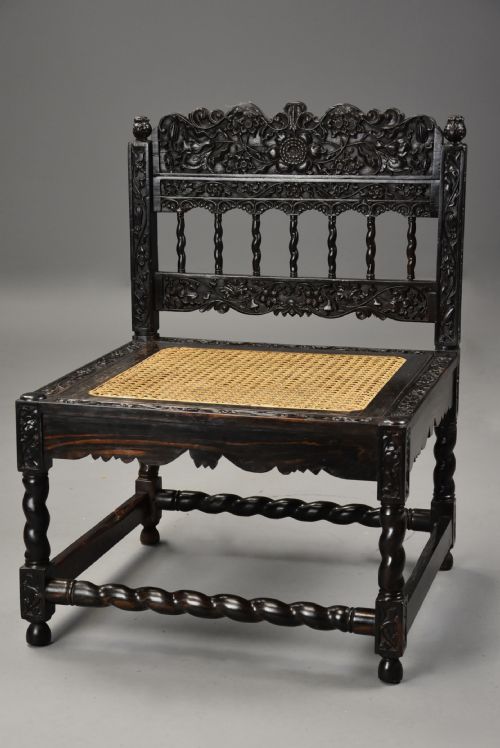
The defining characteristic remains the spiralling turned wood forming the legs or supports. Buyers find these forms appearing alongside upholstered seats, carved wooden backs, and occasionally ebonised finishes.
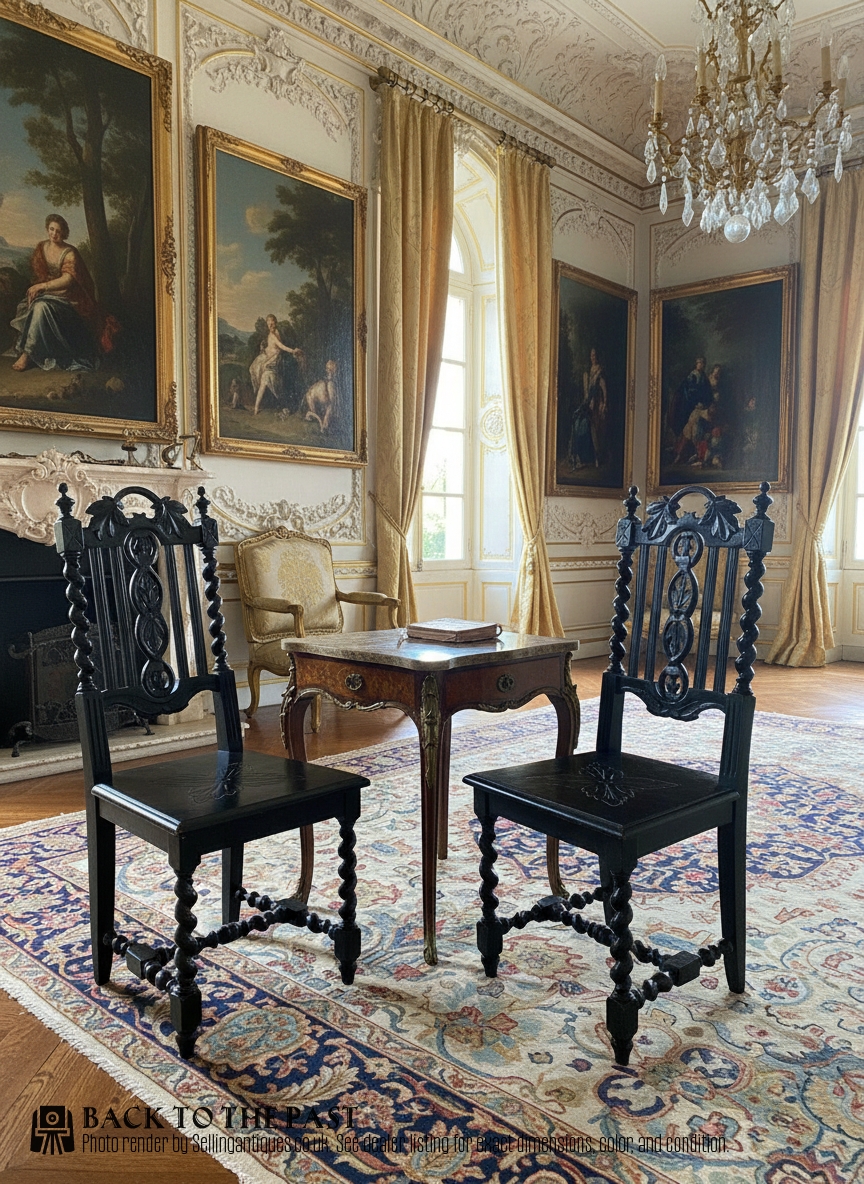
How they were made
Cabinet makers constructed these frames predominantly from solid oak, shaping the characteristic spirals by hand or with lathe assistance. Workshops also utilised alternative materials including lacquered papier-mâché, ebonised oak, and brass components.
Upholstered versions relied on textile and leather coverings stretched over internal padding. Carved details such as floral leaf motifs or figurative scenes decorated the wooden backs.
Retail Price Guide 2026
Typical UK retail prices for barley twist side chairs, calculated from the Sellingantiques database of over a million retail prices indexed since 2003. This retail price guide relies exclusively on Sellingantiques data; no external sources or auction records are used, so the figures do not describe the wider market.
Listings span oak, ebonised oak, and lacquered papier-mâché across Victorian and Edwardian periods.
What varies in quality
Quality rests upon the crispness of the woodturning and the depth of any carved decoration on the frame. Sharp, well-defined spirals demonstrate greater skill than softer, worn twists.
The selection of materials dictates the standing of a piece, from standard oak frames to intricately lacquered papier-mâché or ebonised surfaces. Cohesive sets show consistent matching across all members, whereas paired items rely on balanced proportions.
The Barley Twist Side Chairs Glossary
- Barley twist
- A spiralling turned column resembling the stalk of barley. This decorative woodworking technique appears frequently on chair legs and stretchers.
- Jacobean Revival
- A nineteenth-century design movement imitating seventeenth-century British styles. It favours dark oak, heavy turning, and geometric paneling.
- Ebonised oak
- Timber treated to imitate ebony, producing a dark, dense, polished black finish. This technique appeared on nineteenth-century statement seating.
- Papier-mâché
- A composite material made from paper pulp and adhesive, pressed into moulds and lacquered. It provided a smooth base for painted and inlaid bedroom furniture.
- Side chair
- A light, armless chair intended for dining or occasional seating. These pieces stood around tables or against walls in period rooms.
Frequently Asked Questions
Are these chairs comfortable for daily dining?
Most pieces feature upright wooden backs and firm upholstered pads designed for formal dining rather than lounging. Their supportive structures suit traditional dining tables.
Buyers planning for daily use often look for examples with intact textile or leather upholstery and sturdy cross stretchers.
How do I date an oak barley twist chair?
Dating relies on timber characteristics, joinery methods, and stylistic cues connecting the piece to Victorian or Edwardian periods. Heavily carved frames often point towards revival movements.
Comparing the turning style and finish against dated archive examples helps clarify the era of manufacture.
Can I mix different sets of side chairs?
Pairing chairs with matching twist profiles creates a deliberate aesthetic around a dining table. Similar wood tones help unify mixed groupings.
Maintaining a consistent period and timber type ensures the arrangement feels balanced rather than mismatched.
What maintenance do papier-mâché chairs need?
Lacquered surfaces require gentle dusting with a dry microfibre cloth to protect the finish. Avoid direct sunlight and moisture to preserve the delicate structure.
Keeping these lighter bedroom chairs away from heavy traffic prevents surface wear on the lacquer.